
Asia Pacific Egg Market Outlook to 2030
Region:Bangladesh
Author(s):Paribhasha Tiwari
Product Code:KROD3024
Region:Bangladesh
Author(s):Paribhasha Tiwari
Product Code:KROD3024
October 2024
89
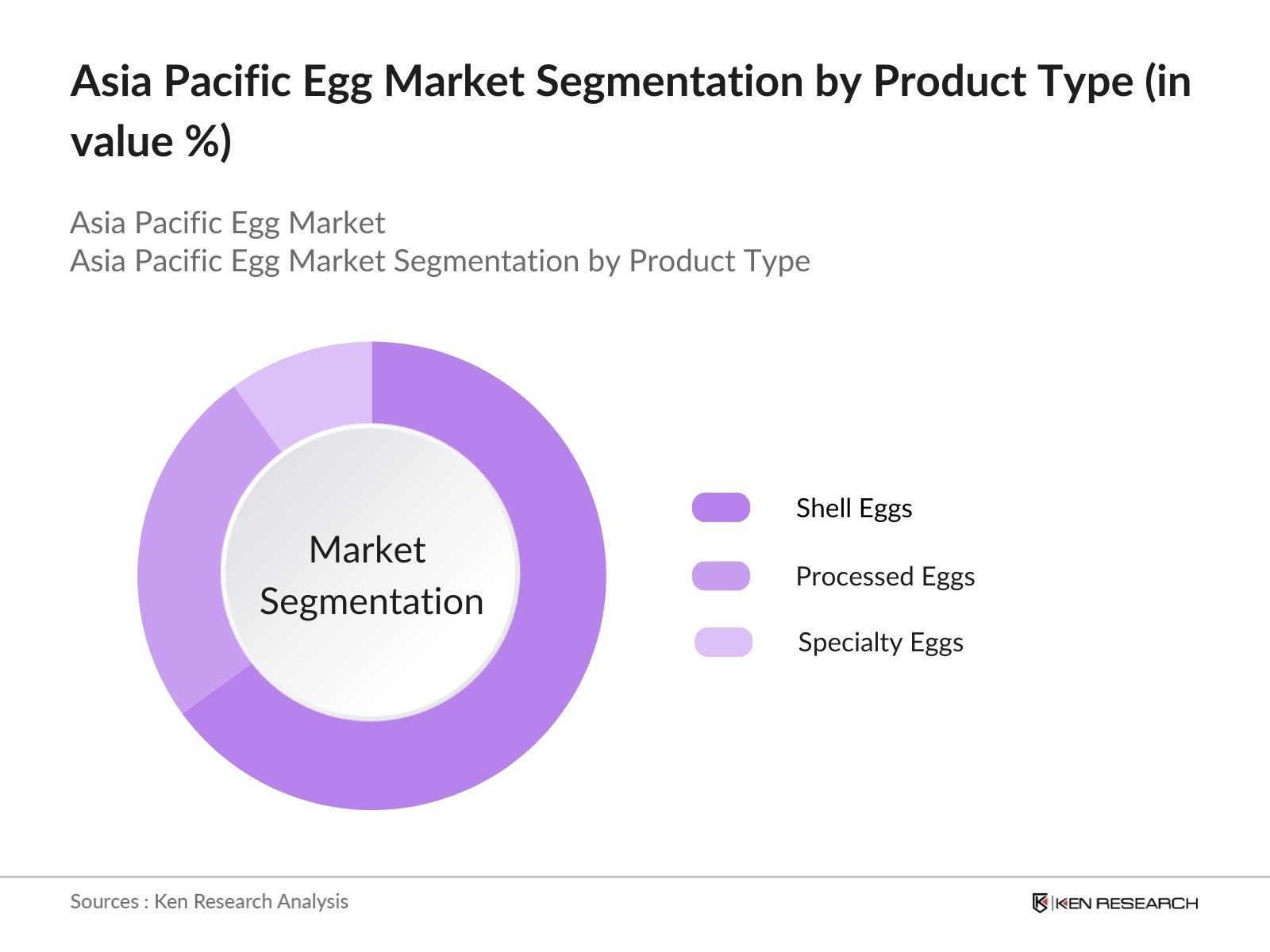
By Product Type: The Asia Pacific Egg Market is segmented by product type into shell eggs, processed eggs, and specialty eggs. Recently, shell eggs have a dominant market share under the product type segmentation. This dominance is primarily due to their widespread consumption in households and their use in various food applications, including baking and food processing. Shell eggs are more affordable than processed and specialty eggs, making them a popular choice among consumers, especially in rural areas. The increasing production and easy availability of shell eggs further strengthen their position in the market.
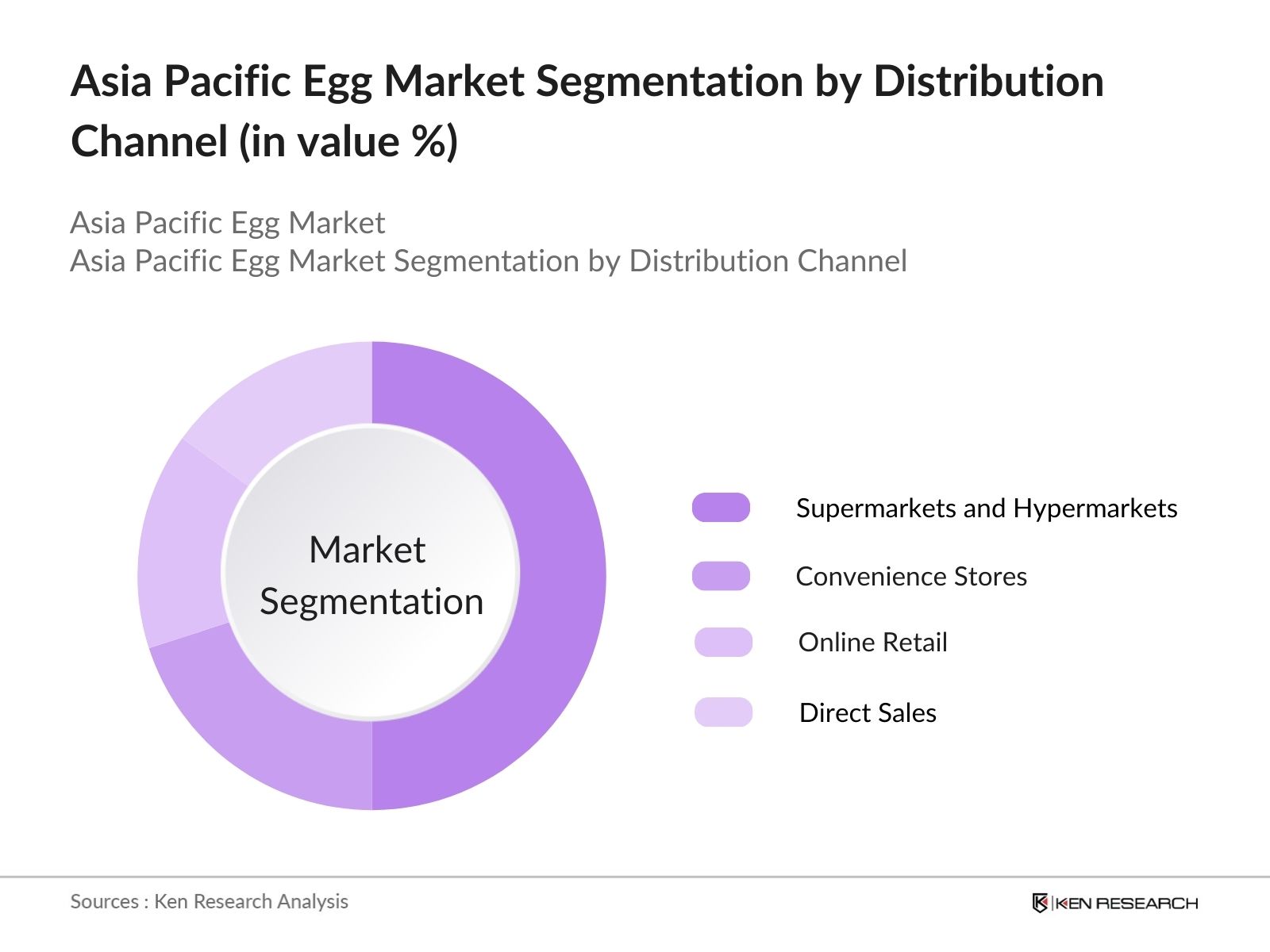
By Distribution Channel: The Asia Pacific Egg Market is segmented by distribution channel into supermarkets and hypermarkets, convenience stores, online retail, and direct sales. Supermarkets and hypermarkets hold a dominant position in the distribution channel segmentation. This is due to the growing urbanization and changing consumer purchasing behaviors, where convenience and a variety of egg products are highly valued. These channels offer a wide selection of egg products, including specialty and processed eggs, at competitive prices, making them a preferred choice for consumers.
The Asia Pacific Egg Market is dominated by a few key players, including large-scale poultry farms and egg processing companies. These players have established a strong market presence through extensive production capabilities and an efficient supply chain network. Leading companies like Charoen Pokphand Foods, Suguna Foods, and NH Foods are instrumental in shaping the competitive landscape by leveraging advanced production technologies and meeting rising consumer demands for both traditional and specialty egg products.
|
Company Name |
Establishment Year |
Headquarters |
Key Products |
Revenue (USD Billion) |
Market Strategy |
Production Capacity |
Geographic Presence |
Distribution Channels |
Sustainability Efforts |
|
Charoen Pokphand Foods PCL |
1921 |
Bangkok, Thailand |
|||||||
|
Suguna Foods |
1984 |
Coimbatore, India |
|||||||
|
NH Foods Ltd. |
1942 |
Osaka, Japan |
|||||||
|
Baiada Poultry Pty Ltd |
1940 |
Sydney, Australia |
|||||||
|
Granja Mantiqueira Group |
1987 |
Minas Gerais, Brazil |
The Asia Pacific Egg Market is expected to show steady growth in the coming years, driven by the increasing consumption of protein-rich foods, advancements in egg production technologies, and the rising demand for specialty egg products. As consumers become more health-conscious, the market for organic and omega-3-enriched eggs is likely to expand. Additionally, technological advancements in poultry farming, such as automation and IoT integration, are expected to boost productivity and efficiency in egg production, making it easier for producers to meet the rising demand. Governments in the region are also expected to continue supporting the poultry industry through subsidies and initiatives aimed at improving agricultural practices.
|
Segment |
Sub-Segment |
|
Product Type |
Shell Eggs Processed Eggs Specialty Eggs |
|
Distribution Channel |
Supermarkets Convenience Stores Online Direct Sales |
|
Application |
Household Food Processing Bakery Restaurants |
|
End-User |
B2C B2B |
|
Region |
China India Japan South Korea Southeast Asia |
Charoen Pokphand Foods PCL
Suguna Foods
NH Foods Ltd.
Baiada Poultry Pty Ltd
Granja Mantiqueira Group
Venky’s (India) Limited
ISE Foods Inc.
Rose Acre Farms
Proan
Ovos Brasilis
Ovostar Union
Rembrandt Foods
Lohmann Tierzucht GmbH
Eggland’s Best
Farm Pride Foods Ltd
1.1. Definition and Scope
1.2. Market Taxonomy
1.3. Market Growth Rate
1.4. Market Segmentation Overview
2.1. Historical Market Size
2.2. Year-On-Year Growth Analysis
2.3. Key Market Developments and Milestones
3.1. Growth Drivers
3.1.1. Increasing Population and Urbanization
3.1.2. Rise in Demand for Protein-Rich Foods
3.1.3. Government Support for Poultry Farming
3.1.4. Adoption of Technological Advancements in Egg Production
3.2. Market Challenges
3.2.1. Fluctuating Feed Costs (Impact on Egg Prices)
3.2.2. Disease Outbreaks (Impact on Supply Chain)
3.2.3. Regulatory Compliance (Food Safety Standards)
3.2.4. Environmental Concerns (Carbon Footprint of Poultry Farming)
3.3. Opportunities
3.3.1. Organic and Free-Range Eggs Demand Surge
3.3.2. Export Opportunities to Emerging Markets
3.3.3. Technological Advancements in Egg Processing
3.3.4. Growth in Functional and Nutraceutical Egg Products
3.4. Trends
3.4.1. Increase in Specialty Eggs (Omega-3, Organic)
3.4.2. Integration of IoT and AI in Poultry Farming
3.4.3. Focus on Sustainable Egg Production Methods
3.5. Government Regulations
3.5.1. Food Safety and Standards (Impact on Production and Sales)
3.5.2. Tariffs and Trade Policies (Impact on Export/Import)
3.5.3. Subsidies and Grants for Poultry Farmers
3.6. SWOT Analysis
3.7. Stakeholder Ecosystem (Farmers, Producers, Distributors)
3.8. Porters Five Forces Analysis
3.9. Competition Ecosystem
4.1. By Product Type (In Value %)
4.1.1. Shell Eggs
4.1.2. Processed Eggs (Liquid, Dried, Frozen)
4.1.3. Specialty Eggs (Organic, Omega-3 Enriched, Free-Range)
4.2. By Distribution Channel (In Value %)
4.2.1. Supermarkets and Hypermarkets
4.2.2. Convenience Stores
4.2.3. Online Retail
4.2.4. Direct Sales
4.3. By Application (In Value %)
4.3.1. Household Consumption
4.3.2. Food Processing
4.3.3. Bakery and Confectionery
4.3.4. Restaurants and Catering
4.4. By End-User (In Value %)
4.4.1. B2C (Retail Consumers)
4.4.2. B2B (Foodservice, Hotels, Industrial Use)
4.5. By Region (In Value %)
4.5.1. China
4.5.2. India
4.5.3. Japan
4.5.4. South Korea
4.5.5. Southeast Asia
5.1 Detailed Profiles of Major Companies
5.1.1. Charoen Pokphand Foods PCL
5.1.2. Venkys (India) Limited
5.1.3. Suguna Foods
5.1.4. NH Foods Ltd.
5.1.5. ISE Foods Inc.
5.1.6. Baiada Poultry Pty Ltd
5.1.7. Granja Mantiqueira Group
5.1.8. Rose Acre Farms
5.1.9. Proan
5.1.10. Ovos Brasilis
5.1.11. Ovostar Union
5.1.12. Rembrandt Foods
5.1.13. Lohmann Tierzucht GmbH
5.1.14. Egglands Best
5.1.15. Farm Pride Foods Ltd
5.2 Cross Comparison Parameters (Revenue, Market Share, Production Capacity, Number of Employees, Geographic Reach, Egg Product Type, Special Certifications)
5.3 Market Share Analysis
5.4 Strategic Initiatives
5.5 Mergers And Acquisitions
5.6 Investment Analysis
5.7 Government Grants and Support
5.8 Private Equity and Venture Capital Investments
6.1. Food Safety Regulations
6.2. Import and Export Regulations
6.3. Environmental Regulations
6.4. Poultry Farming Certifications
7.1. Projected Market Size
7.2. Key Factors Driving Future Market Growth
8.1. By Product Type (In Value %)
8.2. By Distribution Channel (In Value %)
8.3. By Application (In Value %)
8.4. By End-User (In Value %)
8.5. By Region (In Value %)
9.1. Market Penetration Strategies
9.2. Customer Cohort Analysis
9.3. Marketing and Branding Strategies
9.4. White Space Opportunity Analysis
Disclaimer Contact UsThis stage involves mapping out the key stakeholders in the Asia Pacific Egg Market. Extensive desk research is conducted, using a combination of proprietary databases and secondary sources. The aim is to identify the key variables that influence market dynamics, such as consumer preferences, production trends, and regulatory factors.
In this phase, we gather historical data related to the market size, production levels, and consumption rates. This data is then analyzed to construct a comprehensive understanding of the market, taking into account the current market penetration and the role of various distribution channels.
Key market hypotheses are developed and validated through direct consultations with industry experts. These interviews provide insights into production trends, competitive dynamics, and other operational metrics that influence the market.
The final phase involves synthesizing all gathered data, including expert insights and proprietary research, to produce a validated, comprehensive market analysis. This ensures that the final output is accurate and reflective of the current market conditions.
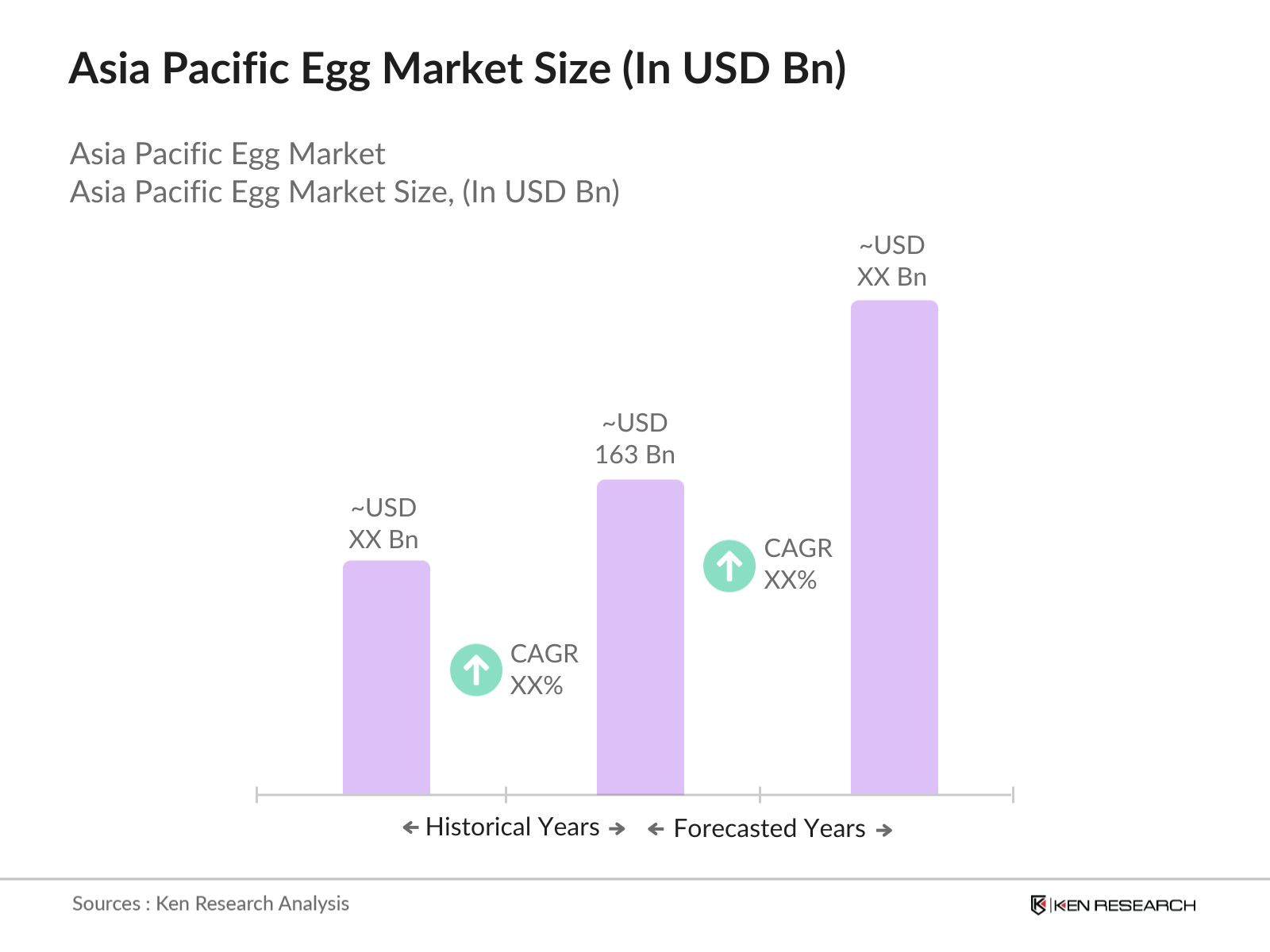
The Asia Pacific Egg Market is valued at USD 163 billion, driven by increasing demand for protein-rich foods, technological advancements in egg production, and a growing population in the region.
The main challenges in the Asia Pacific Egg Market include fluctuating feed costs, which impact production prices, and the outbreak of diseases in poultry, which can affect supply chains. Environmental concerns regarding the carbon footprint of poultry farming also pose challenges.
Key players in the Asia Pacific Egg Market include Charoen Pokphand Foods PCL, Suguna Foods, NH Foods Ltd., Baiada Poultry Pty Ltd, and Granja Mantiqueira Group. These companies dominate due to their large-scale production capabilities and efficient supply chains.
The Asia Pacific Egg Market is driven by the rising demand for high-protein foods, government support for poultry farming, and technological advancements in production processes. Additionally, the growing popularity of specialty egg products such as organic and omega-3-enriched eggs contributes to market growth.

What makes us stand out is that our consultants follows Robust, Refine and Result (RRR) methodology. i.e. Robust for clear definitions, approaches and sanity checking, Refine for differentiating respondents facts and opinions and Result for presenting data with story

We have set a benchmark in the industry by offering our clients with syndicated and customized market research reports featuring coverage of entire market as well as meticulous research and analyst insights.

While we don't replace traditional research, we flip the method upside down. Our dual approach of Top Bottom & Bottom Top ensures quality deliverable by not just verifying company fundamentals but also looking at the sector and macroeconomic factors.

With one step in the future, our research team constantly tries to show you the bigger picture. We help with some of the tough questions you may encounter along the way: How is the industry positioned? Best marketing channel? KPI's of competitors? By aligning every element, we help maximize success.

Our report gives you instant access to the answers and sources that other companies might choose to hide. We elaborate each steps of research methodology we have used and showcase you the sample size to earn your trust.

If you need any support, we are here! We pride ourselves on universe strength, data quality, and quick, friendly, and professional service.