















Asia Pacific Irrigation Automation Market Outlook to 2030
Region:Asia
Author(s):Yogita Sahu
Product Code:KROD1823
October 2024
89
About the Report
Asia Pacific Irrigation Automation Market Overview
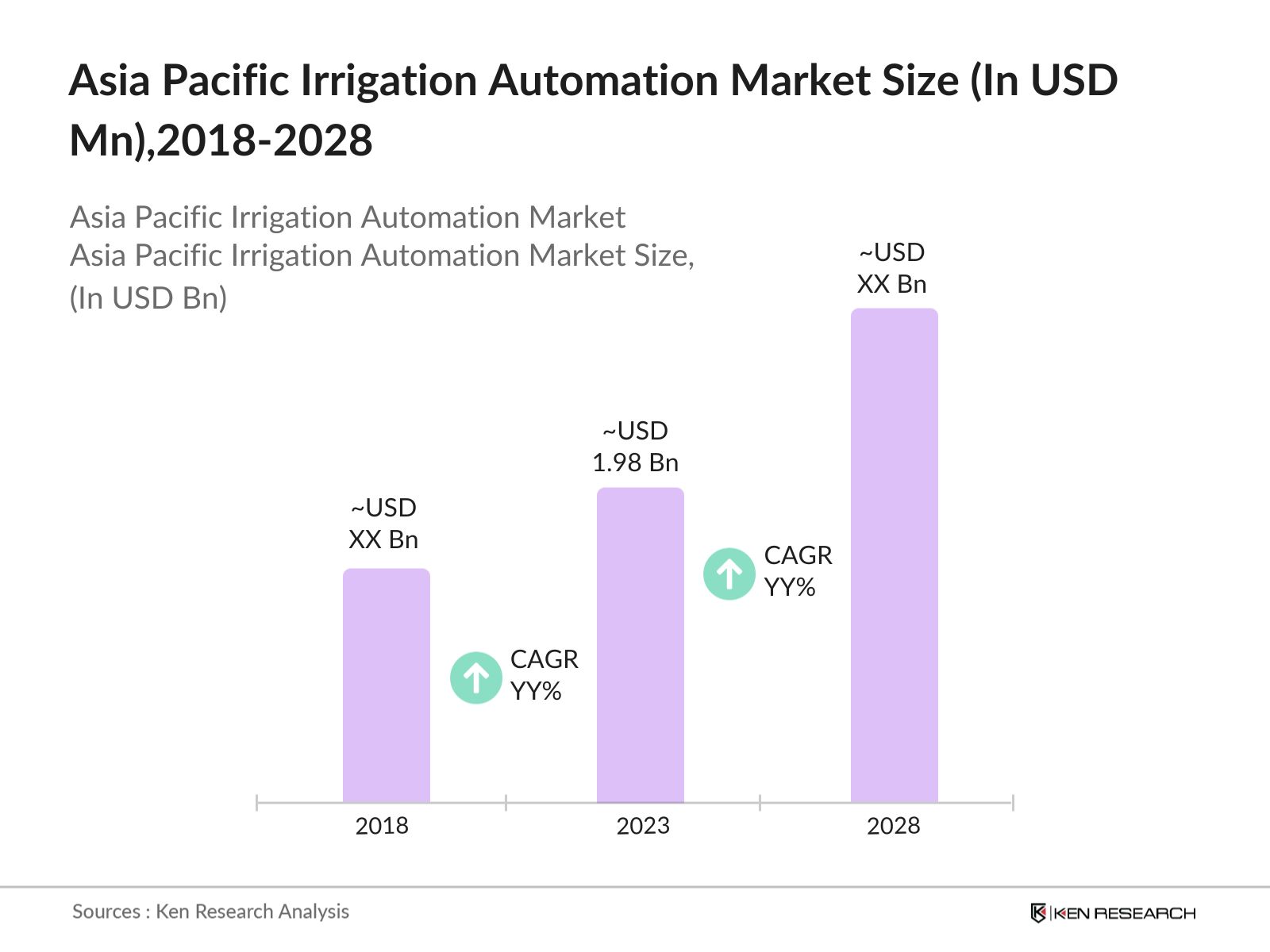
- The Asia Pacific Irrigation Automation Market size was valued at USD 1.98 billion in 2023. The growth over the past decade, driven by increasing water scarcity, the need for higher agricultural productivity, and the adoption of precision farming techniques. Additionally, by advancements in technology, including IoT-enabled irrigation systems, and increasing awareness among farmers about the benefits of automated irrigation in terms of efficiency and cost savings.
- The market is dominated by several key players include Netafim Ltd., The Toro Company, Jain Irrigation Systems Ltd., Lindsay Corporation, and Valmont Industries, Inc. These players have focused on developing advanced irrigation solutions that cater to the diverse needs of farmers across the region, from small-scale operations to large agricultural enterprises.
- In 2024, Jain Irrigation Systems Ltd. launched a new line of solar-powered automated irrigation systems, specifically designed for off-grid rural areas in Asia Pacific. The company has already deployed these systems across 100,000 hectares in India, with plans to expand to other countries in the region.
- China dominates the market, due to the country's large agricultural sector, which is increasingly adopting advanced technologies to improve productivity and water efficiency. The government's focus on modernizing agriculture to meet the food demands of its vast population and its ambitious targets for water conservation have positioned China as the leading market in the region.
Asia Pacific Irrigation Automation Market Segmentation
The market s segmented into various factors like product, automation type, and region.
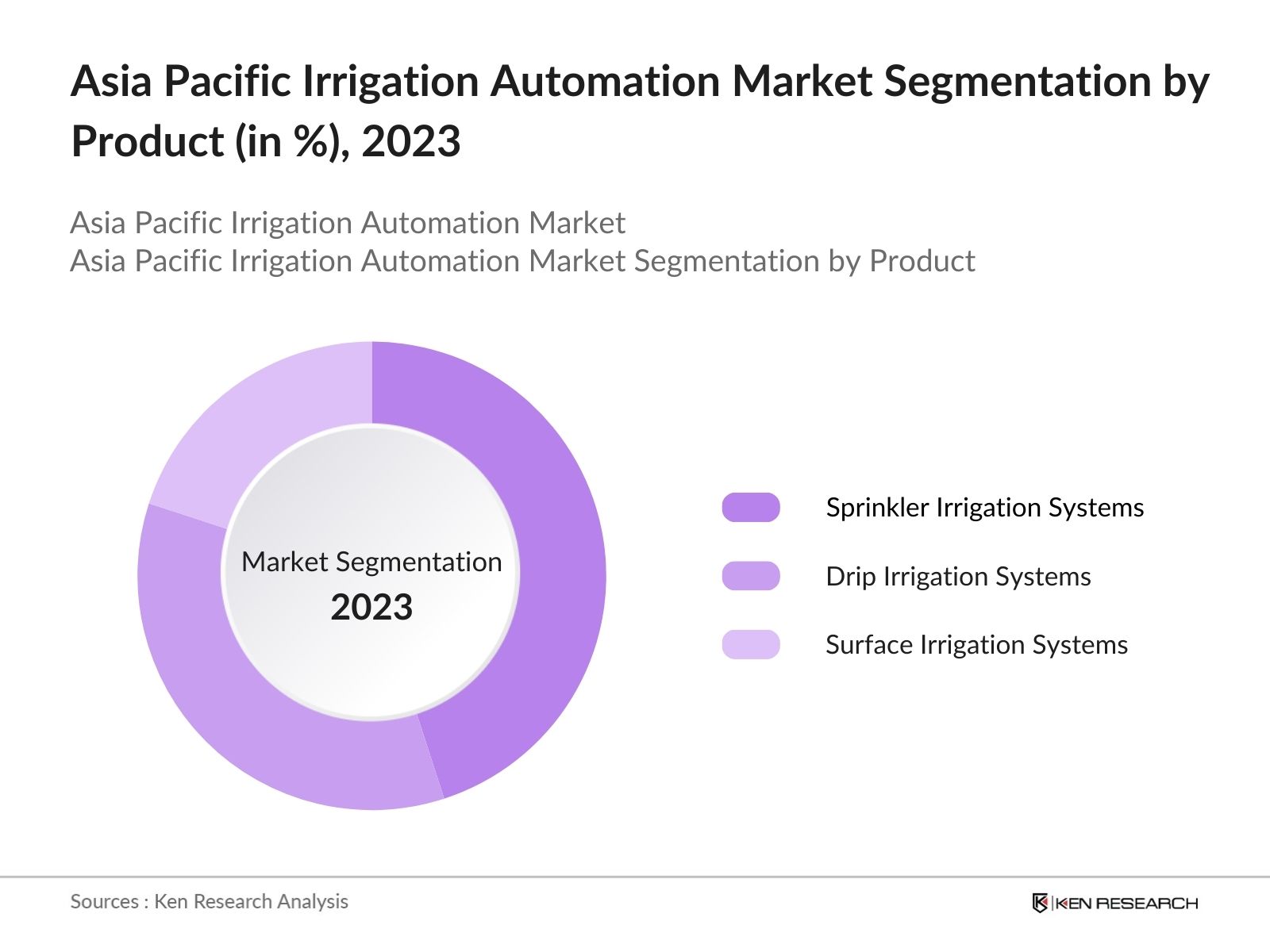
By Product: The market is segmented by product into sprinkler irrigation systems, drip irrigation systems, and surface irrigation systems. In 2023, sprinkler irrigation systems held a dominant market share due to their versatility and efficiency in covering large agricultural areas, making them suitable for a wide range of crops and terrains.
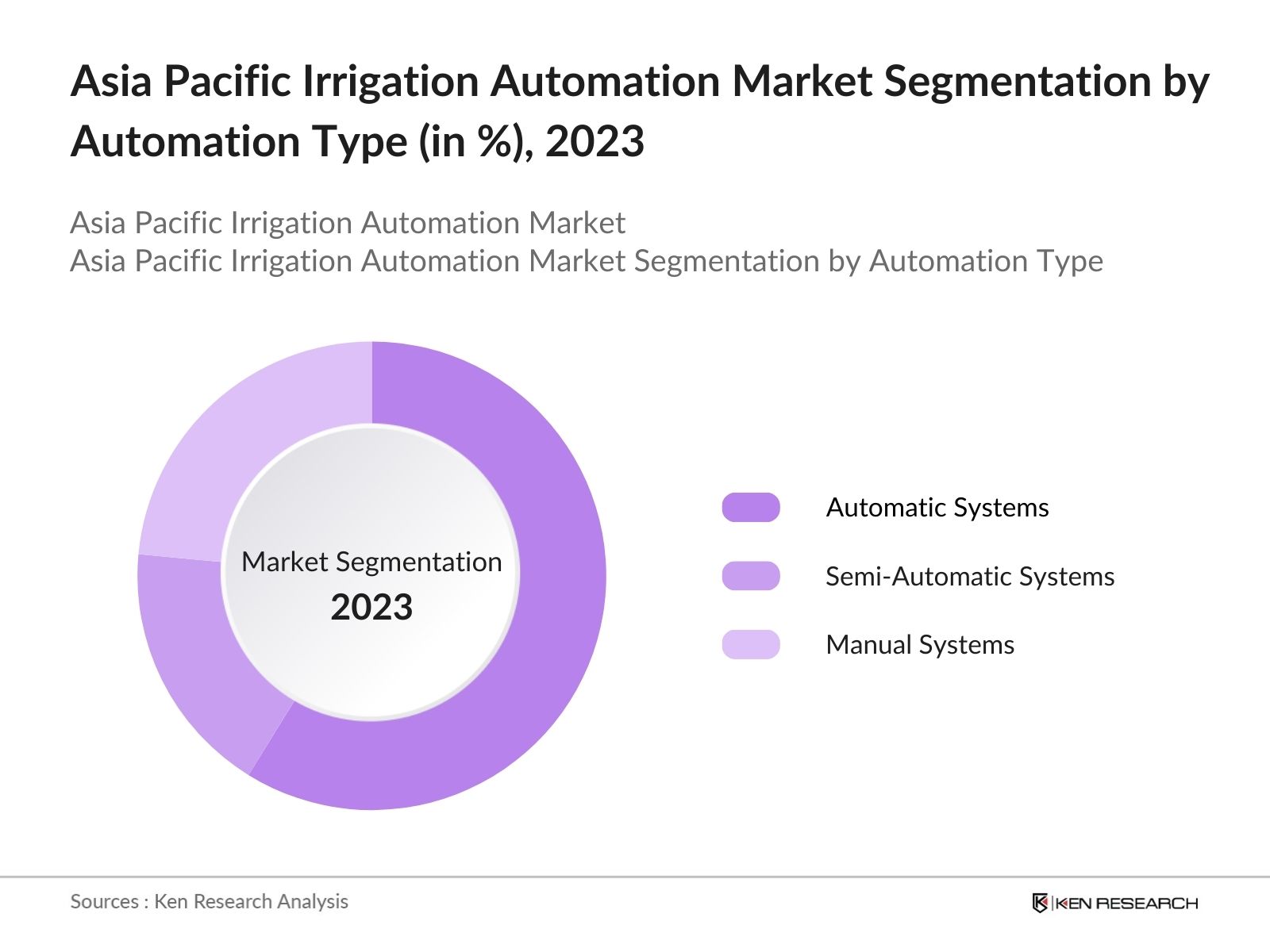
By Automation Type: The market is segmented by automation type into automatic, semi-automatic, and manual systems. In 2023, Automatic irrigation systems held the largest market share by their ability to operate without human intervention, using sensors and controllers to optimize water usage based on real-time data.
By Region: The market is segmented by region into China, South Korea, Japan, India, Australia, and Rest of APAC. In 2023, China leads the market by significant government investments in smart agriculture and the large-scale adoption of advanced irrigation technologies.
Asia Pacific Irrigation Automation Market Competitive Landscape
|
Company Name |
Establishment Year |
Headquarters |
|
Netafim Ltd. |
1965 |
Tel Aviv, Israel |
|
The Toro Company |
1914 |
Bloomington, USA |
|
Jain Irrigation Systems Ltd. |
1986 |
Jalgaon, India |
|
Lindsay Corporation |
1955 |
Omaha, USA |
|
Valmont Industries, Inc. |
1946 |
Omaha, USA |
- Lindsay Corporation: Lindsay Corporation has significantly upgraded its FieldNET Advisor platform in 2024, enhancing irrigation management with real-time data and whole-farm management features. The platform now includes satellite imagery for crop water usage and a user-friendly interface, aimed at optimizing yields and reducing costs for growers globally.
- Valmont Industries, Inc.: Valmont Industries is enhancing agricultural efficiency with its solar-powered pivot irrigation systems, already installed in over 29,000 locations across the Middle East, covering 1.4 million hectares. These systems save approximately 40% more water compared to traditional methods, contributing to a reduction of 61 million pounds of CO2 emissions annually.
Asia Pacific Irrigation Automation Market Analysis
Market Growth Drivers
- Water Scarcity and Agricultural Demand: In the Asia-Pacific region, over 90% of the population faces imminent water crises, with agriculture consuming about 70% of available freshwater. By 2030, water demand is projected to exceed supply by 40%. Innovative irrigation technologies could significantly enhance efficiency, addressing both water scarcity and food security challenges.
- Population Growth and Food Demand: Rapid population growth in the Asia Pacific region, currently at 4.75 billion, is projected to increase by 30 million annually, reaching 4.83 billion by 2028. This surge drives demand for food and agricultural expansion, necessitating the adoption of automated irrigation systems across an estimated 20 million hectares by 2028.
- Expansion of High-Value Crop Cultivation: The shift towards high-value crops such as fruits, vegetables, and horticultural products, which require precise water management, is driving the adoption of irrigation automation. In 2024, the cultivation area under high-value crops in Asia Pacific. The implementation of automated irrigation systems on these lands is projected to increase crop yields, further fueling market growth.
Market Challenges
- High Initial Costs of Irrigation Automation: One of the primary challenges faced by the irrigation automation sector in Asia Pacific is the high initial cost of implementing these systems. In 2024, the average cost for setting up a fully automated irrigation system is high. This financial burden is a significant barrier for small-scale farmers, who constitute over 70% of the farming community in the region, limiting the widespread adoption of these technologies.
- Lack of Technical Expertise and Awareness: Despite the benefits of irrigation automation, a challenge is the lack of technical expertise and awareness among farmers. In 2024, over 60% of smallholder farmers in Asia Pacific are reported to be unaware of or lack the skills needed to operate automated irrigation systems. This knowledge gap hinders the adoption of advanced technologies, especially in rural areas where traditional farming practices dominate.
Government Initiatives
- Chinas Smart Agriculture Initiative: In 2024, China's government allocated substantial resources to expand smart agriculture, emphasizing the integration of remote sensing, GIS, and IoT technologies to modernize farming. This initiative includes subsidies aimed at making advanced agricultural technologies more affordable for small farmers. The government also supports the use of satellite imagery and UAVs for real-time monitoring, enhancing efficiency across 200 million hectares of arable land.
- Japans Agricultural Innovation Plan: Japan's Agricultural Innovation Plan, launched in 2024 with a USD 1 billion budget, aims to modernize 3 million hectares of farmland by 2028 through smart farming technologies. The initiative focuses on high-value crops, automated irrigation systems, and developing next-generation irrigation technologies to boost efficiency and adaptability to varying climatic conditions.
Asia Pacific Irrigation Automation Market Future Outlook
The future trends in the Asia Pacific irrigation automation industry include increased adoption of AI-driven systems, expansion of drip irrigation in high-value crops, and the integration of renewable energy sources like solar power.
Future Market Trends
- Increased Adoption of AI-Driven Irrigation Systems: Over the next five years, the adoption of AI-driven irrigation systems in Asia Pacific is expected to increase, utilize these systems by 2028. These systems will enable real-time adjustments to irrigation schedules based on weather patterns, soil moisture levels, and crop growth stages, optimizing water usage and increasing crop yields.
- Integration of Renewable Energy in Irrigation Automation: By 2028, the integration of renewable energy sources, particularly solar power, into irrigation automation systems is expected to become a standard practice in Asia Pacific. The shift towards renewable energy in irrigation will be driven by government policies promoting sustainability and the declining costs of solar technology.
Scope of the Report
|
By Product |
Sprinkler Irrigation Systems Drip Irrigation Systems Surface Irrigation Systems |
||
|
By Automation Type |
Automatic Systems
Manual Systems |
||
|
By Region |
China South Korea Japan India Australia Rest of APAC |
|
Semi-Automatic Systems |
Products
Key Target Audience Organizations and Entities Who Can Benefit by Subscribing This Report:
Government Regulatory Bodies (e.g., Indian Ministry of Agriculture)
Agrochemical Companies
Financial Institutions
Crop Insurance Companies
Smart Irrigation Technology Companies
Venture Capitalist
Irrigation Automation Companies
Companies
Players Mentioned in the Report:
Netafim Ltd.
The Toro Company
Jain Irrigation Systems Ltd.
Lindsay Corporation
Valmont Industries, Inc.
Rain Bird Corporation
Hunter Industries
Nelson Irrigation Corporation
Rivulis Irrigation
T-L Irrigation Co.
Reinke Manufacturing Company, Inc.
Elgo Irrigation Ltd.
Antelco Pty Ltd.
Metzer Group
Irritec S.p.A.
Table of Contents
1. Asia Pacific Irrigation Automation Market Overview
1.1. Definition and Scope
1.2. Market Taxonomy
1.3. Market Growth Rate
1.4. Market Segmentation Overview
2. Asia Pacific Irrigation Automation Market Size (in USD), 2018-2023
2.1. Historical Market Size
2.2. Year-on-Year Growth Analysis
2.3. Key Market Developments and Milestones
3. Asia Pacific Irrigation Automation Market Analysis
3.1. Growth Drivers
3.1.1. Water Scarcity
3.1.2. Government Investments
3.1.3. Population Growth
3.1.4. High-Value Crop Expansion
3.2. Restraints
3.2.1. High Initial Costs
3.2.2. Technical Expertise Gap
3.2.3. Fragmented Land Holdings
3.2.4. Infrastructure Limitations
3.3. Opportunities
3.3.1. Technological Advancements
3.3.2. Renewable Energy Integration
3.3.3. Region-Specific Solutions
3.3.4. Expansion in Emerging Markets
3.4. Trends
3.4.1. AI-Driven Irrigation Systems
3.4.2. Drip Irrigation Expansion
3.4.3. Solar-Powered Systems
3.4.4. Remote Monitoring Technologies
3.5. Government Regulation
3.5.1. National Irrigation Policies
3.5.2. Subsidies and Financial Support
3.5.3. Water Conservation Initiatives
3.5.4. Public-Private Partnerships
3.6. SWOT Analysis
3.7. Stakeholder Ecosystem
3.8. Competitive Ecosystem
4. Asia Pacific Irrigation Automation Market Segmentation, 2023
4.1. By Product Type (in Value)
4.1.1. Sprinkler Irrigation Systems
4.1.2. Drip Irrigation Systems
4.1.3. Surface Irrigation Systems
4.2. By Automation Type (in Value)
4.2.1. Automatic Systems
4.2.2. Semi-Automatic Systems
4.2.3. Manual Systems
4.3. By Region (in Value)
4.3.1. China
4.3.2. India
4.3.3. Australia
4.3.4. Japan
4.3.5. South Korea
4.3.6. Rest of APAC
5. Asia Pacific Irrigation Automation Market Cross Comparison
5.1. Detailed Profiles of Major Companies
5.1.1. Netafim Ltd.
5.1.2. Jain Irrigation Systems Ltd.
5.1.3. Lindsay Corporation
5.1.4. The Toro Company
5.1.5. Valmont Industries, Inc.
5.1.6. Rain Bird Corporation
5.1.7. Hunter Industries
5.1.8. Nelson Irrigation Corporation
5.2. Cross Comparison Parameters (No. of Employees, Headquarters, Inception Year, Revenue)
6. Asia Pacific Irrigation Automation Market Competitive Landscape
6.1. Market Share Analysis
6.2. Strategic Initiatives
6.3. Mergers and Acquisitions
6.4. Investment Analysis
6.4.1. Venture Capital Funding
6.4.2. Government Grants
6.4.3. Private Equity Investments
7. Asia Pacific Irrigation Automation Market Regulatory Framework
7.1. Environmental Standards
7.2. Compliance Requirements
7.3. Certification Processes
8. Asia Pacific Irrigation Automation Future Market Size (in USD), 2023-2028
8.1. Future Market Size Projections
8.2. Key Factors Driving Future Market Growth
9. Asia Pacific Irrigation Automation Future Market Segmentation, 2028
9.1. By Product Type (in Value)
9.2. By Automation Type (in Value)
9.3. By Region (in Value)
10. Asia Pacific Irrigation Automation Market Analysts Recommendations
10.1. TAM/SAM/SOM Analysis
10.2. Customer Cohort Analysis
10.3. Marketing Initiatives
10.4. White Space Opportunity Analysis
Research Methodology
Step:1 Identifying Key Variables:
Ecosystem creation for all the major entities and referring to multiple secondary and proprietary databases to perform desk research around market to collate industry level information.
Step:2 Market Building:
Collating statistics on this industry over the years, penetration of marketplaces and service providers ratio to compute revenue generated for Asia Pacific Irrigation Automation industry. We will also review service quality statistics to understand revenue generated which can ensure accuracy behind the data points shared.
Step:3 Validating and Finalizing:
Building market hypothesis and conducting CATIs with industry experts belonging to different companies to validate statistics and seek operational and financial information from company representatives.
Step:4 Research output:
Our team will approach multiple agrochemical companies and understand nature of product segments and sales, consumer preference and other parameters, which will support us validate statistics derived through bottom to top approach from such agrochemical companies.
Frequently Asked Questions
01 How big is the Asia Pacific Irrigation Automation market?
The Asia Pacific Irrigation Automation Market size was valued at USD 1.98 billion in 2023. The growth over the past decade, driven by increasing water scarcity, the need for higher agricultural productivity, and the adoption of precision farming techniques.
02 What are the challenges in the Asia Pacific Irrigation Automation market?
Challenges in the Asia Pacific Irrigation Automation market include high initial costs, lack of technical expertise, fragmented land holdings, and infrastructure limitations in rural areas.
03 Who are the major players in the Asia Pacific Irrigation Automation market?
Key players in the Asia Pacific Irrigation Automation market include Netafim Ltd., Jain Irrigation Systems Ltd., Lindsay Corporation, The Toro Company, and Valmont Industries, Inc.
04 What are the main growth drivers of the Asia Pacific Irrigation Automation market?
The growth of the Asia Pacific Irrigation Automation market includes increasing water scarcity, government initiatives, and the rising demand for efficient agricultural practices to enhance productivity.
Why Buy From Us?

What makes us stand out is that our consultants follows Robust, Refine and Result (RRR) methodology. i.e. Robust for clear definitions, approaches and sanity checking, Refine for differentiating respondents facts and opinions and Result for presenting data with story

We have set a benchmark in the industry by offering our clients with syndicated and customized market research reports featuring coverage of entire market as well as meticulous research and analyst insights.

While we don't replace traditional research, we flip the method upside down. Our dual approach of Top Bottom & Bottom Top ensures quality deliverable by not just verifying company fundamentals but also looking at the sector and macroeconomic factors.

With one step in the future, our research team constantly tries to show you the bigger picture. We help with some of the tough questions you may encounter along the way: How is the industry positioned? Best marketing channel? KPI's of competitors? By aligning every element, we help maximize success.

Our report gives you instant access to the answers and sources that other companies might choose to hide. We elaborate each steps of research methodology we have used and showcase you the sample size to earn your trust.

If you need any support, we are here! We pride ourselves on universe strength, data quality, and quick, friendly, and professional service.