















Asia-Pacific SCADA Market Outlook to 2030
Region:Asia
Author(s):Sanjeev
Product Code:KROD1563
November 2024
89
About the Report
Asia-Pacific SCADA Market Overview
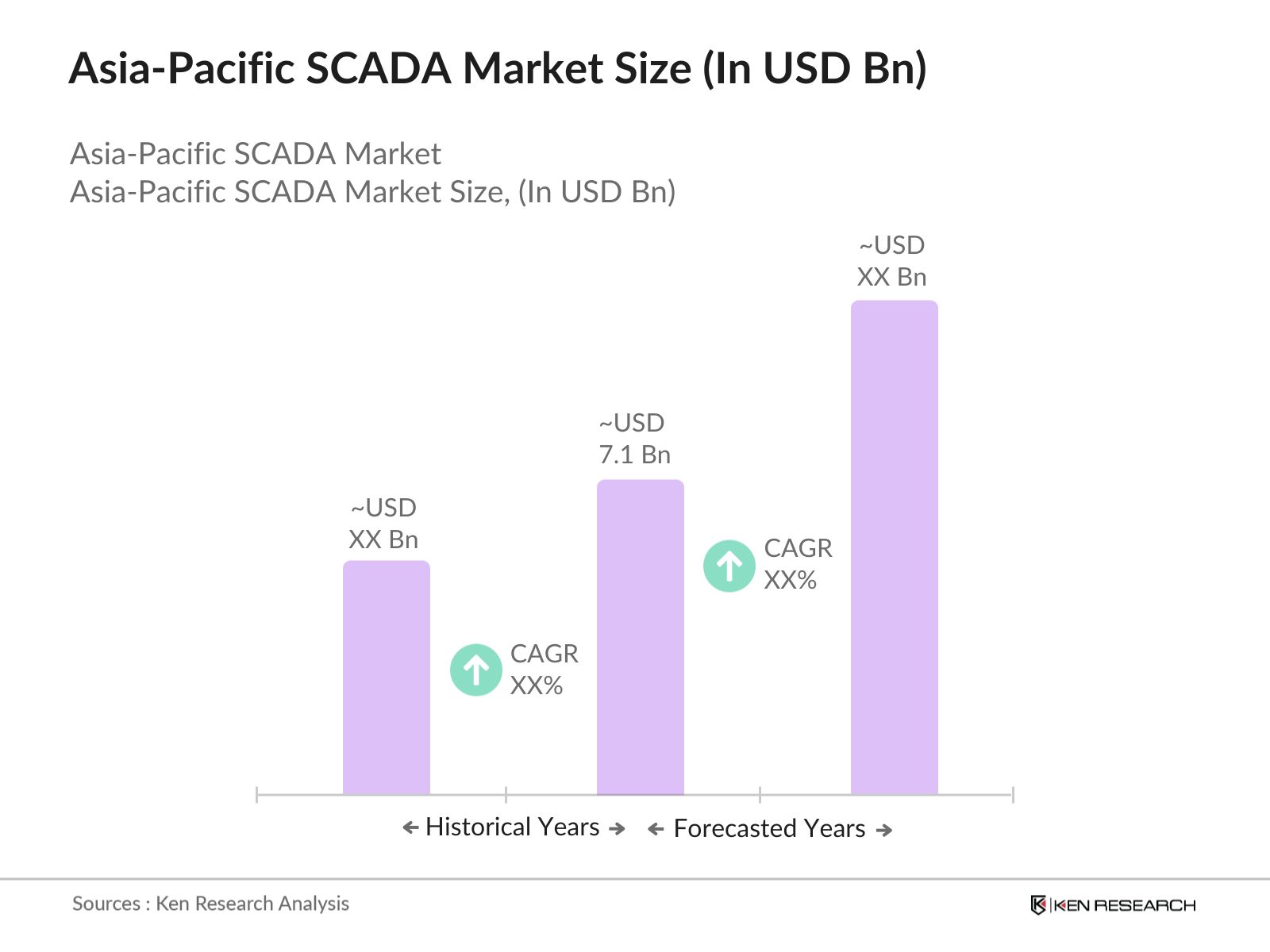
- In 2023, the Asia-Pacific (APAC) SCADA (Supervisory Control and Data Acquisition) market was valued at USD 7.1 Billion. The growth is driven by the increasing need for automated control systems, advancements in IoT and digital technologies, and growing industrialization in the region. SCADA systems are used for controlling and monitoring industrial processes such as manufacturing, power generation, and water treatment.
- Leading companies in the APAC SCADA market include Siemens AG, Schneider Electric, ABB Ltd., Honeywell International Inc., and Mitsubishi Electric Corporation. These companies are recognized for their advanced SCADA solutions and robust industrial automation technologies. Siemens AG is noted for its comprehensive SCADA systems and integration capabilities.
- In Asia- Pacific, Major cities such as Tokyo, Shanghai, and Sydney play crucial roles in the market. Tokyo's prominence is attributed to Japan's advanced technology infrastructure and high demand for automation solutions. Shanghais growth is driven by Chinas rapid industrialization and smart city initiatives. Sydney is notable due to Australias growing investments in smart infrastructure and industrial automation.
- In 2023, Siemens AG introduced its new SCADA platform, the Siemens WinCC Unified System, designed to enhance scalability, data visualization, and cloud integration. This new system aims to provide more efficient and flexible SCADA solutions for complex industrial processes.
Asia-Pacific SCADA Market Segmentation
The APAC SCADA market can be segmented by technology, end-user, and region:
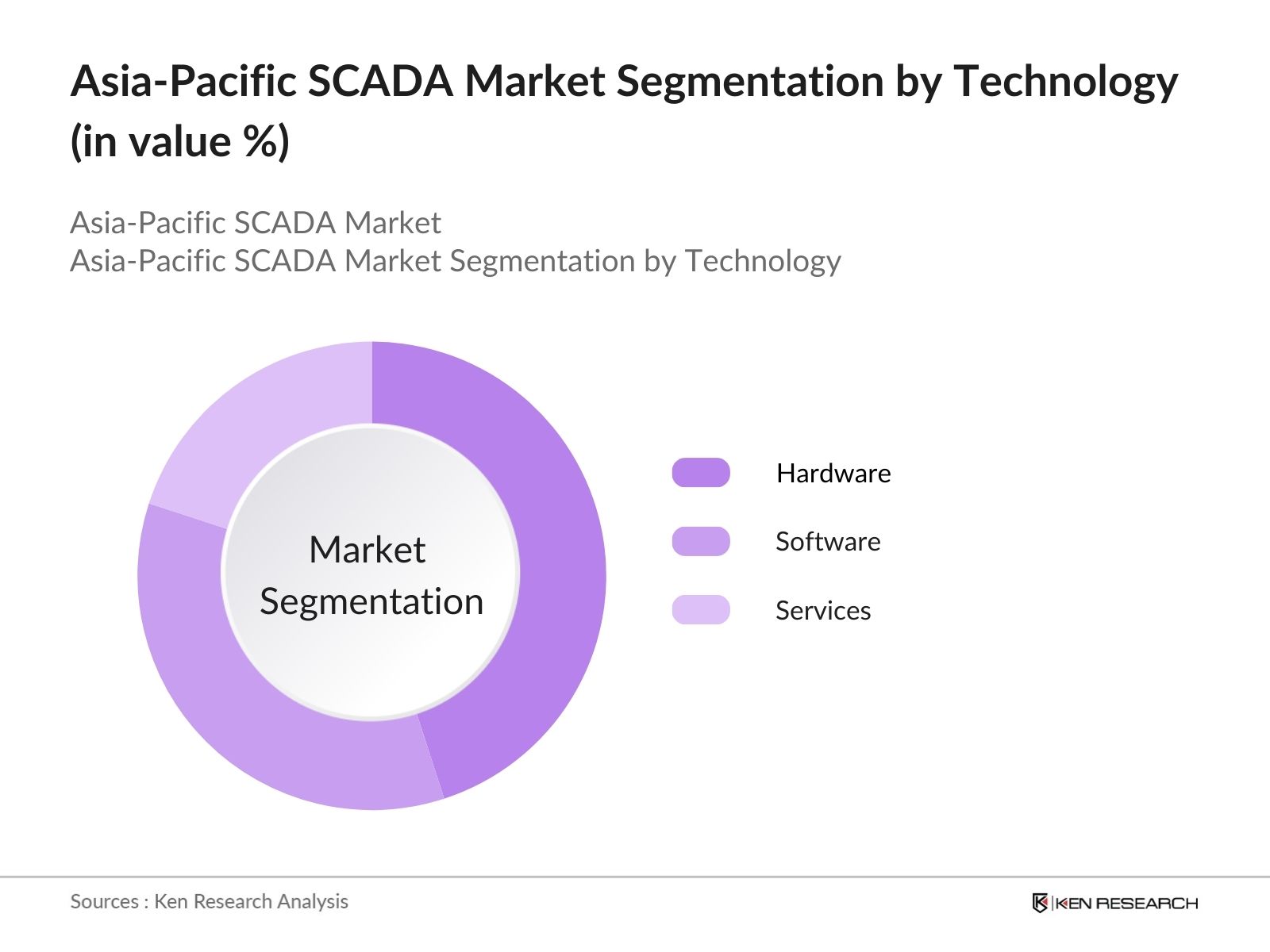
- By Technology: The market is segmented by technology type into hardware, software, and services. In 2023, SCADA software remains the most dominant segment due to its role in data acquisition, monitoring, and control. The integration of advanced analytics and IoT capabilities into SCADA software is driving its adoption.
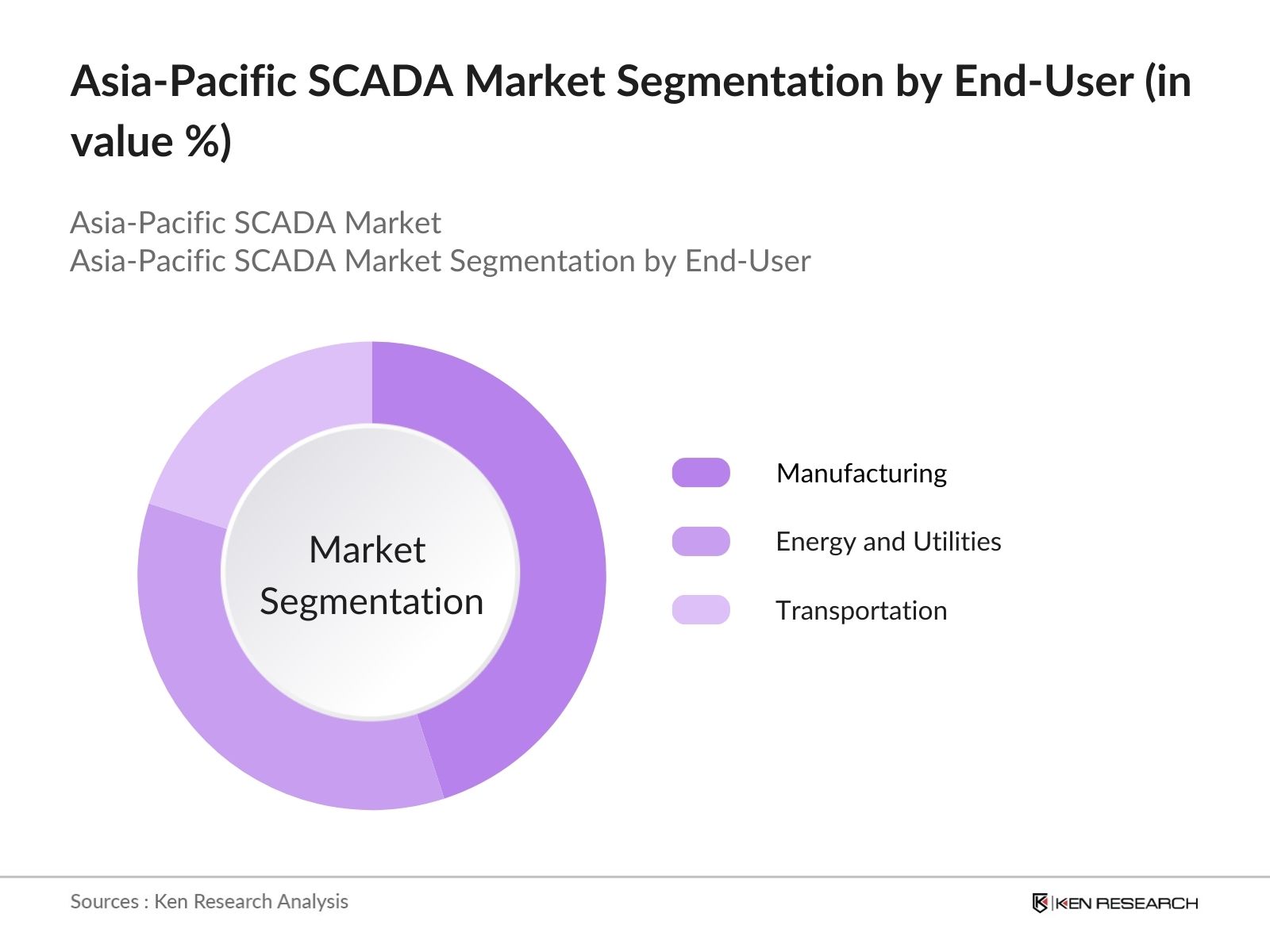
- By End-User: The market is segmented by end-user type into manufacturing, energy and utilities and transportation. In 2023, the manufacturing sector leads the market due to the increasing need for automation and real-time monitoring in production processes. The sector's drive towards smart manufacturing and Industry 4.0 initiatives is a key growth factor.
- By Region: The market is segmented regionally into China, India, Japan, and Australia. In 2023, China leads the Asia-Pacific SCADA market due to its large industrial base, rapid urbanization, and substantial investments in smart infrastructure. India's growing manufacturing sector and industrial automation projects contribute to its market share.
Asia-Pacific SCADA Market Competitive Landscape
|
Company |
Establishment Year |
Headquarters |
|
Siemens AG |
1847 |
Munich, Germany |
|
Schneider Electric |
1836 |
Rueil-Malmaison, France |
|
ABB Ltd. |
1988 |
Zurich, Switzerland |
|
Honeywell International Inc. |
1906 |
Charlotte, USA |
|
Mitsubishi Electric Corporation |
1921 |
Tokyo, Japan |
- Siemens AG: In 2024, Siemens AG launched its Siemens WinCC Unified System, a cutting-edge SCADA solution offering enhanced data visualization, cloud integration, and scalability. This launch represents Siemens' commitment to advancing SCADA technology and meeting the evolving needs of industrial automation.
- Schneider Electric: In 2024, Schneider Electric expanded its SCADA offerings with the introduction of EcoStruxure Control Expert. This new solution integrates advanced analytics and edge computing to provide more efficient and adaptive control for industrial processes.
Asia-Pacific SCADA Market Analysis
Growth Drivers:
- Increasing Industrial Automation: The growing demand for automated systems in manufacturing, energy, and utilities is driving the SCADA market. The adoption of Industry 4.0 technologies and the integration of IoT and AI into SCADA systems are contributing to market growth. Enhanced data analytics and real-time monitoring capabilities are key factors driving the adoption of SCADA systems.
- Technological Advancements: Advances in SCADA technologies, such as cloud-based solutions, advanced data analytics, and IoT integration, are boosting market growth. These innovations enable more efficient and flexible control of industrial processes, improving operational efficiency and decision-making.
- Rising Industrialization: Rapid industrialization in emerging economies, particularly in China and India, is driving the demand for SCADA systems. The expansion of infrastructure projects and the need for smart city solutions contribute to the growing adoption of SCADA technologies.
Market Challenges:
- High Initial Investment: The upfront cost of SCADA systems, including hardware, software, and implementation services, can be substantial. This includes the expense of purchasing specialized equipment, licensing software, and integrating the system with existing infrastructure. For smaller organizations and those with limited budgets, these costs can be prohibitive, restricting their ability to adopt and benefit from advanced SCADA technologies.
- Skills and Talent Shortage: The SCADA industry faces shortage of skilled professionals who have the expertise needed for designing, implementing, and maintaining complex SCADA systems. This shortage encompasses various roles, including system integrators, software developers, and cybersecurity experts. The lack of qualified personnel can lead to delays in project completion, suboptimal system performance, and difficulties in troubleshooting and managing SCADA systems effectively.
- Regulatory Compliance Challenges: Different countries within the Asia-Pacific region have diverse and often complex regulatory requirements for SCADA systems. These regulations can cover aspects such as data privacy, cybersecurity, and environmental standards. Ensuring compliance with these varying requirements can be a daunting task, requiring resources and expertise. Organizations may need to adapt their systems and processes to meet local regulations, which can lead to additional costs and operational delays.
- Interoperability Issues: SCADA systems from different vendors may suffer from interoperability challenges, making it difficult to integrate and communicate effectively across various platforms and technologies. This lack of seamless integration can lead to operational inefficiencies, data silos, and increased complexity in system management. Organizations may need to invest in additional middleware or custom solutions to bridge interoperability gaps, which can increase costs and extend project timelines.
Government Initiatives:
- Smart Cities Initiatives: Several Asia-Pacific countries are investing heavily in smart city projects which incorporate SCADA systems for improved urban management. For example, the Indian governments Smart Cities Mission aims to develop 100 smart cities by 2025, with investments in SCADA systems for traffic management, water supply, and energy management.
- Infrastructure Modernization Programs: Governments in the Asia-Pacific region are modernizing infrastructure to enhance operational efficiency. South Koreas "Green New Deal" initiative, with a budget of USD 144 billion, includes upgrading infrastructure with smart technologies, including SCADA systems, to enhance environmental sustainability and efficiency.
Asia-Pacific SCADA Future Market Outlook
The Asia-Pacific SCADA market is expected to experience substantial growth, driven by ongoing advancements in technology, increased industrial automation, and supportive government initiatives.
Future Market Trends:
- Advancement in SCADA Technologies: The integration of AI, machine learning, and advanced analytics into SCADA systems is anticipated to enhance their capabilities. These technologies will provide more predictive and adaptive control, improving operational efficiency and decision-making.
- Growth of Smart Cities: The expansion of smart city initiatives in the APAC region will drive the demand for SCADA systems. The need for intelligent infrastructure and advanced control systems in urban environments will contribute to market growth.
- Increased Investment in Infrastructure: Ongoing investments in industrial infrastructure and utilities will fuel the demand for SCADA systems. The focus on modernizing and upgrading infrastructure will drive the adoption of advanced SCADA solutions.
Scope of the Report
Market Scope
|
By Technology |
Hardware Software Services |
|
By End-User |
Manufacturing Energy and Utilities Transportation |
|
By System Type |
Hardware Software Services |
|
By Communication Protocol |
Modbus DNP3 OPC Profibus |
|
By Region |
North South East West |
Products
Key Target Audience:
Banks and Financial Institutions
Venture Capitalists
Government Agencies and Regulatory Bodies (BEE, MIIT, CEC, METI)
Industrial Automation Providers
Manufacturing Companies
Utility Providers
Technology Providers
System Integrators
Consulting Firms
Time Period Captured in the Report:
Historical Period: 2018-2023
Base Year: 2023
Forecast Period: 2023-2028
Companies
Players Mentioned in the Report:
Siemens AG
Schneider Electric
ABB Ltd.
Honeywell International Inc.
Mitsubishi Electric Corporation
Rockwell Automation
Yokogawa Electric Corporation
Emerson Electric Co.
Omron Corporation
General Electric
Invensys (now part of Schneider Electric)
Siemens Digital Industries
GE Digital
Advantech Co., Ltd.
Beckhoff Automation
Table of Contents
1. Asia-Pacific SCADA Market Overview
1.1. Definition and Scope
1.2. Market Taxonomy
1.3. Market Growth Rate
1.4. Market Segmentation Overview
2. Asia-Pacific SCADA Market Size (in USD Million), 2018-2023
2.1. Historical Market Size
2.2. Year-on-Year Growth Analysis
2.3. Key Market Developments and Milestones
3. Asia-Pacific SCADA Market Analysis
3.1. Growth Drivers
3.1.1. Increasing Industrial Automation
3.1.2. Technological Advancements
3.1.3. Rising Industrialization
3.1.4. Government Initiatives
3.2. Restraints
3.2.1. High Initial Investment
3.2.2. Skills and Talent Shortage
3.2.3. Regulatory Compliance Challenges
3.2.4. Interoperability Issues
3.3. Opportunities
3.3.1. Technological Advancements
3.3.2. Expansion into Emerging Markets
3.3.3. Increased Adoption in Smart Cities
3.3.4. Infrastructure Upgrades
3.4. Trends
3.4.1. Adoption of Cloud-Based Solutions
3.4.2. Integration with IoT and AI
3.4.3. Growth of Smart Cities Initiatives
3.4.4. Enhanced Data Analytics Capabilities
3.5. Government Initiatives
3.5.1. Smart Cities Initiatives
3.5.2. Infrastructure Modernization Programs
3.5.3. Investment in Sustainable Technologies
3.5.4. Public-Private Partnerships
3.6. SWOT Analysis
3.7. Stake Ecosystem
3.8. Competition Ecosystem
4. Asia-Pacific SCADA Market Segmentation, 2023
4.1. By Technology (in Value %)
4.1.1. Hardware
4.1.2. Software
4.1.3. Services
4.2. By End-User (in Value %)
4.2.1. Manufacturing
4.2.2. Energy and Utilities
4.2.3. Transportation
4.2.4. Others
4.3. By System Type (in Value %)
4.3.1. Hardware
4.3.2. Software
4.3.3. Services
4.4. By Communication Protocol (in Value %)
4.4.1. Modbus
4.4.2. DNP3
4.4.3. OPC
4.4.4. Profibus
4.5. By Region (in Value %)
4.5.1. North
4.5.2. South
4.5.3. East
4.5.4. West
5. Asia-Pacific SCADA Market Cross Comparison
5.1. Detailed Profiles of Major Companies
5.1.1. Siemens AG
5.1.2. Schneider Electric
5.1.3. ABB Ltd.
5.1.4. Honeywell International Inc.
5.1.5. Mitsubishi Electric Corporation
5.1.6. Rockwell Automation
5.1.7. Yokogawa Electric Corporation
5.1.8. Emerson Electric Co.
5.1.9. Omron Corporation
5.1.10. General Electric
5.1.11. Invensys (now part of Schneider Electric)
5.1.12. Siemens Digital Industries
5.1.13. GE Digital
5.1.14. Advantech Co., Ltd.
5.1.15. Beckhoff Automation
5.2. Cross Comparison Parameters (No. of Employees, Headquarters, Inception Year, Revenue)
6.Asia-Pacific SCADA Market Competitive Landscape
6.1. Market Share Analysis
6.2. Strategic Initiatives
6.3. Mergers and Acquisitions
6.4. Investment Analysis
6.4.1. Venture Capital Funding
6.4.2. Government Grants
6.4.3. Private Equity Investments
7.Asia-Pacific SCADA Market Regulatory Framework
7.1. Industry Standards and Guidelines
7.2. Compliance Requirements
7.3. Certification Processes
8.Asia-Pacific SCADA Market Future Outlook (in USD Million), 2023-2028
8.1. Future Market Size Projections
8.2. Key Factors Driving Future Market Growth
9.Asia-Pacific SCADA Market Future Segmentation, 2028
9.1. By Technology (in Value %)
9.2. By End-User (in Value %)
9.3. By System Type (in Value %)
9.4. By Communication Protocol (in Value %)
9.5. By Region (in Value %)
10.Asia-Pacific SCADA Market Analysts Recommendations
10.1. TAM/SAM/SOM Analysis
10.2. Customer Cohort Analysis
10.3. Marketing Initiatives
10.4. White Space Opportunity Analysis
Disclaimer Contact UsResearch Methodology
Step 1. Identifying Key Variables:
Creation of an ecosystem map for major entities and referencing multiple secondary and proprietary databases to perform desk research on the market and gather industry-level information.
Step 2. Market Building:
Compiling statistics on the Asia-Pacific SCADA market, including marketplace penetration and service provider ratios to compute revenue. Review service quality statistics to ensure accuracy of data.
Step 3. Validating and Finalizing:
Building market hypotheses and conducting CATIs with industry experts from various companies to validate statistics and obtain operational and financial data.
Step 4. Research Output:
Engaging with essential technology companies to understand product segments, sales, consumer preferences, and other parameters to validate statistics derived through a bottom-to-top approach.
Frequently Asked Questions
01. How big is the Asia-Pacific SCADA market?
In 2023, the Asia-Pacific (APAC) SCADA market was valued at USD 7.1 Billion. This growth is driven by increased industrial automation, advancements in IoT and digital technologies, and rising infrastructure development in the region.
02. What are the challenges in the Asia-Pacific SCADA market?
Challenges in Asia-Pacific SCADA market include integration issues with existing systems, cybersecurity risks, and varying regulatory standards across countries. These factors can impact implementation and security of SCADA systems.
03. Who are the major players in the Asia-Pacific SCADA market?
Key players in Asia-Pacific SCADA market include Siemens AG, Schneider Electric, ABB Ltd., Honeywell International Inc., and Mitsubishi Electric Corporation. These companies are leading due to their innovative SCADA solutions and market presence.
04. What are the growth drivers of the Asia-Pacific SCADA market?
Growth drivers in Asia-Pacific SCADA market include increasing industrial automation, advancements in SCADA technologies, and rising industrialization in emerging economies. Government initiatives supporting smart infrastructure also contribute to market growth.
Why Buy From Us?

What makes us stand out is that our consultants follows Robust, Refine and Result (RRR) methodology. i.e. Robust for clear definitions, approaches and sanity checking, Refine for differentiating respondents facts and opinions and Result for presenting data with story

We have set a benchmark in the industry by offering our clients with syndicated and customized market research reports featuring coverage of entire market as well as meticulous research and analyst insights.

While we don't replace traditional research, we flip the method upside down. Our dual approach of Top Bottom & Bottom Top ensures quality deliverable by not just verifying company fundamentals but also looking at the sector and macroeconomic factors.

With one step in the future, our research team constantly tries to show you the bigger picture. We help with some of the tough questions you may encounter along the way: How is the industry positioned? Best marketing channel? KPI's of competitors? By aligning every element, we help maximize success.

Our report gives you instant access to the answers and sources that other companies might choose to hide. We elaborate each steps of research methodology we have used and showcase you the sample size to earn your trust.

If you need any support, we are here! We pride ourselves on universe strength, data quality, and quick, friendly, and professional service.