















Asia Pacific Skincare Market Outlook to 2030
Region:Asia
Author(s):Meenakshi Bisht
Product Code:KROD7399
November 2024
84
About the Report
Asia Pacific Skincare Market Overview
- The Asia Pacific Skincare Market is valued at USD 91.4 billion based on a five-year historical analysis. The market is primarily driven by growing consumer awareness regarding skin health, increasing demand for anti-aging products, and the rising influence of beauty trends promoted by digital media. Additionally, the demand for natural and organic skincare products is gaining momentum, with companies investing in sustainable ingredient sourcing to appeal to environmentally conscious consumers.
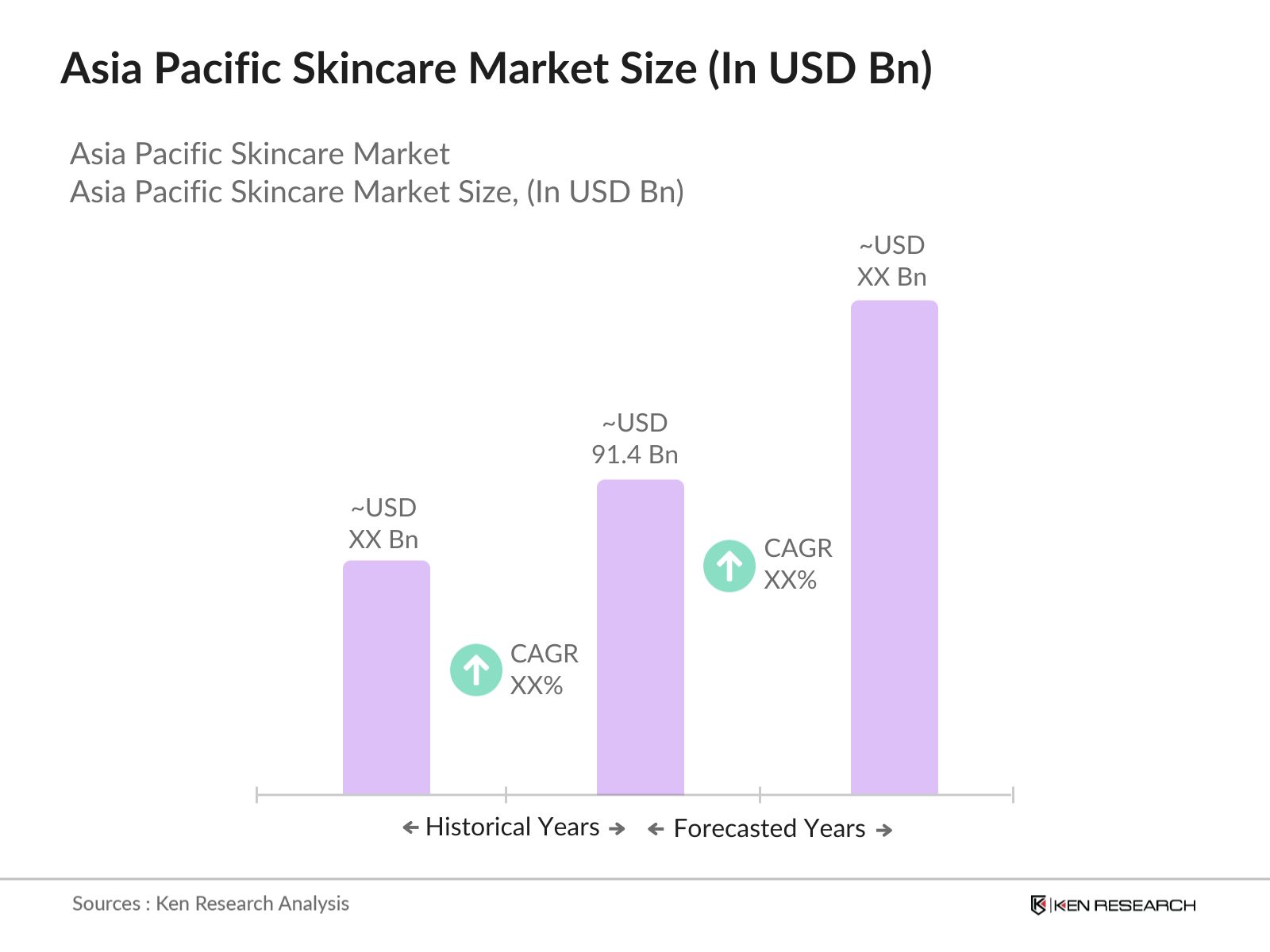
- The market is dominated by countries like China, Japan, and South Korea, primarily due to the region's cultural emphasis on skincare routines and innovative beauty products. South Koreas dominance is driven by the rise of the K-beauty trend, which has a significant influence worldwide. China leads the market due to its large consumer base and increasing demand for premium skincare products, while Japan is known for its innovation in beauty technology and high consumer preference for quality skincare solutions.
- In 2023, Japan indeed implemented stricter guidelines regarding skincare product testing and safety, reflecting a significant regulatory shift aimed at enhancing consumer protection. The Ministry of Health, Labour and Welfare (MHLW) oversees these regulations under the Pharmaceutical and Medical Devices Law (PMDL), which governs the approval process for cosmetics and quasi-drugs in Japan.
Asia Pacific Skincare Market Segmentation
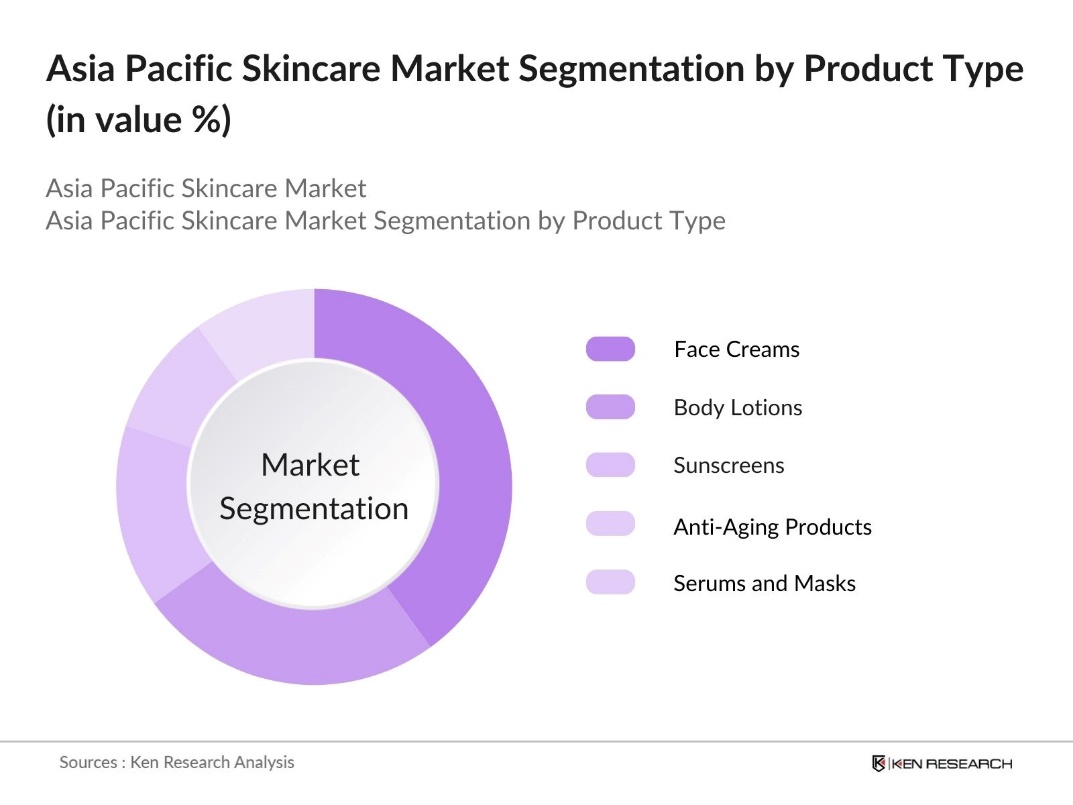
By Product Type: The Asia Pacific skincare market is segmented by product type into face creams, body lotions, sunscreens, anti-aging products, and serums and masks. The face creams have taken the dominant market share in the region due to their frequent use in daily skincare routines. Face creams, especially those designed for hydration, whitening, and anti-aging, are in high demand among consumers. The cultural importance of fair and healthy skin in countries like South Korea and China, along with the influence of celebrity endorsements, contributes to the dominance of this segment.
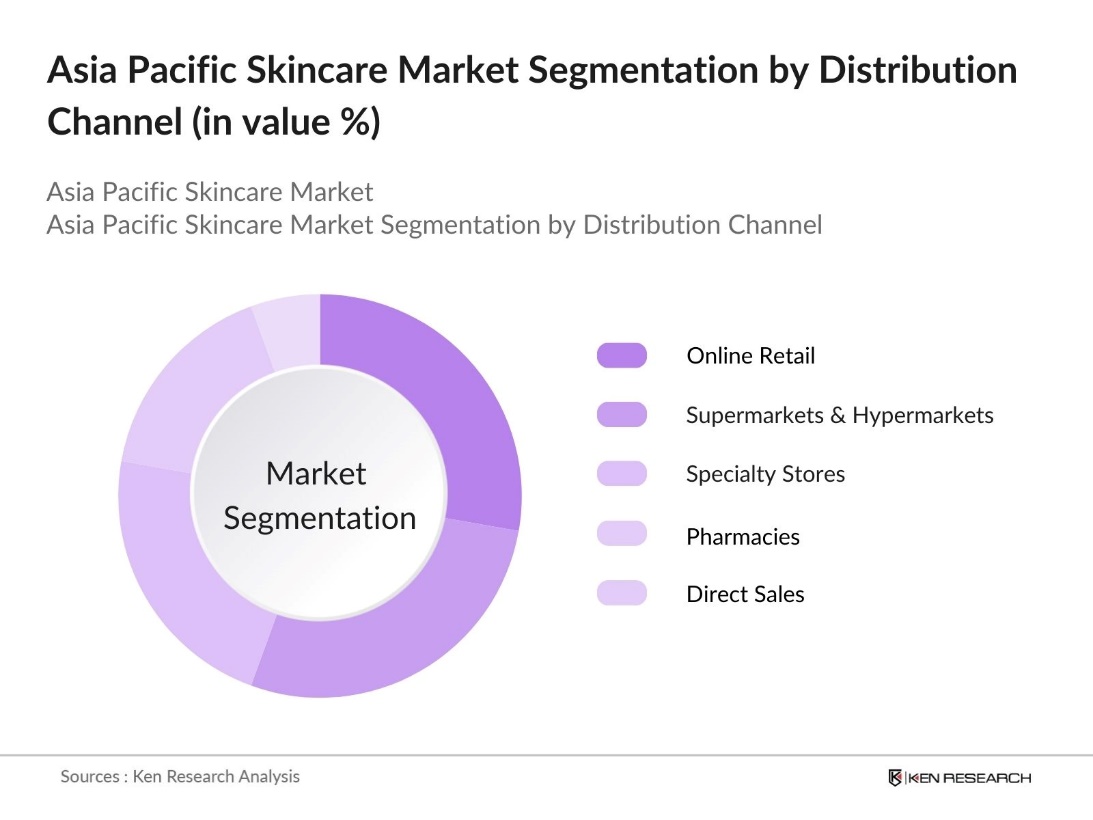
By Distribution Channel: The Asia Pacific skincare market is further segmented by distribution channels into online retail, supermarkets & hypermarkets, specialty stores, pharmacies, and direct sales. Online retail leads in market share, driven by the convenience of e-commerce platforms and the increasing number of online shoppers. The rise of digital influencers and social media platforms like Instagram and YouTube has contributed to the popularity of online retail channels, where consumers can purchase products after watching reviews or tutorials.
Asia Pacific Skincare Market Competitive Landscape
The Asia Pacific skincare market is characterized by a combination of global and regional players. The market is dominated by leading global brands like LOral, Shiseido, and Este Lauder, as well as emerging regional players, particularly from South Korea and China. The markets consolidation around these key players highlights their ability to innovate, maintain extensive distribution networks, and capitalize on strong brand loyalty.
|
Company Name |
Establishment Year |
Headquarters |
Revenue |
R&D Investments |
Product Portfolio |
Brand Presence |
Distribution Channels |
Market Penetration |
|
LOral Group |
1909 |
Paris, France |
||||||
|
Shiseido Company, Limited |
1872 |
Tokyo, Japan |
||||||
|
Este Lauder Companies Inc. |
1946 |
New York, USA |
||||||
|
Amorepacific Corporation |
1945 |
Seoul, South Korea |
||||||
|
Johnson & Johnson |
1886 |
New Brunswick, USA |
Asia Pacific Skincare Industry Analysis
Growth Drivers
- Increasing Demand for Natural and Organic Products: The Asia Pacific region has seen a marked rise in demand for natural and organic skincare products, driven by consumer awareness of harmful synthetic ingredients. In 2023, the skincare consumers in key markets like Japan, South Korea, and Australia preferred natural ingredients over chemical-based products. Countries like India and China have seen growth in natural product certifications, as evidenced by a 20% increase in certified organic skincare brands in 2022. Urban areas, where disposable incomes are higher, account for a majority of this demand, supported by sustainable product policies.
- Rapid Urbanization and Changing Lifestyles: The urban areas are projected to encompass over 50% of the population in Asia and Africa by 2030. The shift towards urban living is driving demand for premium skincare products that cater to busy lifestyles, such as on-the-go solutions and multi-functional products. The working-age population in urban areas has a higher propensity for disposable income spending on personal care, increase in the skincare market within these regions.
- Rising Awareness of Skincare and Anti-Aging Solutions: The growing aging population in Asia Pacific, particularly in countries like Japan and China, is driving significant demand for anti-aging skincare products. As more individuals seek solutions for wrinkles, fine lines, and other signs of aging, the market is witnessing a surge in the availability of advanced skincare solutions. This trend is supported by an increased focus on skincare routines, which has been amplified by substantial investments in advertising campaigns across the region, promoting the benefits of skincare and anti-aging products to a broader audience.
Market Challenges
- High Costs of Premium Products: The premium skincare market faces significant challenges related to affordability, especially in emerging economies across the Asia Pacific region. While premium products tend to be more popular in wealthier markets like Japan and Australia, consumers in lower-income countries often find these products difficult to access. The disparity in income levels across the region highlights the gap in spending power, making premium skincare less accessible to a wider audience in these areas, which limits the growth potential of this segment.
- Regulatory Restrictions and Compliance Issues: Strict regulations on skincare products, particularly in countries like Japan, China, and South Korea, pose challenges for manufacturers. These regulations often involve complex compliance requirements, especially regarding ingredient usage, testing protocols, and safety standards. The need to navigate different regulatory frameworks across markets can lead to increased costs and delays for brands. This regulatory landscape can also be a barrier to entry for new players, limiting the number of products and companies able to successfully compete in the region.
Asia Pacific Skincare Market Future Outlook
Over the next few years, the Asia Pacific skincare market is expected to witness significant growth, driven by rising consumer demand for premium and natural skincare products. Factors such as growing disposable incomes, expanding e-commerce platforms, and increasing awareness of skin health will continue to push the market forward. Additionally, technological advancements in skincare, such as personalized skincare solutions and AI-driven beauty tools, will play a key role in shaping the future of the industry.
Market Opportunities
- Growth in E-commerce and Online Retailing: E-commerce has provided new opportunities for skincare brands across the Asia Pacific region. The rise of online platforms has allowed brands to reach a broader audience, especially smaller and niche players. Online retailing offers convenience for urban consumers with busy lifestyles, allowing them to shop for skincare products without visiting physical stores, further driving the growth of the skincare market.
- Expansion into Emerging Markets: Emerging markets like Vietnam, Thailand, and Indonesia offer substantial growth opportunities for skincare brands. These countries are seeing increased demand for affordable skincare products due to urbanization and a rising middle class. As consumer spending on skincare grows in these regions, they become attractive markets for international brands looking to expand their presence.
Scope of the Report
|
Product Type |
Face Creams Body Lotions Sunscreens Anti-Aging Products Serums and Masks |
|
Distribution Channel |
Online Retail Supermarkets & Hypermarkets Specialty Stores Pharmacies Direct Sales |
|
End User |
Women Men Children |
|
Ingredient Type |
Natural/Organic Synthetic |
|
Region |
China Japan South Korea India Australia |
Products
Key Target Audience
Skincare Manufacturers
E-commerce Platforms
Technology Companies
Sustainable Packaging Companies
Government and Regulatory Bodies (FDA, Ministry of Health)
Investors and venture capital Firms
Banks and Financial Institutions
Companies
Players Mentioned in the Report
LOral Group
Shiseido Company, Limited
Este Lauder Companies Inc.
Amorepacific Corporation
Johnson & Johnson
Procter & Gamble Co.
Kao Corporation
Unilever PLC
The Himalaya Drug Company
LG Household & Health Care
Table of Contents
1. Asia Pacific Skincare Market Overview
1.1. Definition and Scope
1.2. Market Taxonomy
1.3. Market Growth Rate
1.4. Market Segmentation Overview
2. Asia Pacific Skincare Market Size (In USD Bn)
2.1. Historical Market Size
2.2. Year-On-Year Growth Analysis
2.3. Key Market Developments and Milestones
3. Asia Pacific Skincare Market Analysis
3.1. Growth Drivers
3.1.1. Increasing Demand for Natural and Organic Products
3.1.2. Rising Awareness of Skincare and Anti-Aging Solutions
3.1.3. Government Initiatives Promoting Sustainable Products
3.1.4. Rapid Urbanization and Changing Lifestyles
3.2. Market Challenges
3.2.1. High Costs of Premium Products
3.2.2. Regulatory Restrictions and Compliance Issues
3.2.3. Competition from Unregulated Products
3.3. Opportunities
3.3.1. Growth in E-commerce and Online Retailing
3.3.2. Expansion into Emerging Markets
3.3.3. Introduction of Innovative Skincare Solutions
3.4. Trends
3.4.1. Shift Toward Vegan and Cruelty-Free Skincare
3.4.2. Technological Advancements in Skincare Devices
3.4.3. Adoption of Personalization in Skincare
3.5. Government Regulations
3.5.1. Skincare Product Safety and Standards Regulations
3.5.2. Labeling and Ingredient Transparency Requirements
3.5.3. Restrictions on Chemical Ingredients
3.6. SWOT Analysis
3.7. Stakeholder Ecosystem
3.8. Porters Five Forces
3.9. Competition Ecosystem
4. Asia Pacific Skincare Market Segmentation
4.1. By Product Type (In Value %)
4.1.1. Face Creams
4.1.2. Body Lotions
4.1.3. Sunscreens
4.1.4. Anti-Aging Products
4.1.5. Serums and Masks
4.2. By Distribution Channel (In Value %)
4.2.1. Online Retail
4.2.2. Supermarkets & Hypermarkets
4.2.3. Specialty Stores
4.2.4. Pharmacies
4.2.5. Direct Sales
4.3. By End User (In Value %)
4.3.1. Women
4.3.2. Men
4.3.3. Children
4.4. By Ingredient Type (In Value %)
4.4.1. Natural/Organic
4.4.2. Synthetic
4.5. By Region (In Value %)
4.5.1. China
4.5.2. Japan
4.5.3. South Korea
4.5.4. India
4.5.5. Australia
5. Asia Pacific Skincare Market Competitive Analysis
5.1 Detailed Profiles of Major Companies
5.1.1. L'Oral Group
5.1.2. Shiseido Company, Limited
5.1.3. Este Lauder Companies Inc.
5.1.4. Procter & Gamble Co.
5.1.5. Amorepacific Corporation
5.1.6. Beiersdorf AG
5.1.7. Johnson & Johnson
5.1.8. Kao Corporation
5.1.9. Unilever PLC
5.1.10. The Himalaya Drug Company
5.1.11. LG Household & Health Care
5.1.12. Coty Inc.
5.1.13. Avon Products, Inc.
5.1.14. Natura & Co
5.1.15. Revlon, Inc.
5.2 Cross Comparison Parameters (Product Portfolio, Market Share, Revenue, Research and Development Capabilities)
5.3. Market Share Analysis
5.4. Strategic Initiatives
5.5. Mergers And Acquisitions
5.6. Investment Analysis
5.7. Venture Capital Funding
5.8. Government Grants
5.9. Private Equity Investments
6. Asia Pacific Skincare Market Regulatory Framework
6.1. Product Safety Regulations
6.2. Compliance with Ingredient Labeling
6.3. Certification Processes
7. Asia Pacific Skincare Future Market Size (In USD Bn)
7.1. Future Market Size Projections
7.2. Key Factors Driving Future Market Growth
8. Asia Pacific Skincare Future Market Segmentation
8.1. By Product Type (In Value %)
8.2. By Distribution Channel (In Value %)
8.3. By End User (In Value %)
8.4. By Ingredient Type (In Value %)
8.5. By Region (In Value %)
9. Asia Pacific Skincare Market Analysts Recommendations
9.1. TAM/SAM/SOM Analysis
9.2. Customer Cohort Analysis
9.3. Marketing Initiatives
9.4. White Space Opportunity Analysis
Disclaimer Contact UsResearch Methodology
Step 1: Identification of Key Variables
The initial phase involved constructing an ecosystem map of major stakeholders in the Asia Pacific skincare market. Extensive desk research utilizing secondary and proprietary databases provided comprehensive industry-level information. The primary goal was to define the key variables influencing market dynamics, including consumer behavior, regulatory changes, and technological advancements.
Step 2: Market Analysis and Construction
Historical data on market penetration, product sales, and consumer preferences were compiled and analyzed to build the market model. Key metrics, including the ratio of premium to mass-market products, and revenue generation, were evaluated to ensure accuracy. This phase also included an analysis of emerging trends such as sustainable and organic skincare.
Step 3: Hypothesis Validation and Expert Consultation
The hypotheses developed in earlier stages were validated through interviews with industry experts, including key players in the skincare market. These consultations provided valuable operational and financial insights directly from industry practitioners, which helped refine and corroborate the collected data.
Step 4: Research Synthesis and Final Output
The final phase involved synthesizing the gathered information to form a comprehensive market report. This included verifying the accuracy of the data and aligning it with industry trends and consumer insights. The final report provides a holistic view of the Asia Pacific skincare market, including actionable recommendations for stakeholders.
Frequently Asked Questions
01. How big is the Asia Pacific Skincare Market?
The Asia Pacific Skincare Market is valued at USD 91.4 billion, driven by consumer awareness about skin health and increasing demand for premium skincare products.
02. What are the challenges in the Asia Pacific Skincare Market?
Challenges in Asia Pacific Skincare Market include high competition among global brands, regulatory hurdles related to product safety, and the rising cost of premium ingredients, which can affect the profitability of key players.
03. Who are the major players in the Asia Pacific Skincare Market?
Major players in the Asia Pacific Skincare Market include LOral, Shiseido, Este Lauder, Amorepacific, and Johnson & Johnson, which dominate due to their extensive product portfolios and strong brand presence.
04. What are the growth drivers of the Asia Pacific Skincare Market?
The Asia Pacific Skincare Market is driven by rising consumer demand for natural and organic products, advancements in skincare technology, and growing awareness of skincare routines, particularly in countries like South Korea and China.
Why Buy From Us?

What makes us stand out is that our consultants follows Robust, Refine and Result (RRR) methodology. i.e. Robust for clear definitions, approaches and sanity checking, Refine for differentiating respondents facts and opinions and Result for presenting data with story

We have set a benchmark in the industry by offering our clients with syndicated and customized market research reports featuring coverage of entire market as well as meticulous research and analyst insights.

While we don't replace traditional research, we flip the method upside down. Our dual approach of Top Bottom & Bottom Top ensures quality deliverable by not just verifying company fundamentals but also looking at the sector and macroeconomic factors.

With one step in the future, our research team constantly tries to show you the bigger picture. We help with some of the tough questions you may encounter along the way: How is the industry positioned? Best marketing channel? KPI's of competitors? By aligning every element, we help maximize success.

Our report gives you instant access to the answers and sources that other companies might choose to hide. We elaborate each steps of research methodology we have used and showcase you the sample size to earn your trust.

If you need any support, we are here! We pride ourselves on universe strength, data quality, and quick, friendly, and professional service.