















Asia-Pacific Virtual Fitting Room Market Outlook to 2030
Region:Asia
Author(s):Naman Rohilla
Product Code:KROD2027
November 2024
82
About the Report
Asia-Pacific Virtual Fitting Market Overview
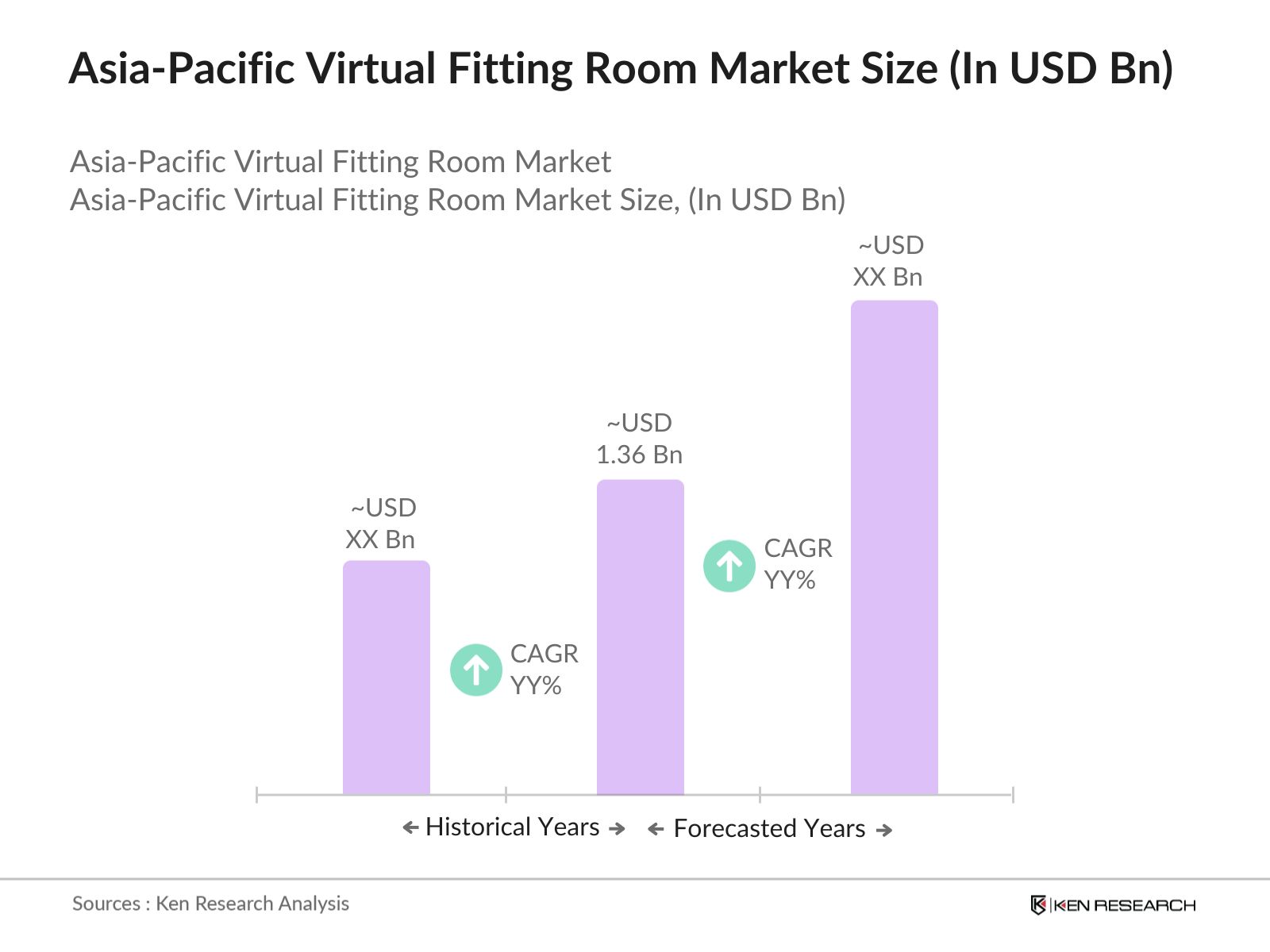
- The Asia-Pacific Virtual Fitting Room (VFR) market has witnessed substantial growth over recent years, with the market valued at USD 1.36 billion. This growth is driven by the increasing adoption of AR/VR technologies in e-commerce, particularly in fashion and apparel, where the demand for personalized and immersive shopping experiences has surged. The rise of digital shopping and growing consumer expectations for personalized fittings has catalyzed the expansion of virtual fitting rooms, making them a critical tool for retailers.
- China and Japan dominate the Asia-Pacific VFR market due to their strong technological infrastructure and high consumer adoption rates of advanced shopping solutions. Both countries are leading in e-commerce penetration, with major retail giants adopting virtual fitting rooms as part of their strategy to enhance customer engagement and reduce return rates. Additionally, government support for digital innovations in these nations has fostered a conducive environment for the rapid growth of the VFR market.
- As of 2023, stringent data protection laws such as the General Data Protection Regulation (GDPR) in Europe and the California Consumer Privacy Act (CCPA) in the US have set a global precedent for data security. In Asia-Pacific, countries like Singapore and Japan have implemented similar regulations to protect consumer data, particularly in the retail sector.
Asia-Pacific Virtual Fitting Market Segmentation
The Asia-Pacific Virtual Fitting Room Market is segmented by technology, end-use industry, platform type, retailer type, and geographical region.
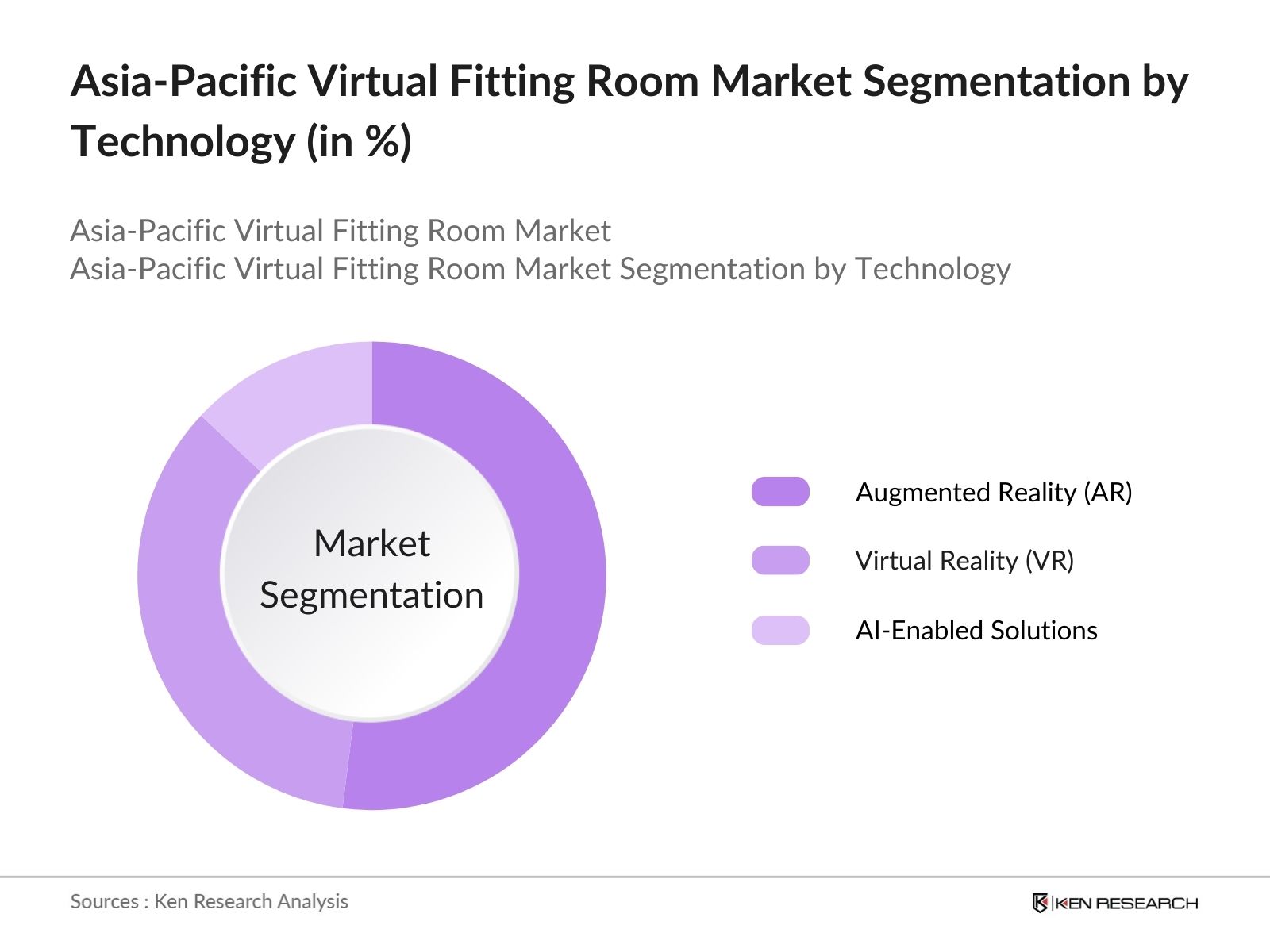
By Technology: The Asia-Pacific Virtual Fitting Room market is segmented by technology into Augmented Reality (AR), Virtual Reality (VR), and AI-enabled solutions. Among these, Augmented Reality (AR) solutions have the largest market share, capturing 52% in 2023. AR has gained prominence due to its ability to integrate seamlessly with mobile devices and e-commerce platforms, offering consumers a more interactive and real-time experience. AR's lower hardware requirements compared to VR also contribute to its broader adoption by retailers and customers alike.
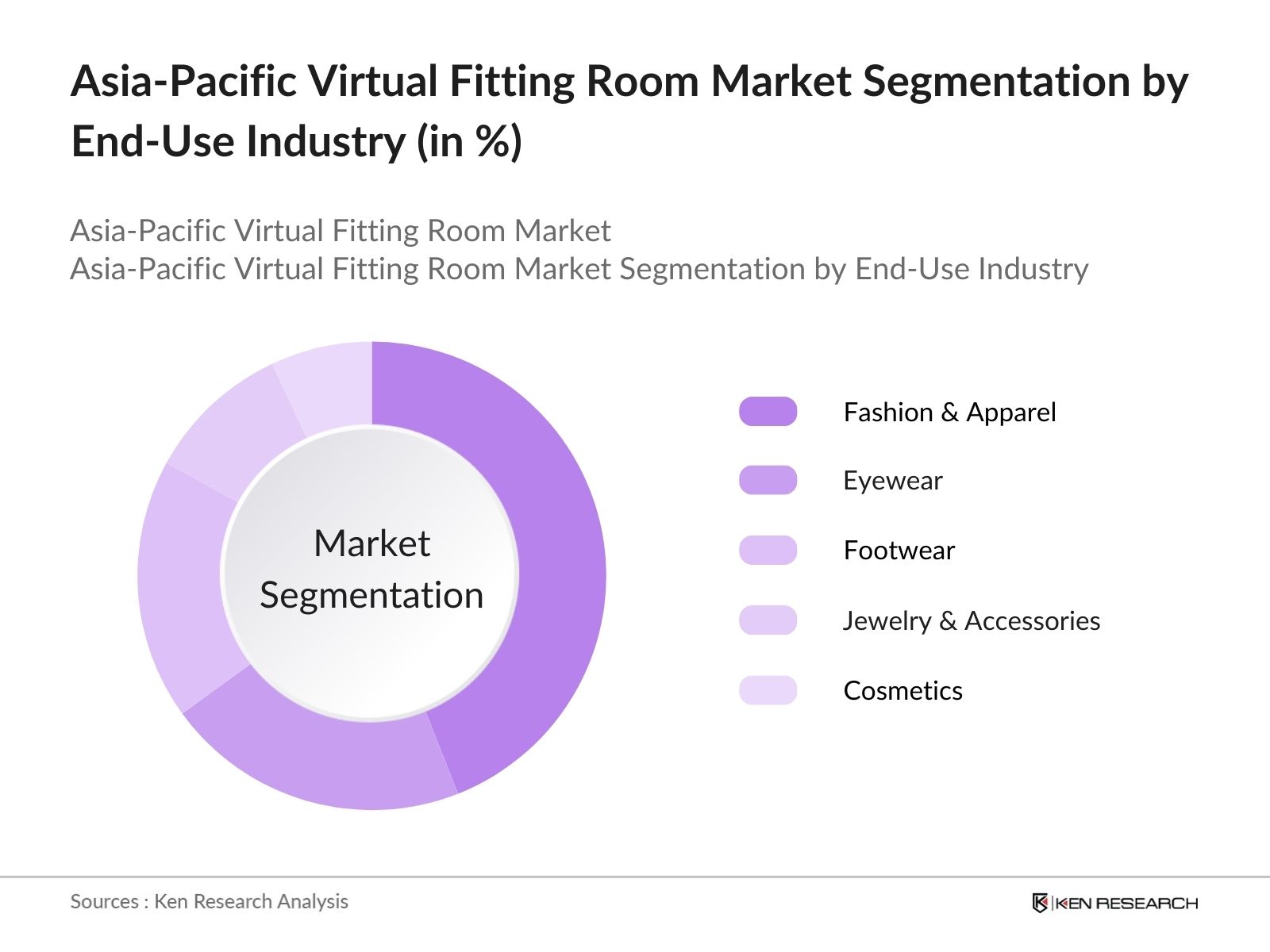
By End-Use Industry: The VFR market is also segmented by end-use industry into Fashion & Apparel, Eyewear, Footwear, Jewelry & Accessories, and Cosmetics. Fashion & Apparel dominates this segment, accounting for 44% of the market share in 2023. The adoption of virtual fitting rooms in the fashion industry is driven by the need to reduce product returns and offer customers a personalized shopping experience. With major retailers integrating VFR into their e-commerce platforms, this segment is expected to continue leading the market.
Asia-Pacific Virtual Fitting Market Competitive Landscape
The Asia-Pacific Virtual Fitting Room market is led by a few key players that dominate through their advanced technologies and strategic partnerships with retailers. The competitive landscape is characterized by the presence of both regional innovators and global technology providers. The market is dominated by companies such as Metail, which has revolutionized the VFR space with its AI-based fitting algorithms, and Zugara, known for its pioneering AR solutions. Additionally, regional companies like Visualook and TrueFit have cemented their positions through localized strategies and tailored offerings to meet the diverse needs of Asia-Pacific consumers.
|
Company Name |
Establishment Year |
Headquarters |
Market Share (%) |
Technology Focus |
Revenue (2023) |
Key Clients |
Geographical Reach |
Innovation Index |
|
Metail |
2008 |
London, UK |
- |
- |
- |
- |
- |
- |
|
Zugara |
2009 |
Los Angeles, USA |
- |
- |
- |
- |
- |
- |
|
3DLOOK |
2016 |
Palo Alto, USA |
- |
- |
- |
- |
- |
- |
|
TrueFit |
2010 |
Boston, USA |
- |
- |
- |
- |
- |
- |
|
Visualook |
2015 |
Tokyo, Japan |
- |
- |
- |
- |
- |
- |
Asia-Pacific Virtual Fitting Market Analysis
Asia-Pacific Virtual Fitting Market Growth Drivers:
- Rising E-commerce Penetration: The Asia-Pacific region has seen a substantial increase in e-commerce penetration, with over 60% of the population engaging in online shopping in 2023. Countries like China, India, and Japan have witnessed substantial e-commerce growth, contributing over USD 3.9 trillion to global e-commerce sales in 2022. The rise of digital retail platforms has created an opportunity for virtual fitting rooms to thrive, as consumers seek interactive solutions to enhance their online shopping experiences, especially in the fashion and apparel sectors. This trend is likely to grow as mobile and internet connectivity continues to expand across the region.
- Increasing Demand for Personalized Shopping Experiences: In 2023, over 70% of consumers in the Asia-Pacific region reported that personalization influences their purchasing decisions. Virtual fitting rooms cater to this demand by offering tailored experiences that allow users to visualize products in real time. Major retailers such as Japans Zozo and China's Alibaba have heavily invested in personalization technologies, offering customized virtual try-ons. This personalization trend aligns with the growing middle class and increased disposable income in the region, driving further adoption of advanced shopping technologies in fashion retail.
- High Adoption Among Fashion and Apparel Retailers: As of 2023, more than 40% of fashion and apparel retailers in Asia-Pacific have incorporated virtual fitting rooms into their online platforms. In countries like South Korea and Japan, leading fashion brands such as Uniqlo and Lotte are utilizing these technologies to boost customer engagement. The growing competition in e-commerce, particularly in fast fashion, has led to the widespread adoption of virtual try-on solutions to differentiate brands and improve conversion rates, enhancing customer satisfaction and reducing product returns.
Asia-Pacific Virtual Fitting Market Challenges:
- High Implementation Costs: Implementing virtual fitting room solutions requires substantial investment, particularly in the integration of AR/VR technology. In 2023, the average cost for deploying virtual fitting rooms in retail was estimated at around USD 1 million per store across major markets like China, Japan, and South Korea. This creates a barrier for small and medium-sized retailers, who may lack the capital to invest in such advanced systems, thus limiting the widespread adoption of these solutions across the Asia-Pacific region.
- Consumer Privacy and Data Security Concerns: Privacy remains a major concern for consumers using virtual fitting rooms, as the technology often requires the collection of personal data such as body measurements and preferences. In 2023, data security breaches in retail increased by 25% in Asia-Pacific, prompting concerns over the protection of sensitive consumer information. Governments in countries like Singapore and Australia have implemented stringent data protection laws, including the Personal Data Protection Act (PDPA) and the Privacy Act 1988, respectively, to mitigate risks, but concerns still linger, particularly among younger, tech-savvy consumers.
Asia-Pacific Virtual Fitting Future Market Outlook
Over the next five years, the Asia-Pacific Virtual Fitting Room market is expected to experience robust growth driven by advancements in AR/VR technology, increased consumer demand for personalized shopping experiences, and widespread adoption by fashion retailers. As more consumers shift towards online shopping, virtual fitting rooms will become integral to reducing return rates and improving customer satisfaction. Furthermore, the integration of AI and machine learning to enhance fitting accuracy will further bolster the markets expansion.
Asia-Pacific Virtual Fitting Market Opportunities:
- Growth in Mobile Virtual Fitting Room Applications: As mobile internet penetration in Asia-Pacific surpassed 70% in 2023, the demand for mobile-friendly virtual fitting room applications has skyrocketed. In markets like India and Indonesia, mobile commerce now accounts for more than half of total online sales, prompting retailers to develop mobile-optimized virtual try-on solutions. These applications cater to the growing population of mobile shoppers, particularly in emerging economies, where smartphone usage is increasing at an unprecedented rate, driven by affordable data plans and government efforts to improve digital infrastructure.
- Integration of AI and Machine Learning for Enhanced Fitting Accuracy: Artificial intelligence and machine learning technologies are playing an increasingly vital role in enhancing the accuracy of virtual fitting rooms. In 2023, investments in AI for retail applications in the Asia-Pacific region exceeded USD 12 billion, according to the World Bank. Retailers are leveraging AI algorithms to provide more accurate size recommendations and product visualizations, reducing the likelihood of returns and increasing customer satisfaction. This technology is particularly beneficial in markets like China, where the fashion industry is rapidly evolving, and accurate personalization is crucial for retaining customers.
Scope of the Report
|
By Technology |
Augmented Reality (AR) Virtual Reality (VR) AI-Enabled Solutions |
|
By End-Use Industry |
Fashion & Apparel Eyewear Footwear Jewelry & Accessories Cosmetics |
|
By Platform Type |
Mobile Applications Web-Based Platforms In-store Kiosks |
|
By Retailer Type |
E-commerce Retailers Brick-and-Mortar Retailers Omni-channel Retailers |
|
By Region |
China India Japan Australia Rest of APAC |
Products
Key Target Audience Organizations and Entities Who Can Benefit by Subscribing This Report:
Government and Regulatory Bodies
Banks and Financial Institutes
Investors and Venture Capitalists
Fashion and Apparel Companies
AR/VR Technology Providing Companies
E-commerce Companies
AI Solution Providing Companies
Footwear and Eyewear Companies
Digital Transformation Consulting Firms
Table of Contents
1. Asia-Pacific Virtual Fitting Room Market Overview
1.1. Definition and Scope
1.2. Market Taxonomy
1.3. Market Growth Rate
1.4. Market Segmentation Overview
2. Asia-Pacific Virtual Fitting Room Market Size (In USD Bn)
2.1. Historical Market Size
2.2. Year-On-Year Growth Analysis
2.3. Key Market Developments and Milestones
3. Asia-Pacific Virtual Fitting Room Market Analysis
3.1. Growth Drivers
3.1.1. Technological Advancements in AR/VR Integration
3.1.2. Rising E-commerce Penetration
3.1.3. Increasing Demand for Personalized Shopping Experiences
3.1.4. High Adoption Among Fashion and Apparel Retailers
3.2. Market Challenges
3.2.1. High Implementation Costs
3.2.2. Consumer Privacy and Data Security Concerns
3.2.3. Compatibility Issues with Retailer Platforms
3.3. Opportunities
3.3.1. Growth in Mobile Virtual Fitting Room Applications
3.3.2. Integration of AI and Machine Learning for Enhanced Fitting Accuracy
3.3.3. Expansion into New Consumer Segments
3.4. Trends
3.4.1. Increasing Use of AI for Predictive Analytics
3.4.2. Rise of Omni-channel Virtual Shopping Experiences
3.4.3. Collaboration with Influencers for Virtual Try-ons
3.5. Government Regulation
3.5.1. Data Protection Laws (GDPR, CCPA)
3.5.2. E-commerce and Retail Regulation
3.5.3. Guidelines on Augmented Reality Advertising
3.6. SWOT Analysis
3.7. Stake Ecosystem
3.7.1. Retailers
3.7.2. AR/VR Solution Providers
3.7.3. E-commerce Platforms
3.7.4. Consumer Experience Designers
3.8. Porters Five Forces
3.9. Competition Ecosystem
4. Asia-Pacific Virtual Fitting Room Market Segmentation
4.1. By Technology (In Value %)
4.1.1. Augmented Reality (AR)
4.1.2. Virtual Reality (VR)
4.1.3. Artificial Intelligence (AI) Enabled Solutions
4.2. By End-Use Industry (In Value %)
4.2.1. Fashion & Apparel
4.2.2. Eyewear
4.2.3. Footwear
4.2.4. Jewelry & Accessories
4.2.5. Cosmetics
4.3. By Platform Type (In Value %)
4.3.1. Mobile Applications
4.3.2. Web-Based Platforms
4.3.3. In-store Kiosks
4.4. By Retailer Type (In Value %)
4.4.1. E-commerce Retailers
4.4.2. Brick-and-Mortar Retailers
4.4.3. Omni-channel Retailers
4.5. By Region (In Value %)
4.5.1. China
4.5.2. India
4.5.3. Japan
4.5.4. Australia
4.5.5. Southeast Asia
5. Asia-Pacific Virtual Fitting Room Market Competitive Analysis
5.1. Detailed Profiles of Major Companies
5.1.1. Metail
5.1.2. Zugara
5.1.3. 3DLOOK
5.1.4. Reactive Reality GmbH
5.1.5. Veesual
5.1.6. TrueFit
5.1.7. Visualook
5.1.8. Fits.me
5.1.9. Aila Technologies, Inc.
5.1.10. FXGear Inc.
5.1.11. Virtusize
5.1.12. Sizebay
5.1.13. TriMirror
5.1.14. Clo Virtual Fashion
5.1.15. MySize, Inc.
5.2. Cross Comparison Parameters (Technology Type, Core Features, Integration Capability, Pricing, Customer Base, Data Security Measures, Geographical Reach, Support & Maintenance Services)
5.3. Market Share Analysis
5.4. Strategic Initiatives
5.5. Mergers And Acquisitions
5.6. Investment Analysis
5.7. Venture Capital Funding
5.8. Government Grants
5.9. Private Equity Investments
6. Asia-Pacific Virtual Fitting Room Market Regulatory Framework
6.1. Data Protection and Consumer Privacy Laws
6.2. Compliance with Industry-Specific Regulations
6.3. AR/VR Advertising Guidelines
7. Asia-Pacific Virtual Fitting Room Future Market Size (In USD Bn)
7.1. Future Market Size Projections
7.2. Key Factors Driving Future Market Growth
8. Asia-Pacific Virtual Fitting Room Future Market Segmentation
8.1. By Technology (In Value %)
8.2. By End-Use Industry (In Value %)
8.3. By Platform Type (In Value %)
8.4. By Retailer Type (In Value %)
8.5. By Region (In Value %)
9. Asia-Pacific Virtual Fitting Room Market Analysts Recommendations
9.1. TAM/SAM/SOM Analysis
9.2. Customer Cohort Analysis
9.3. Marketing Initiatives
9.4. White Space Opportunity Analysis
Disclaimer Contact UsResearch Methodology
Step 1: Identification of Key Variables
The research begins by mapping the key stakeholders within the Asia-Pacific Virtual Fitting Room Market, focusing on technology providers, retailers, and consumer behaviour. Extensive desk research is carried out, utilizing secondary sources such as industry reports, government publications, and proprietary databases to gather relevant data.
Step 2: Market Analysis and Construction
Historical market data is analyzed to identify trends and growth drivers. This step involves evaluating penetration rates, consumer adoption, and retailer investments in virtual fitting rooms. Market share and segment-specific analysis are conducted to ensure accurate data collection.
Step 3: Hypothesis Validation and Expert Consultation
Market assumptions are validated through expert consultations with industry stakeholders, including AR/VR developers and retailers. These interviews provide deep insights into market trends and emerging opportunities, which are then used to fine-tune the research outcomes.
Step 4: Research Synthesis and Final Output
Finally, the research synthesis includes verifying data from multiple sources and providing an in-depth analysis of the VFR market. This includes insights into product innovation, consumer behaviour, and market projections for the next five years.
Frequently Asked Questions
01. How big is the Asia-Pacific Virtual Fitting Room Market?
The Asia-Pacific Virtual Fitting Room Market is valued at USD 1.36 billion, driven by the adoption of AR/VR technology and increasing e-commerce activity, particularly in the fashion and apparel sectors.
02. What are the challenges in the Asia-Pacific Virtual Fitting Room Market?
The Asia-Pacific Virtual Fitting Room Market includes high implementation costs for retailers, consumer privacy concerns, and technical barriers related to platform compatibility and data accuracy in fitting algorithms.
03. Who are the major players in the Asia-Pacific Virtual Fitting Room Market?
The Asia-Pacific Virtual Fitting Room Market major players include Metail, Zugara, 3DLOOK, TrueFit, and Visualook, each contributing to advancements in AR/VR and AI solutions for virtual fitting rooms.
04. What are the growth drivers of the Asia-Pacific Virtual Fitting Room Market?
The Asia-Pacific Virtual Fitting Room Market growth is driven by rising consumer demand for personalized shopping experiences, the growing e-commerce market, and technological advancements in AR, VR, and AI-enabled fitting solutions.
Why Buy From Us?

What makes us stand out is that our consultants follows Robust, Refine and Result (RRR) methodology. i.e. Robust for clear definitions, approaches and sanity checking, Refine for differentiating respondents facts and opinions and Result for presenting data with story

We have set a benchmark in the industry by offering our clients with syndicated and customized market research reports featuring coverage of entire market as well as meticulous research and analyst insights.

While we don't replace traditional research, we flip the method upside down. Our dual approach of Top Bottom & Bottom Top ensures quality deliverable by not just verifying company fundamentals but also looking at the sector and macroeconomic factors.

With one step in the future, our research team constantly tries to show you the bigger picture. We help with some of the tough questions you may encounter along the way: How is the industry positioned? Best marketing channel? KPI's of competitors? By aligning every element, we help maximize success.

Our report gives you instant access to the answers and sources that other companies might choose to hide. We elaborate each steps of research methodology we have used and showcase you the sample size to earn your trust.

If you need any support, we are here! We pride ourselves on universe strength, data quality, and quick, friendly, and professional service.