















Global Controllable Pitch Marine Propeller Market Outlook to 2030
Region:Global
Author(s):Shubham
Product Code:KROD5058
October 2024
83
About the Report
Global Controllable Pitch Marine Propeller Market Overview
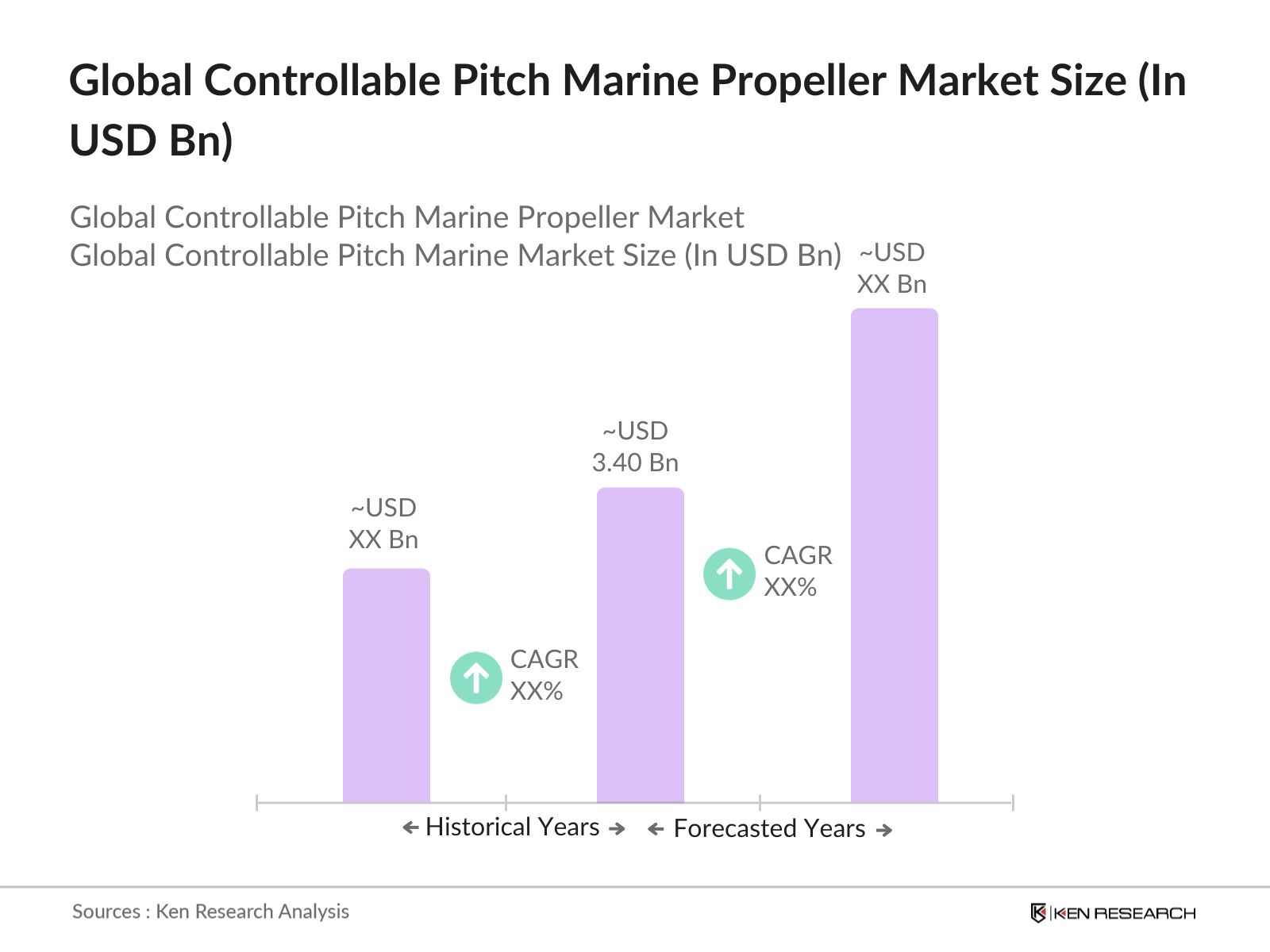
- The global Controllable Pitch Marine Propeller market is valued at USD 3.40 billion, based on a five-year historical analysis. This market is primarily driven by the increasing demand for fuel-efficient propulsion systems in the maritime industry, especially in sectors like commercial shipping, naval defense, and offshore vessels. The ability of controllable pitch propellers (CPP) to adjust blade angles while in operation makes them a vital component for optimizing fuel efficiency and vessel maneuverability, which is becoming crucial as global regulations on emissions tighten.
- The market is seeing growth in key regions like North America, Europe, and Asia-Pacific due to the increased focus on improving marine fuel efficiency and reducing emissions. Ports in regions such as Singapore, Rotterdam, and Shanghai are notable for their investment in advanced marine technologies, including CPPs, to meet international environmental standards. Moreover, the maritime sectors shift toward more sustainable and adaptable technologies has led to an upsurge in demand for CPP systems.
- The International Maritime Organization (IMO) has set forth stringent regulations regarding the reduction of sulfur emissions, which came into effect in 2020. The growing emphasis on eco-friendly marine propulsion systems has positioned CPP technology as an effective solution to reduce fuel consumption and emissions. Compliance with these regulations is crucial, driving shipbuilders and operators to invest in CPP technology to enhance performance and sustainability.
Global Controllable Pitch Marine Propeller Market Segmentation
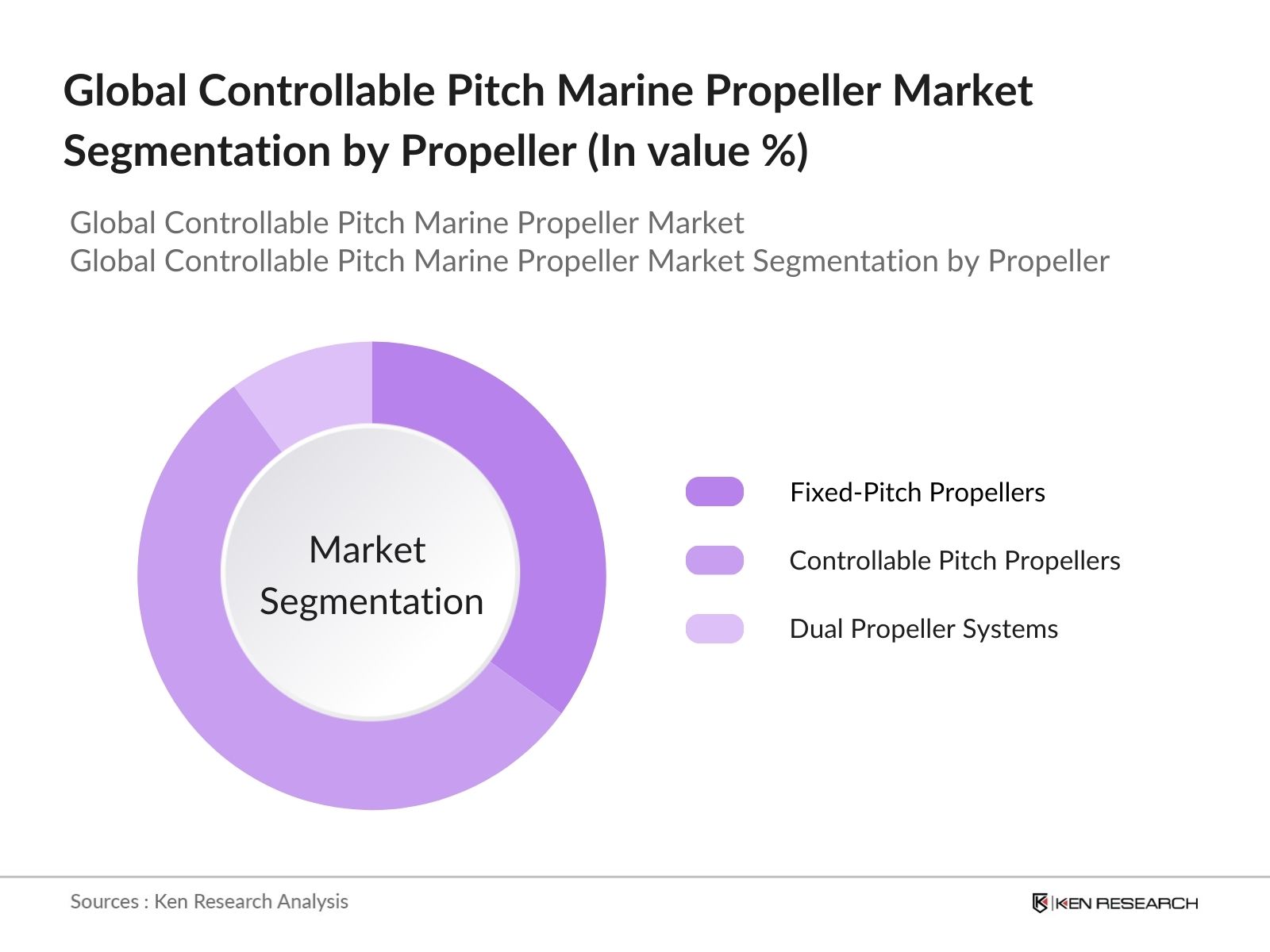
- By Product Type: The market is segmented by product type into fixed-pitch propellers (FPP), controllable pitch propellers (CPP), and others (including dual propeller systems). The CPP segment dominates the market share due to its flexibility and efficiency in adjusting blade angles for varying operational conditions. The ability to optimize thrust and fuel consumption during voyages has made CPP systems a preferred choice in commercial and naval fleets. Leading manufacturers such as Rolls-Royce and Wrtsil are key players in this segment, offering high-performance CPP systems for global fleets.
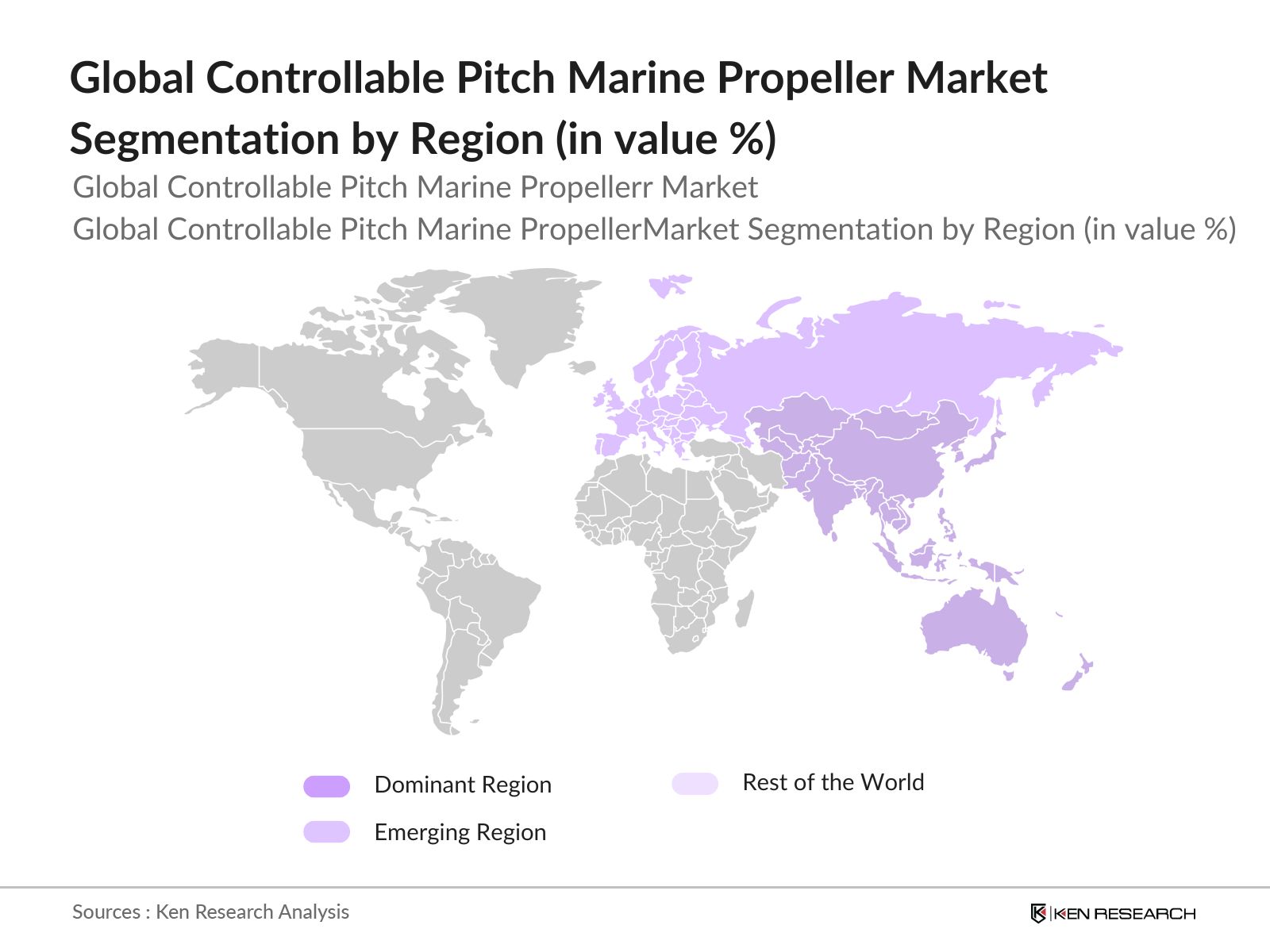
- By Region: The global market is geographically segmented into North America, Europe, Asia-Pacific, Latin America, and the Middle East & Africa. Asia-Pacific leads the market due to its significant shipbuilding industry, with countries like China, South Korea, and Japan being major hubs for marine manufacturing. Europe is another key region, driven by its stringent environmental regulations and the presence of advanced marine technology companies. North America, particularly the U.S., is seeing increased adoption of CPP technology in naval defense applications.
Global Controllable Pitch Marine Propeller Market Competitive Landscape
The market is highly competitive, with key players focused on innovation, strategic partnerships, and expanding their product portfolios to cater to the growing demand for advanced marine propulsion systems. Companies like Rolls-Royce, Wrtsil, and Schottel are leading the market with their extensive range of CPP products designed for various vessel types and applications.
|
Company Name |
Establishment Year |
Headquarters |
Revenue (2023) |
Market Presence |
R&D Investment |
Global Reach |
Propeller Type Portfolio |
Client Segments |
Environmental Certifications |
|
Rolls-Royce Holdings Plc |
1906 |
London, UK |
|||||||
|
Wrtsil Corporation |
1834 |
Helsinki, Finland |
|||||||
|
Schottel GmbH |
1921 |
Germany |
|||||||
|
Hyundai Heavy Industries |
1972 |
Seoul, South Korea |
|||||||
|
Kongsberg Gruppen ASA |
1814 |
Kongsberg, Norway |
Global Controllable Pitch Marine Propeller Industry Analysis
Growth Drivers
- Rising Demand for Fuel Efficiency: Controllable pitch propellers (CPP) offer significant advantages in fuel efficiency by adjusting the blade pitch based on sailing conditions. This adaptability reduces fuel consumption, which has become crucial as marine fuel costs surged to an average of USD 650 per metric ton in 2024, driven by increasing oil prices. With fuel accounting for nearly 50% of operating costs in commercial shipping, CPP systems are increasingly favored due to their ability to optimize fuel usage and reduce wastage. According to the International Maritime Organization (IMO), CPP systems help ships meet fuel-saving targets, further driving their demand.
- Stringent Environmental Regulations: The IMO's 2020 sulfur cap mandates ships to use fuels with a sulfur content of no more than 0.50%, which has spurred the adoption of CPP systems that allow for efficient engine performance under low-sulfur fuels. In 2024, penalties for non-compliance with these regulations can cost up to USD 25,000 per ship per day in emission control areas (ECA). CPPs ability to adjust propulsion efficiency under varying loads is instrumental in reducing both sulfur and nitrogen oxide emissions, aligning with IMOs goals to cut shipping greenhouse gas emissions by at least 50% by 2050.
- Expansion in Shipbuilding Industry: The global shipbuilding industry is experiencing significant growth, with over 90 million deadweight tons of vessels expected to be delivered by the end of 2024, primarily driven by Asia-Pacific nations such as China and South Korea. This surge in shipbuilding activities is fostering demand for advanced propulsion systems like CPPs, particularly in container ships and bulk carriers, where fuel efficiency and performance are prioritized. The Asia-Pacific region alone is expected to account for more than 50% of new vessel orders, according to UNCTADs maritime report for 2024.
Market Challanges
- High Installation and Maintenance Costs: The installation of a controllable pitch propeller (CPP) system on large commercial vessels is a significant financial investment, often requiring considerable customization based on vessel size and operational requirements. Maintenance costs for CPP systems are also elevated due to the technical intricacies involved. These expenses, both for installation and ongoing maintenance, are a deterrent for some shipping companies, particularly smaller operators. Furthermore, the rising costs of skilled labor, especially for marine engineers trained in CPP systems, further increase the operational expenditure for maintaining these advanced propulsion technologies.
- Technical Complexity of CPP Systems: While controllable pitch propeller systems offer significant efficiency benefits, their technical complexity poses challenges. The systems rely on advanced automation and real-time data analysis to adjust the propellers pitch for optimal performance, which can be difficult to manage without proper software and expertise. Integrating CPP into modern vessels requires not only sophisticated technology but also skilled operators who can ensure it functions effectively. The lack of trained maritime engineers, especially in key regions like Europe and North America, remains a significant barrier to broader adoption of these systems.
Global Controllable Pitch Marine Propeller Market Future Outlook
The global Controllable Pitch Marine Propeller market is expected to experience robust growth through 2028, driven by advancements in propulsion technologies, growing environmental concerns, and increasing demand for fuel-efficient marine systems. The integration of advanced automation systems and AI in CPP technology is likely to enhance operational efficiency, making these systems more user-friendly and reducing maintenance costs over time. Furthermore, the ongoing investments in green shipbuilding initiatives will support the adoption of CPP technology in both commercial and defense sectors.
Future Market Opportunities
- Increasing Adoption in Autonomous Shipping: Autonomous vessels, expected to account for over 1,500 vessels by 2025, are increasingly relying on CPP systems due to their ability to provide automated and optimized propulsion control. As of 2024, around 100 fully autonomous ships are operational globally, predominantly in Europe and Asia. CPP systems integrated with AI and machine learning algorithms allow for precise navigation and fuel efficiency without human intervention, which is critical for these vessels. The rise of unmanned shipping operations presents a significant opportunity for CPP system manufacturers to capitalize on this growing trend.
- Expansion in Offshore Wind Farm Vessels: The offshore wind energy sector is booming, with global installed capacity expected to exceed 75 GW in 2024, driven by rapid expansion in Europe and China. This has increased demand for specialized vessels, including installation and maintenance ships equipped with CPP systems for precise maneuvering and fuel-efficient operation. Offshore support vessels equipped with CPP can better navigate challenging sea conditions, making them indispensable for wind farm development projects. With new offshore vessels expected to be commissioned in 2024, this represents a growing market for CPP integration
Scope of the Report
|
By Propeller |
Fixed-Pitch Propellers Controllable Pitch Propellers Dual Propeller Systems |
|
By Application |
Commercial Vessels Naval Vessels Offshore Vessels |
|
By Material |
Bronze Stainless Steel Composites |
|
By Vessel |
Cargo Ships Tankers Fishing Vessels Offshore Support Vessels Recreational Boats |
|
By Region |
North America Europe Asia-Pacific Middle East & Africa Latin America |
Products
Key Target Audience
Shipbuilding Companies
Naval and Defense Contractors
Offshore Energy Companies
Maritime Logistics Providers
Investments and Venture Capitalist Firms
Government and Regulatory Bodies (IMO, EPA)
Banks and Financial Institutes
Port Authorities and Maritime Infrastructure Developers
Green Technology and Sustainable Energy Firms
Companies
List of Major Players
-
Rolls-Royce Holdings Plc
Wrtsil Corporation
Schottel GmbH
Hyundai Heavy Industries
Kongsberg Gruppen ASA
ZF Friedrichshafen AG
MAN Energy Solutions SE
Nakashima Propeller Co., Ltd.
Caterpillar Marine Power Systems
Berg Propulsion AB
Veem Ltd.
Andritz Hydro
ABB Marine
Brunvoll AS
Mecklenburger Metallguss GmbH (MMG)
Table of Contents
1. Global Controllable Pitch Marine Propeller Market Overview
1.1. Definition and Scope
1.2. Market Taxonomy
1.3. Market Growth Rate (CAGR, demand increase, global and regional trends)
1.4. Market Segmentation Overview (Propeller Type, Application, Material, Vessel Type, Region)
2. Global Controllable Pitch Marine Propeller Market Size (In USD Bn)
2.1. Historical Market Size (Market size analysis in value and volume, historical performance metrics)
2.2. Year-On-Year Growth Analysis (Detailed breakdown of annual growth rates and contributing factors)
2.3. Key Market Developments and Milestones (Technological advancements, regulatory shifts, key market entrants, major contracts, sustainability initiatives)
3. Global Controllable Pitch Marine Propeller Market Analysis
3.1. Growth Drivers
3.1.1. Rising Demand for Fuel Efficiency (Impact on fuel costs, CPP fuel-saving mechanisms)
3.1.2. Stringent Environmental Regulations (Impact of IMO sulfur regulations, emission control mandates)
3.1.3. Expansion in Shipbuilding Industry (Region-specific shipbuilding expansion, increasing vessel demand)
3.1.4. Technological Advancements in Propulsion Systems (Automation, AI integration, smart propeller technologies)
3.2. Market Challenges
3.2.1. High Installation and Maintenance Costs (Cost structure, operational and capital expenditure analysis)
3.2.2. Technical Complexity of CPP Systems (Challenges in CPP integration, real-time adjustments, skilled labor requirements)
3.2.3. Fluctuating Raw Material Costs (Impact of stainless steel, bronze, and composite material price fluctuations)
3.3. Opportunities
3.3.1. Increasing Adoption in Autonomous Shipping (Integration of CPP in AI-controlled vessels)
3.3.2. Expansion in Offshore Wind Farm Vessels (CPP for offshore energy sector support vessels)
3.3.3. Partnership with Major Shipbuilders (Collaborations and licensing agreements)
3.4. Trends
3.4.1. Rise in Hybrid Propulsion Systems (Combination of electric and mechanical propulsion with CPP)
3.4.2. Focus on Low Emission Vessels (CPP systems role in eco-friendly ship designs)
3.4.3. Digitalization of CPP Monitoring (Real-time propeller performance tracking)
3.5. Government Regulation
3.5.1. IMO Environmental Standards (Emission control areas, fuel efficiency regulations)
3.5.2. National Shipbuilding Support Programs (Subsidies and grants for CPP technology integration)
3.5.3. Certification Processes for CPP (Quality and performance certifications for international compliance)
3.6. SWOT Analysis (Strengths, Weaknesses, Opportunities, Threats specific to CPP systems)
3.7. Stakeholder Ecosystem (Key stakeholders in supply chain, shipbuilders, end-users, regulators)
3.8. Porters Five Forces (Bargaining power of buyers and suppliers, threat of substitutes, industry rivalry, barriers to entry)
3.9. Competition Ecosystem (Structure of competition, number of key players, market share distribution)
4. Global Controllable Pitch Marine Propeller Market Segmentation
4.1. By Propeller Type (In Value %)
4.1.1. Fixed-Pitch Propellers
4.1.2. Controllable Pitch Propellers
4.1.3. Dual Propeller Systems
4.2. By Application (In Value %)
4.2.1. Commercial Vessels (Bulk carriers, container ships, ferries)
4.2.2. Naval Vessels (Submarines, patrol vessels, aircraft carriers)
4.2.3. Offshore Vessels (Oil & gas support vessels, wind farm maintenance vessels)
4.2.4. Others (Fishing vessels, recreational boats)
4.3. By Material (In Value %)
4.3.1. Bronze
4.3.2. Stainless Steel
4.3.3. Composites
4.4. By Vessel Type (In Value %)
4.4.1. Cargo Ships
4.4.2. Tankers
4.4.3. Fishing Vessels
4.4.4. Offshore Support Vessels
4.4.5. Recreational Boats
4.5. By Region (In Value %)
4.5.1. North America
4.5.2. Europe
4.5.3. Asia-Pacific
4.5.4. Middle East & Africa
4.5.5. Latin America
5. Global Controllable Pitch Marine Propeller Market Competitive Analysis
5.1. Detailed Profiles of Major Companies
5.1.1. Rolls-Royce Holdings Plc
5.1.2. Wrtsil Corporation
5.1.3. Schottel GmbH
5.1.4. Hyundai Heavy Industries
5.1.5. Kongsberg Gruppen ASA
5.1.6. MAN Energy Solutions SE
5.1.7. ZF Friedrichshafen AG
5.1.8. Mecklenburger Metallguss GmbH (MMG)
5.1.9. Nakashima Propeller Co., Ltd.
5.1.10. Caterpillar Marine Power Systems
5.1.11. Berg Propulsion AB
5.1.12. Veem Ltd.
5.1.13. Andritz Hydro
5.1.14. ABB Marine
5.1.15. Brunvoll AS
5.2. Cross Comparison Parameters (Revenue, Propeller Technology Portfolio, Vessel Type Coverage, Market Share, Number of Patents, Global Presence, Propeller Efficiency, Environmental Certifications)
5.3. Market Share Analysis (Market share of top 10 players, regional breakdown, market consolidation trends)
5.4. Strategic Initiatives (New product launches, expansion into new geographies, R&D initiatives)
5.5. Mergers And Acquisitions (Impact on market dynamics, notable M&A deals)
5.6. Investment Analysis (Capital expenditure in CPP technology, green propulsion investments)
5.7. Venture Capital Funding (CPP technology startups, emerging players)
5.8. Government Grants (Support for R&D, green shipbuilding initiatives)
5.9. Private Equity Investments (Major investments in CPP manufacturers, strategic collaborations)
6. Global Controllable Pitch Marine Propeller Market Regulatory Framework
6.1. Environmental Standards (IMO, national regulations for emissions)
6.2. Compliance Requirements (CPP compliance, safety standards, emission control protocols)
6.3. Certification Processes (ISO, ABS, DNV certifications for CPP systems)
7. Global Controllable Pitch Marine Propeller Market Future Size (In USD Bn)
7.1. Future Market Size Projections (Key factors influencing market size growth, industry forecasts)
7.2. Key Factors Driving Future Market Growth (Technological advancements, rising shipbuilding activity, emission reduction targets)
8. Global Controllable Pitch Marine Propeller Future Market Segmentation
8.1. By Propeller Type (In Value %)
8.2. By Application (In Value %)
8.3. By Material (In Value %)
8.4. By Vessel Type (In Value %)
8.5. By Region (In Value %)
9. Global Controllable Pitch Marine Propeller Market Analysts Recommendations
9.1. TAM/SAM/SOM Analysis (Total addressable market, serviceable addressable market, share of market)
9.2. Customer Cohort Analysis (Market segmentation based on customer behavior, demand patterns)
9.3. Marketing Initiatives (Suggested marketing approaches, industry-specific strategies)
9.4. White Space Opportunity Analysis (Identifying unaddressed market needs, potential growth areas)
Research Methodology
Step 1: Identification of Key Variables
The initial step involves mapping the ecosystem of stakeholders in the global Controllable Pitch Marine Propeller market. Extensive desk research is conducted using proprietary databases and secondary sources to gather comprehensive information on key players, market trends, and regulatory frameworks. The primary objective is to identify the critical variables influencing market growth, including technological advancements, environmental regulations, and industry dynamics.
Step 2: Market Analysis and Construction
In this phase, historical data for the global CPP market is compiled and analyzed. This includes assessing market size, penetration rates, and revenue generation by propeller type and application. The analysis also incorporates regional market performance to provide a complete picture of market trends. Service quality and efficiency metrics are evaluated to ensure the reliability of market estimates.
Step 3: Hypothesis Validation and Expert Consultation
Market hypotheses developed during the research phase are validated through consultations with industry experts via computer-assisted telephone interviews (CATIs). Insights from marine engineers, shipbuilders, and propeller manufacturers are used to refine the analysis. This direct engagement helps to verify market trends and technological advancements while corroborating data accuracy.
Step 4: Research Synthesis and Final Output
The final phase involves synthesizing research findings and validating them through detailed consultations with CPP system manufacturers and key clients in the marine industry. This ensures that the research output is comprehensive, accurate, and reflective of actual market dynamics. The bottom-up approach is employed to estimate market size, while top-down analysis is used to cross-check data reliability.
Frequently Asked Questions
1 How big is the Global Controllable Pitch Marine Propeller Market?
The global Controllable Pitch Marine Propeller market is valued at USD 3.40 billion, driven by the growing adoption of fuel-efficient propulsion systems in commercial and naval vessels.
2 What are the challenges in the Global Controllable Pitch Marine Propeller Market?
Challenges in the global Controllable Pitch Marine Propeller market include the high initial costs of CPP systems, their technical complexity, and the significant maintenance required, which can be a barrier for smaller shipowners.
3 Who are the major players in the Global Controllable Pitch Marine Propeller Market?
Key players in the global Controllable Pitch Marine Propeller market include Rolls-Royce Holdings Plc, Wrtsil Corporation, Schottel GmbH, Hyundai Heavy Industries, and Kongsberg Gruppen ASA, among others, which dominate the market due to their technological innovations and extensive global presence.
4 What are the growth drivers of the Global Controllable Pitch Marine Propeller Market?
The global Controllable Pitch Marine Propeller market is propelled by the increasing need for fuel-efficient propulsion technologies, stricter environmental regulations, and growing investments in green shipbuilding initiatives globally.
Why Buy From Us?

What makes us stand out is that our consultants follows Robust, Refine and Result (RRR) methodology. i.e. Robust for clear definitions, approaches and sanity checking, Refine for differentiating respondents facts and opinions and Result for presenting data with story

We have set a benchmark in the industry by offering our clients with syndicated and customized market research reports featuring coverage of entire market as well as meticulous research and analyst insights.

While we don't replace traditional research, we flip the method upside down. Our dual approach of Top Bottom & Bottom Top ensures quality deliverable by not just verifying company fundamentals but also looking at the sector and macroeconomic factors.

With one step in the future, our research team constantly tries to show you the bigger picture. We help with some of the tough questions you may encounter along the way: How is the industry positioned? Best marketing channel? KPI's of competitors? By aligning every element, we help maximize success.

Our report gives you instant access to the answers and sources that other companies might choose to hide. We elaborate each steps of research methodology we have used and showcase you the sample size to earn your trust.

If you need any support, we are here! We pride ourselves on universe strength, data quality, and quick, friendly, and professional service.