















Global Nickel Metal Hydride Battery Market Outlook to 2030
Region:Global
Author(s):Paribhasha Tiwari
Product Code:KROD9029
November 2024
100
About the Report
Global Nickel Metal Hydride Battery Market Overview
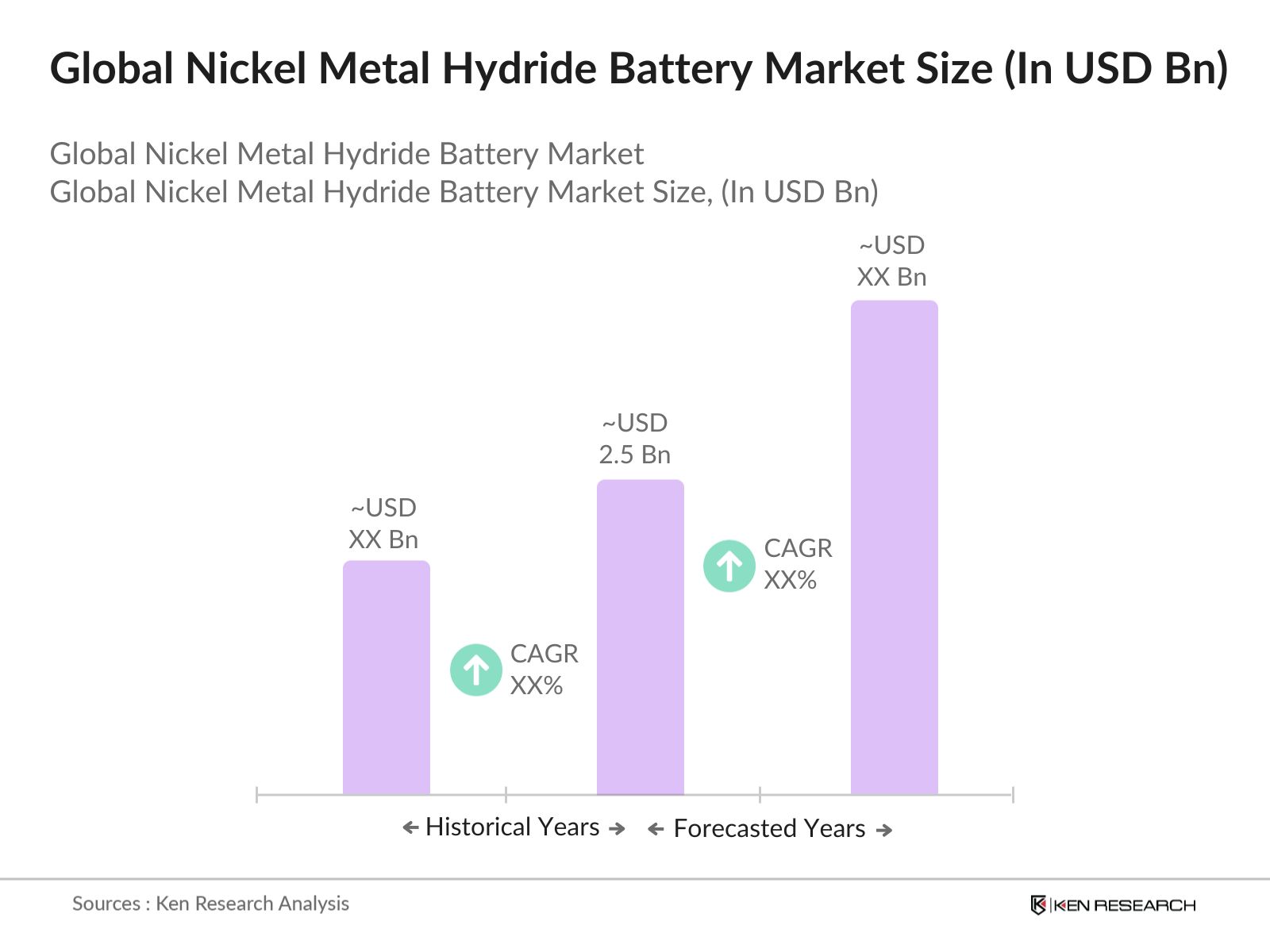
- The global Nickel Metal Hydride (NiMH) battery market is valued at USD 2.5 billion, according to a comprehensive five-year analysis. The market's growth is driven by its wide use in hybrid electric vehicles (HEVs) and consumer electronics, both of which continue to see increasing demand. The automotive industry, in particular, has been a key player in the growing adoption of NiMH batteries due to their reliability and capacity to store energy efficiently, thus driving the overall market.
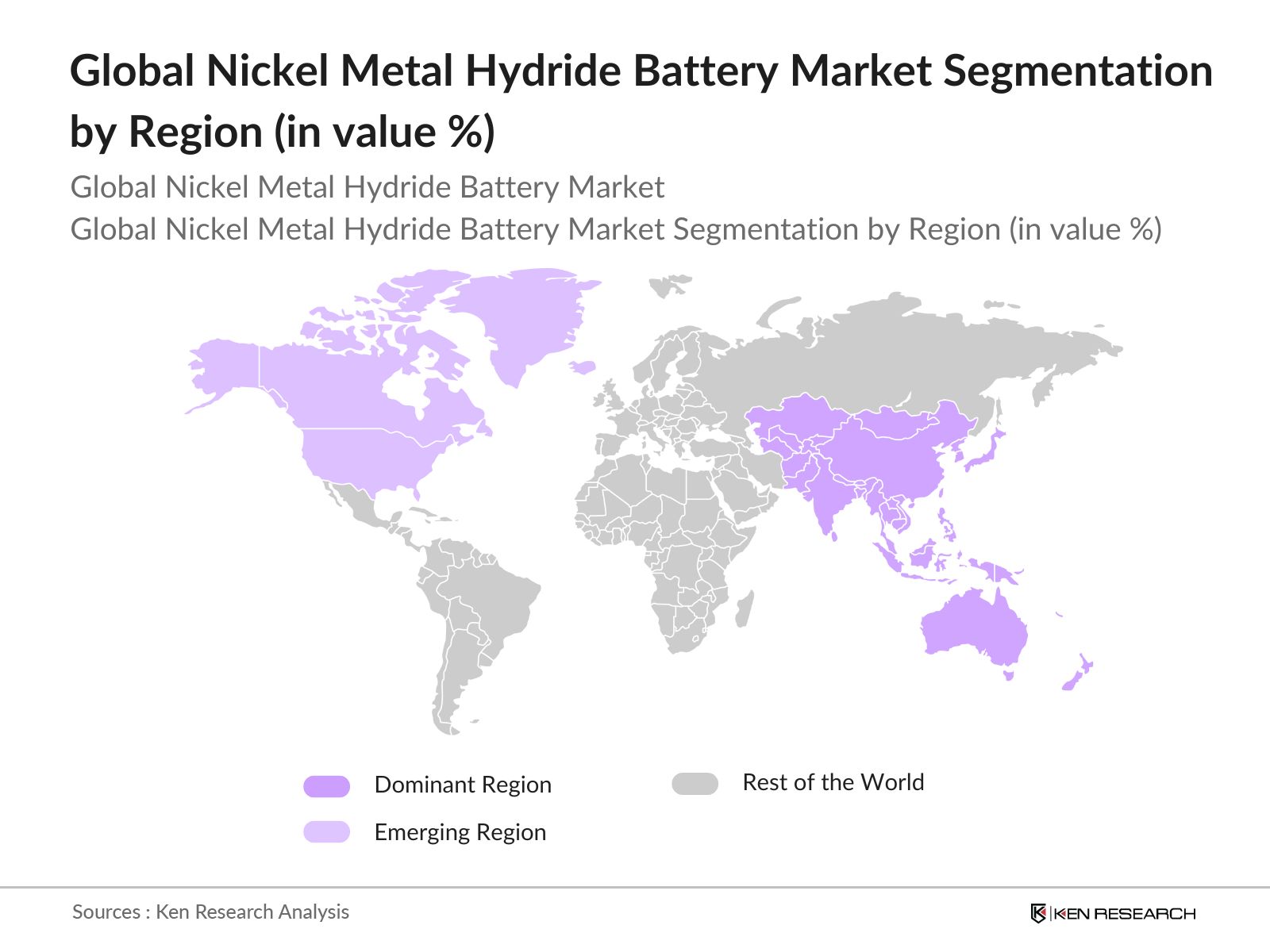
- The NiMH battery market is dominated by Japan, the United States, and China. Japan holds dominance due to its advanced battery manufacturing technologies and its leading automotive manufacturers, such as Toyota, which heavily use NiMH batteries in hybrid models. The U.S. and China also play significant roles due to their large-scale production of electronic devices and electric vehicles, alongside strong government support for energy storage technologies, which further propels the growth of the NiMH market in these regions.
- Governments across the globe are offering financial incentives to promote the adoption of hybrid electric vehicles (HEVs). In 2024, these incentives are projected to amount to over USD 10 billion globally, with countries like Japan, the USA, and China leading the way. These incentives are encouraging automakers to incorporate NiMH batteries into their HEV models, driving the market for NiMH batteries.
Global Nickel Metal Hydride Battery Market Segmentation
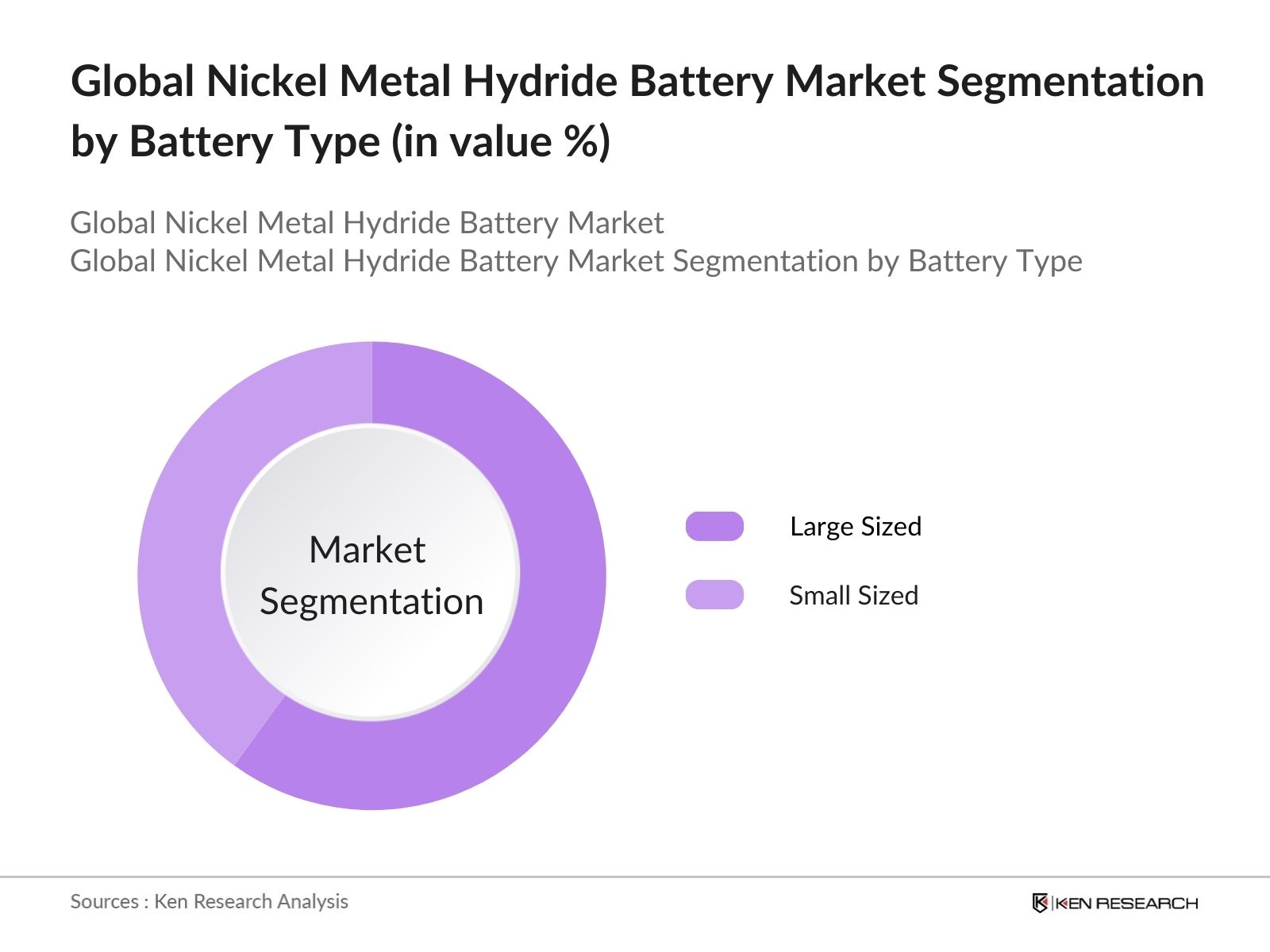
By Battery Type: The global Nickel Metal Hydride battery market is segmented by battery type into small-sized NiMH batteries and large-sized NiMH batteries. Large-sized NiMH batteries dominate the market primarily due to their widespread use in hybrid electric vehicles (HEVs). These batteries provide high energy density and are integral to the automotive sector, especially in hybrid car production. The demand for eco-friendly transportation solutions has made large-sized NiMH batteries an essential part of the automotive industry's efforts to reduce emissions.
By Region: Geographically, the market is segmented into North America, Europe, Asia Pacific, Latin America, and the Middle East & Africa. Asia Pacific, holds the largest market share due to the regions strong manufacturing base for both automotive and consumer electronics industries. In addition, Asia Pacific countries have a growing demand for renewable energy solutions, contributing to the expansion of the NiMH battery market in industrial applications as well.
By Application: The market is further segmented by application into automotive (HEV, PHEV), consumer electronics (laptops, cameras, toys), and industrial (backup power, renewable energy systems). In this segment, automotive applications hold the leading market share. Hybrid Electric Vehicles (HEVs) have gained significant traction worldwide due to increasing environmental regulations and consumer preference for greener alternatives to traditional combustion engines, making automotive the most prominent application for NiMH batteries.
Global Nickel Metal Hydride Battery Market Competitive Landscape
The global NiMH battery market is dominated by several key players, with strong competition between established global manufacturers and innovative new entrants. Leading companies benefit from their established customer base, particularly in the automotive sector, and continuous technological advancements in battery chemistry. This consolidation highlights the dominance of a few major companies that hold considerable market power, influencing product development, pricing, and supply chain logistics.
|
Company Name |
Establishment Year |
Headquarters |
Revenue (USD Bn) |
Employees |
R&D Expenditure |
Manufacturing Facilities |
Key Market |
Product Portfolio |
Partnerships |
|
Panasonic Corporation |
1918 |
Japan |
- | - | - | - | - | - | - |
|
GS Yuasa Corporation |
1917 |
Japan |
- | - | - | - | - | - | - |
|
Duracell Inc. |
1924 |
USA |
- | - | - | - | - | - | - |
|
VARTA AG |
1887 |
Germany |
- | - | - | - | - | - | - |
|
Toshiba Corporation |
1875 |
Japan |
- | - | - | - | - | - | - |
Global Nickel Metal Hydride Battery Market Analysis
Growth Drivers
- Increased Adoption in Hybrid Electric Vehicles (HEVs): The rising adoption of Hybrid Electric Vehicles (HEVs) has been a significant driver for the growth of the Nickel Metal Hydride (NiMH) Battery Market. In 2024, over 12 million HEVs are expected to be in operation globally, requiring advanced battery solutions like NiMH due to their reliability and performance. Governments worldwide are pushing for cleaner transportation alternatives, with countries like Japan and the USA leading in HEV deployment. This surge in HEV usage is driving demand for NiMH batteries, with vehicle manufacturers continuing to integrate NiMH technology into their offerings for a sustainable future.
- Growing Demand for Portable Electronics: The demand for portable electronics, including laptops, digital cameras, and personal entertainment devices, continues to grow. NiMH batteries, with their longer lifecycle and efficient energy storage, are increasingly being chosen by manufacturers. The high-energy density of these batteries makes them ideal for devices that require continuous power, contributing to the growth of the NiMH battery market. Governments in regions like North America and Asia-Pacific are encouraging local production of these devices, further propelling demand.
- Government Initiatives for Energy Storage Solutions: Governments across the globe are implementing policies and offering incentives to promote the use of energy storage solutions as part of renewable energy strategies. In 2024, investments in energy storage technologies are expected to surpass USD 20 billion, with a substantial portion allocated to NiMH batteries for grid applications. Countries like Germany and China are leading in setting up renewable energy storage infrastructure where NiMH batteries are being adopted due to their stability and performance in fluctuating energy grids. These government initiatives will continue driving market growth.
Market Challenges
- Competition from Lithium-Ion Batteries: NiMH batteries face stiff competition from lithium-ion batteries, which are increasingly preferred due to their higher energy density and lighter weight. In 2024, the global lithium-ion battery production is expected to reach 1.5 billion units, making it challenging for NiMH to compete, especially in sectors like consumer electronics and electric vehicles. Governments in developed countries are investing heavily in lithium-ion technology, further contributing to this challenge for NiMH manufacturers.
- High Cost of NiMH Battery Production: The production costs of NiMH batteries remain relatively high compared to other energy storage technologies. In 2024, the average cost of manufacturing a NiMH battery is estimated to be 30% higher than that of lithium-ion batteries, largely due to the materials used in production and the complex manufacturing processes involved. These higher costs are making it difficult for NiMH batteries to achieve price competitiveness, especially in cost-sensitive markets.
Global Nickel Metal Hydride Battery Market Future Outlook
Over the next five years, the global Nickel Metal Hydride (NiMH) battery market is expected to show considerable growth, driven by increasing demand for hybrid and electric vehicles, continuous improvements in battery technologies, and a shift toward renewable energy solutions. Moreover, strong government support for cleaner energy alternatives, along with growing industrial applications of NiMH batteries, will further boost market expansion. Consumer electronics will also continue to be a key application area as NiMH batteries remain preferred for their safety and long-lasting performance in portable devices.
Market Opportunities
- Technological Advancements in Battery Chemistry: Technological advancements in battery chemistry are opening new opportunities for the NiMH battery market. In 2024, ongoing research projects are expected to lead to improvements in energy density and charge cycles for NiMH batteries, potentially increasing their appeal across various applications. Research institutions in countries like South Korea and the USA are working on next-generation NiMH chemistries, which are forecasted to enhance battery performance, providing a competitive edge over alternative technologies.
- Strategic Partnerships and Collaborations: Collaborations between battery manufacturers and automotive companies are becoming more prevalent, creating significant opportunities in the NiMH battery market. In 2024, partnerships involving over 25 major players in the battery and automotive sectors are expected to lead to increased production of NiMH batteries for hybrid electric vehicles. These collaborations are aimed at integrating NiMH technology into future vehicle models, especially in regions like Asia and Europe, where governments are pushing for sustainable transportation solutions.
Scope of the Report
|
By Battery Type |
Small-Sized NiMH Batteries Large-Sized NiMH Batteries |
|
By Application |
Automotive (HEV, PHEV) Consumer Electronics (Laptops, Cameras, Toys) Industrial (Backup Power, Renewable Energy Systems) |
|
By Industry Vertical |
Automotive Consumer Electronics Energy & Power Healthcare |
|
By Sales Channel |
Direct Sales Distributors Online Sales |
|
By Region |
North America Europe Asia Pacific Latin America Middle East & Africa |
Products
Key Target Audience
Automotive Manufacturers
Consumer Electronics Companies
Industrial Energy Storage Providers
Government & Regulatory Bodies (U.S. Department of Energy, Japan Ministry of Economy, Trade, and Industry)
Renewable Energy Firms
Investors and Venture Capitalist Firms
Battery Recycling Companies
Original Equipment Manufacturers (OEMs)
Companies
Players Mentioned in the Report:
Panasonic Corporation
GS Yuasa Corporation
Duracell Inc.
Toshiba Corporation
VARTA AG
Hitachi Chemical Co. Ltd.
Saft Groupe S.A.
Primearth EV Energy Co. Ltd.
FDK Corporation
Shenzhen Grepow Battery Co., Ltd.
Table of Contents
1. Global Nickel Metal Hydride Battery Market Overview
1.1. Definition and Scope
1.2. Market Taxonomy
1.3. Market Growth Rate
1.4. Market Segmentation Overview
2. Global Nickel Metal Hydride Battery Market Size (In USD Bn)
2.1. Historical Market Size
2.2. Year-On-Year Growth Analysis
2.3. Key Market Developments and Milestones
3. Global Nickel Metal Hydride Battery Market Analysis
3.1. Growth Drivers
3.1.1. Increased Adoption in Hybrid Electric Vehicles (HEVs)
3.1.2. Growing Demand for Portable Electronics
3.1.3. Government Initiatives for Energy Storage Solutions
3.1.4. Rising Focus on Renewable Energy Storage
3.2. Market Challenges
3.2.1. Competition from Lithium-Ion Batteries
3.2.2. High Cost of NiMH Battery Production
3.2.3. Environmental Concerns Related to Disposal
3.3. Opportunities
3.3.1. Technological Advancements in Battery Chemistry
3.3.2. Strategic Partnerships and Collaborations
3.3.3. Expansion into Emerging Economies
3.4. Trends
3.4.1. Use of NiMH in Medical Devices
3.4.2. Increasing Investment in Battery Recycling Technologies
3.4.3. Shift Towards Sustainable Battery Technologies
3.5. Government Regulations
3.5.1. Global Battery Recycling Standards
3.5.2. Government Incentives for Clean Energy Storage
3.5.3. Restrictions on Hazardous Materials in Batteries
3.5.4. Compliance with Environmental Protocols
3.6. SWOT Analysis
3.7. Stakeholder Ecosystem
3.8. Porters Five Forces
3.9. Competition Ecosystem
4. Global Nickel Metal Hydride Battery Market Segmentation
4.1. By Battery Type (In Value %)
4.1.1. Small-Sized NiMH Batteries
4.1.2. Large-Sized NiMH Batteries
4.2. By Application (In Value %)
4.2.1. Automotive (HEV, PHEV)
4.2.2. Consumer Electronics (Laptops, Cameras, Toys)
4.2.3. Industrial (Backup Power, Renewable Energy Systems)
4.3. By Industry Vertical (In Value %)
4.3.1. Automotive
4.3.2. Consumer Electronics
4.3.3. Energy & Power
4.3.4. Healthcare
4.4. By Sales Channel (In Value %)
4.4.1. Direct Sales
4.4.2. Distributors
4.4.3. Online Sales
4.5. By Region (In Value %)
4.5.1. North America
4.5.2. Europe
4.5.3. Asia Pacific
4.5.4. Latin America
4.5.5. Middle East & Africa
5. Global Nickel Metal Hydride Battery Market Competitive Analysis
5.1 Detailed Profiles of Major Companies
5.1.1. Panasonic Corporation
5.1.2. GS Yuasa Corporation
5.1.3. Duracell Inc.
5.1.4. Energizer Holdings
5.1.5. Toshiba Corporation
5.1.6. FDK Corporation
5.1.7. VARTA AG
5.1.8. Hunan Corun New Energy Co. Ltd.
5.1.9. Primearth EV Energy Co. Ltd.
5.1.10. Hitachi Chemical Co. Ltd.
5.1.11. Saft Groupe S.A.
5.1.12. GP Batteries International Ltd.
5.1.13. Johnson Controls International PLC
5.1.14. Spectrum Brands, Inc.
5.1.15. Shenzhen Grepow Battery Co., Ltd.
5.2 Cross Comparison Parameters (Headquarters, Revenue, Market Position, Product Portfolio, Technological Innovations, Manufacturing Facilities, R&D Investments, Number of Employees)
5.3. Market Share Analysis
5.4. Strategic Initiatives
5.5. Mergers and Acquisitions
5.6. Investment Analysis
5.7. Venture Capital Funding
5.8. Government Grants
5.9. Private Equity Investments
6. Global Nickel Metal Hydride Battery Market Regulatory Framework
6.1. Environmental Standards
6.2. Compliance Requirements
6.3. Certification Processes
7. Global Nickel Metal Hydride Battery Future Market Size (In USD Bn)
7.1. Future Market Size Projections
7.2. Key Factors Driving Future Market Growth
8. Global Nickel Metal Hydride Battery Future Market Segmentation
8.1. By Battery Type (In Value %)
8.2. By Application (In Value %)
8.3. By Industry Vertical (In Value %)
8.4. By Sales Channel (In Value %)
8.5. By Region (In Value %)
9. Global Nickel Metal Hydride Battery Market Analysts' Recommendations
9.1. TAM/SAM/SOM Analysis
9.2. Customer Cohort Analysis
9.3. Marketing Initiatives
9.4. White Space Opportunity Analysis
Research Methodology
Step 1: Identification of Key Variables
The research process began with identifying the key factors impacting the NiMH battery market, including demand drivers, technological advancements, and government policies. This phase was conducted through in-depth desk research using proprietary databases and published reports.
Step 2: Market Analysis and Construction
In this phase, we collected and analyzed historical data to determine the market size, penetration rates in different regions, and growth dynamics across various segments. The analysis included both primary and secondary data to ensure accurate revenue projections.
Step 3: Hypothesis Validation and Expert Consultation
To validate the market hypotheses, interviews were conducted with experts from leading battery manufacturing companies. These interviews provided insight into current market trends, operational challenges, and future growth opportunities, contributing to the accuracy of the report.
Step 4: Research Synthesis and Final Output
The final phase involved consolidating all research findings and preparing the report, ensuring that the data was cross-verified with key stakeholders in the market. The outcome is a comprehensive, detailed analysis of the global NiMH battery market.
Frequently Asked Questions
01. How big is the Global Nickel Metal Hydride Battery Market?
The global Nickel Metal Hydride battery market is valued at USD 2.5 billion, driven by increased usage in automotive and consumer electronics sectors.
02. What are the challenges in the Global Nickel Metal Hydride Battery Market?
Challenges in the market include strong competition from lithium-ion batteries, high production costs, and environmental concerns related to battery disposal.
03. Who are the major players in the Global Nickel Metal Hydride Battery Market?
Key players include Panasonic Corporation, GS Yuasa Corporation, Duracell Inc., Toshiba Corporation, and VARTA AG, among others, dominating due to technological advancements and established customer bases.
04. What are the growth drivers of the Global Nickel Metal Hydride Battery Market?
Growth in the NiMH battery market is driven by the rising demand for hybrid electric vehicles, advancements in battery technologies, and government support for renewable energy solutions.
Why Buy From Us?

What makes us stand out is that our consultants follows Robust, Refine and Result (RRR) methodology. i.e. Robust for clear definitions, approaches and sanity checking, Refine for differentiating respondents facts and opinions and Result for presenting data with story

We have set a benchmark in the industry by offering our clients with syndicated and customized market research reports featuring coverage of entire market as well as meticulous research and analyst insights.

While we don't replace traditional research, we flip the method upside down. Our dual approach of Top Bottom & Bottom Top ensures quality deliverable by not just verifying company fundamentals but also looking at the sector and macroeconomic factors.

With one step in the future, our research team constantly tries to show you the bigger picture. We help with some of the tough questions you may encounter along the way: How is the industry positioned? Best marketing channel? KPI's of competitors? By aligning every element, we help maximize success.

Our report gives you instant access to the answers and sources that other companies might choose to hide. We elaborate each steps of research methodology we have used and showcase you the sample size to earn your trust.

If you need any support, we are here! We pride ourselves on universe strength, data quality, and quick, friendly, and professional service.