















Global Smart Trash Bin Market Outlook to 2030
Region:Global
Author(s):Naman Rohilla
Product Code:KROD6984
December 2024
90
About the Report
Global Smart Trash Bin Market Overview
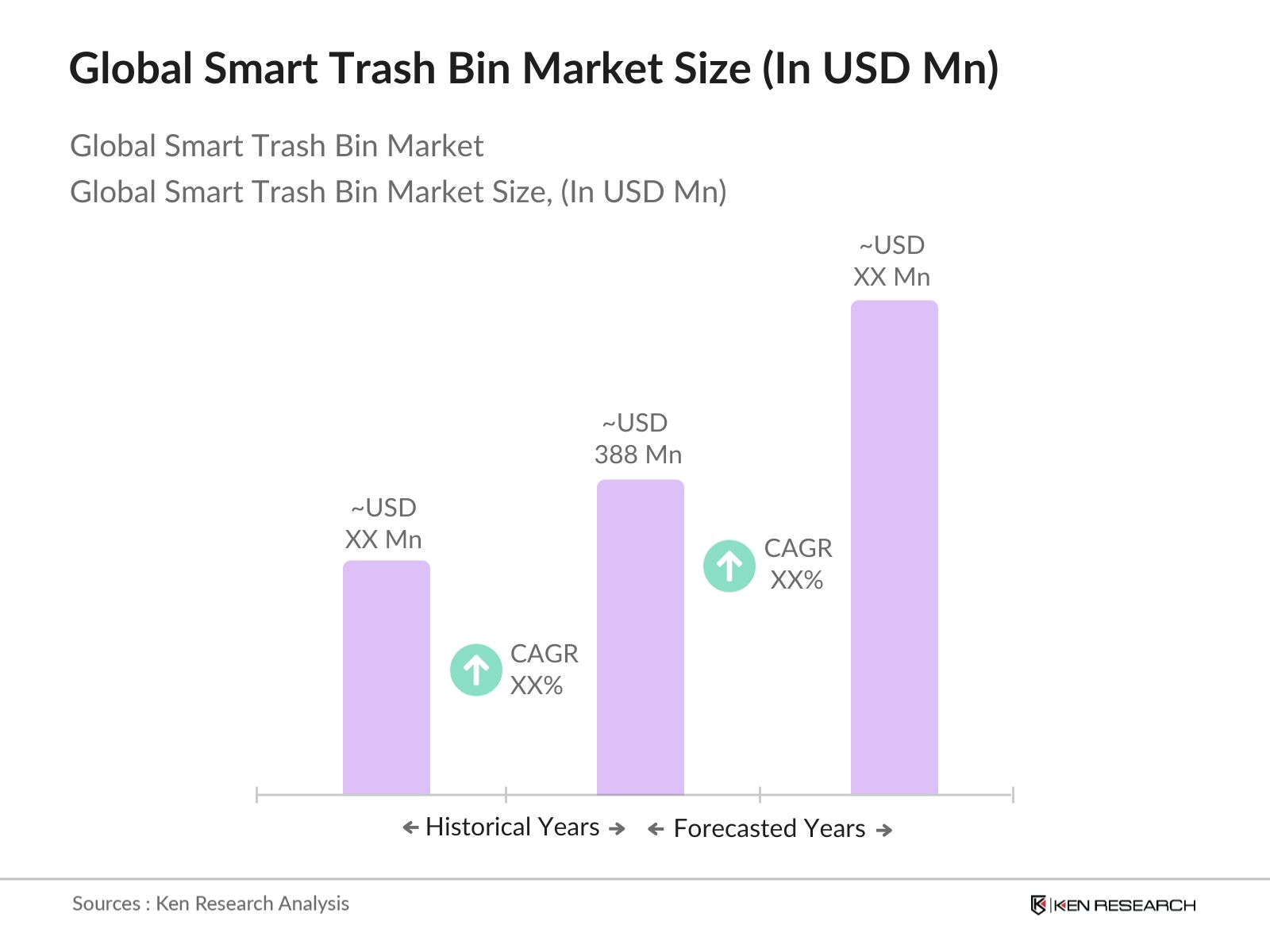
- The Global Smart Trash Bin Market is valued at USD 388 million, based on a five-year historical analysis. This growth is primarily driven by the increasing adoption of smart home technologies, urbanization, and heightened environmental consciousness among consumers. Smart trash bins, equipped with sensors, automated features, and Internet of Things (IoT) connectivity, are increasingly being embraced in residential, commercial, and industrial spaces to enhance waste management efficiency. Furthermore, growing concerns about hygiene and sanitation post-pandemic have spurred demand for contactless waste disposal solutions.
- Countries like the United States, China, and Japan dominate the market due to their advanced technological infrastructures and aggressive implementation of smart city initiatives. These regions have seen investments in automation and waste management technologies, supported by government policies aimed at promoting sustainability. The strong presence of technology providers and a high adoption rate of smart home devices further drive dominance in these countries.
- Governments worldwide are introducing smart city initiatives that incorporate smart waste management systems. In 2023, the United States government allocated $500 million for smart city projects, including smart trash bins, as part of the Smart City Challenge program. Similarly, China's Smart City Development Plan aims to implement smart waste solutions in 500 cities by 2025. These initiatives provide a regulatory framework for cities to adopt innovative waste management technologies, accelerating the deployment of smart trash bins.
Global Smart Trash Bin Market Segmentation
- By Connectivity: The market is also segmented by connectivity into Bluetooth Enabled, Wi-Fi Enabled, and Zigbee Enabled smart trash bins. Wi-Fi Enabled Smart Trash Bins dominate the market under this segmentation due to their ability to connect seamlessly with smart home systems and provide real-time updates on waste levels. These bins can integrate with other IoT devices, facilitating advanced waste management analytics and automation, which makes them the preferred choice for smart home environments.
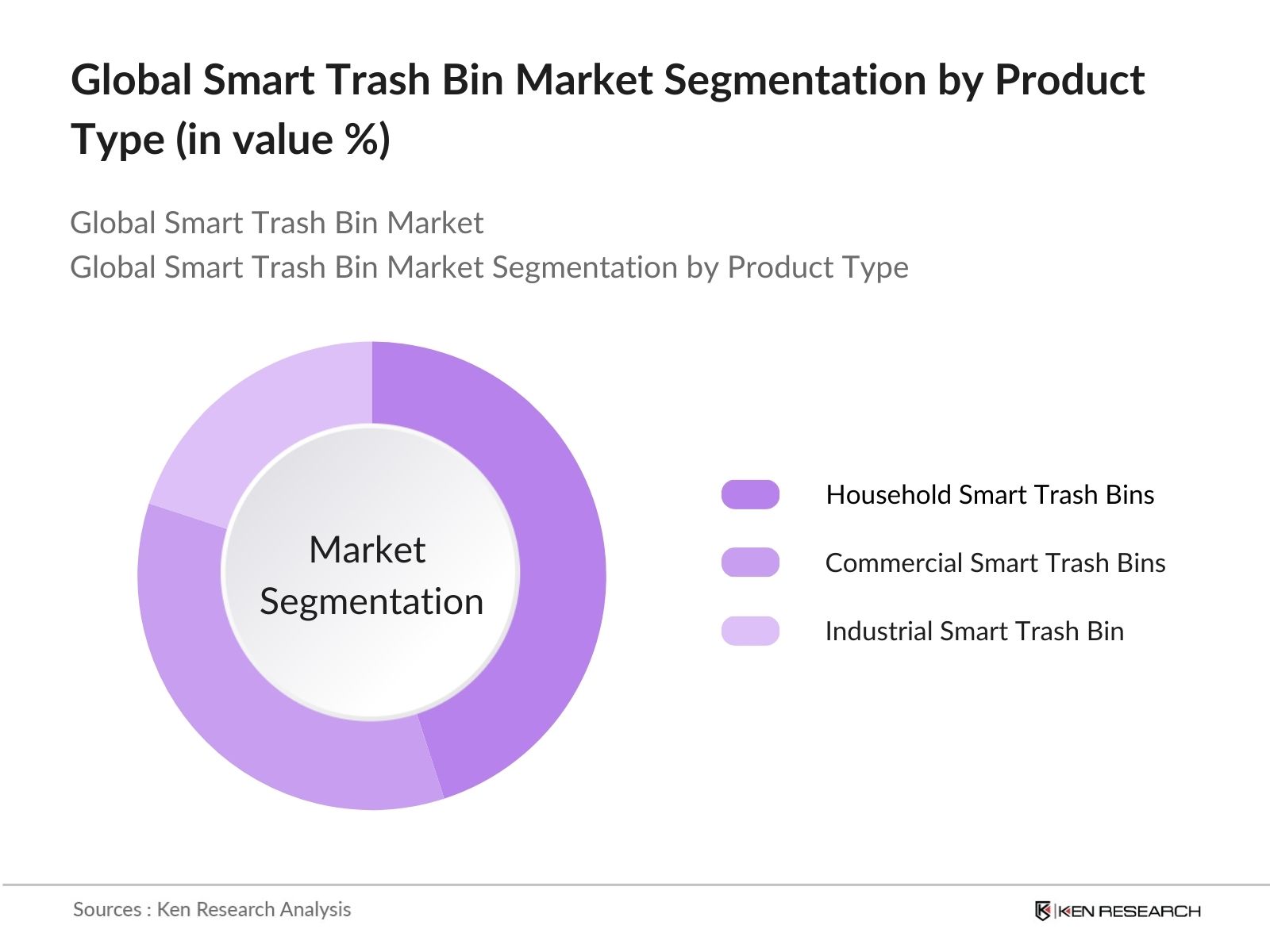
- By Product Type: The Global Smart Trash Bin Market is segmented by product type into Household Smart Trash Bins, Commercial Smart Trash Bins, and Industrial Smart Trash Bins. Currently, Household Smart Trash Bins hold a dominant market share in this segmentation due to their increasing popularity in smart homes and growing concerns about maintaining hygiene in residential spaces. The integration of features like voice control, motion sensors, and auto-lid opening in household smart trash bins have appealed to tech-savvy consumers, driving the demand in this sub-segment.
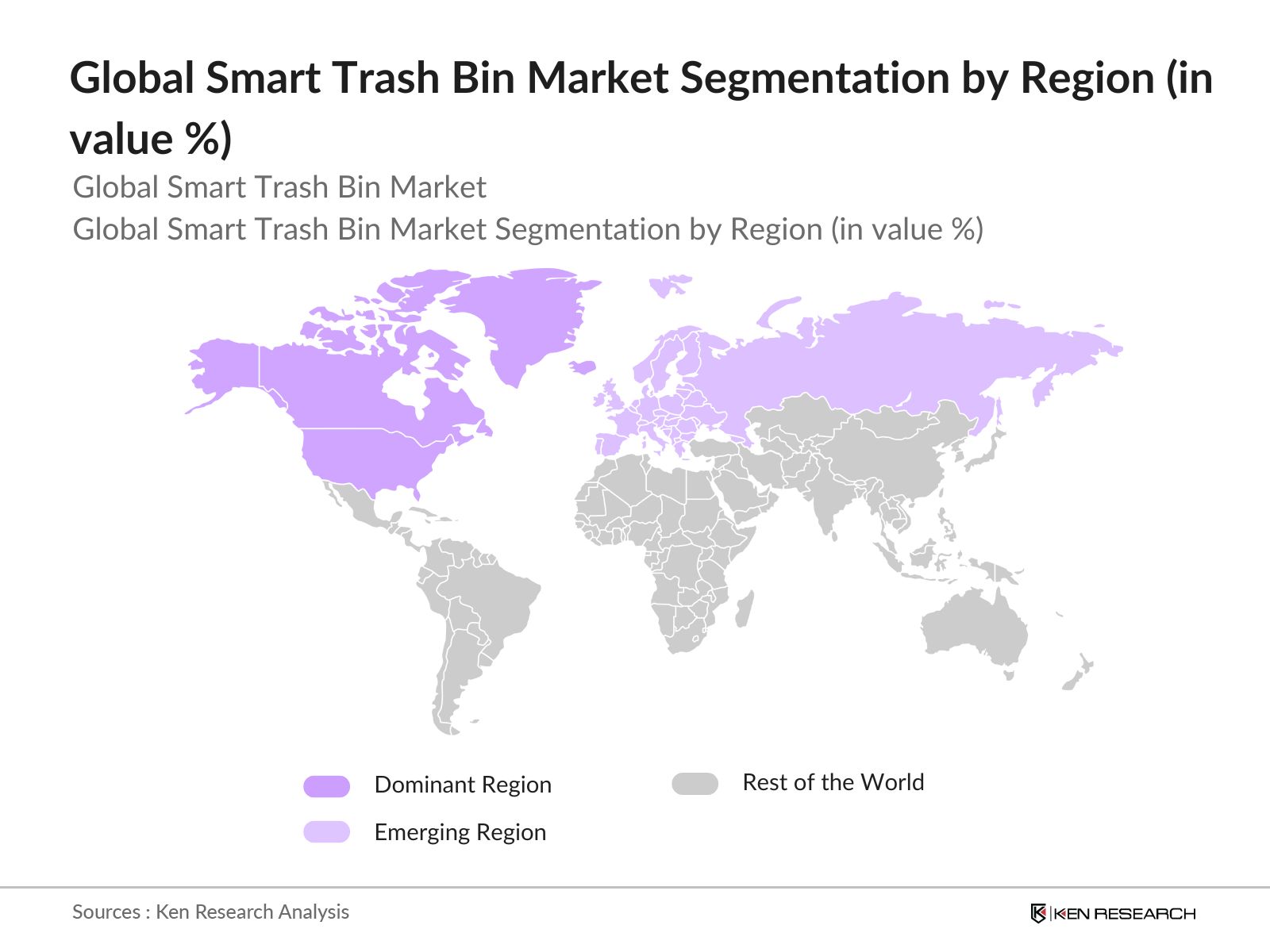
- By Region: Regionally, the Global Smart Trash Bin Market is segmented into North America, Europe, Asia Pacific, Middle East & Africa, and Latin America. North America currently holds the largest market share, primarily driven by technological advancements and high consumer awareness regarding hygiene and smart waste management systems. The growing penetration of smart homes and the adoption of automated waste management solutions in cities like New York, San Francisco, and Toronto are key factors behind North Americas dominance in the market.
Global Smart Trash Bin Market Competitive Landscape
The Global Smart Trash Bin Market is characterized by the presence of both large multinational corporations and emerging startups. Companies focus on innovation, smart waste management technologies, and strategic partnerships to strengthen their market positions. The market is highly competitive, with several players leading the adoption of IoT-enabled waste management solutions. The increasing number of strategic collaborations between waste management companies and smart technology providers is also boosting competition in this market.
|
Company Name |
Established Year |
Headquarters |
Revenue (USD bn) |
Product Innovation |
Global Presence |
R&D Expenditure |
Key Patents |
Sustainability Initiatives |
|
Simplehuman |
2000 |
Torrance, USA |
- |
- |
- |
- |
- |
- |
|
Nine Stars Group |
1998 |
Ontario, Canada |
- |
- |
- |
- |
- |
- |
|
iTouchless |
1999 |
Fremont, USA |
- |
- |
- |
- |
- |
- |
|
CleanRobotics |
2015 |
Denver, USA |
- |
- |
- |
- |
- |
- |
|
Bigbelly |
2003 |
Needham, USA |
- |
- |
- |
- |
- |
- |
Global Smart Trash Bin Market Analysis
Global Smart Trash Bin Market Growth Drivers
- Increasing Adoption of Smart Home Technologies: The adoption of smart home technologies is growing rapidly, driven by a surge in internet penetration and connected devices. According to the World Bank, the number of households with internet access globally surpassed 1.3 billion in 2023. This connectivity drives the demand for smart solutions, including smart trash bins. These devices are increasingly popular in smart homes as they offer convenience and hygiene, automating the waste management process through sensors and connectivity. Data from the International Telecommunication Union (ITU) highlights that global internet penetration has grown by over 10 million new users annually, further supporting this trend.
- Growing Environmental Awareness: Global environmental concerns, such as rising waste levels and greenhouse gas emissions, are pushing consumers and industries towards more sustainable waste management solutions. According to the World Bank, global solid waste generation is expected to increase by over 2 billion metric tons annually by 2025. This has encouraged individuals, governments, and companies to adopt smart waste management solutions, such as smart trash bins, which improve recycling rates and reduce landfill dependency. Additionally, governments are imposing stricter environmental regulations that encourage the use of eco-friendly waste disposal technologies.
- Technological Advancements in Waste Management Solutions: The waste management sector has seen technological advancements, including AI and IoT integration in smart bins. These innovations help optimize waste collection and sorting. For example, the number of IoT-connected devices exceeded 25 billion globally in 2023, according to the International Data Corporation (IDC). These advancements reduce operational costs by minimizing the number of waste collection trips, improving efficiency in urban areas. Furthermore, AI-based sorting systems in smart trash bins can help identify different types of waste, improving recycling rates by nearly 20%.
Global Smart Trash Bin Market Challenges
- High Initial Cost of Smart Trash Bins: Smart trash bins often come with a higher price tag compared to conventional waste bins due to advanced features like sensors, AI integration, and IoT connectivity. The average price of a smart trash bin ranges between $150 to $500, which is higher than the cost of traditional bins, which can be as low as $30. According to a report by Statista, the high initial investment is a barrier to mass adoption, particularly in developing countries where low-cost waste management solutions are preferred.
- Limited Awareness in Emerging Markets: In many emerging markets, awareness of smart waste management solutions is still low. A survey by the World Bank found that only 12% of households in low- and middle-income countries are aware of smart trash bin technology. This limited awareness, coupled with a lack of infrastructure and governmental support, hinders the growth of the smart trash bin market in these regions. Efforts to raise awareness through educational campaigns and governmental support are necessary to overcome this challenge.
Global Smart Trash Bin Market Future Outlook
Over the next five years, the Global Smart Trash Bin Market is expected to witness robust growth, driven by advancements in sensor technology, IoT integration, and increasing awareness about sustainable waste management practices. As more cities adopt smart city initiatives, the demand for automated waste management systems is likely to rise. In addition, rising consumer preferences for touchless solutions in both residential and commercial spaces are expected to propel market growth. Integration with AI to improve waste sorting efficiency and reduce manual intervention will further boost the market's outlook.
Global Smart Trash Bin Market Opportunities
- Integration with IoT Platforms: The integration of smart trash bins with IoT platforms offers growth opportunities. With the number of IoT devices surpassing 25 billion globally in 2023, there is a growing demand for interconnected smart home ecosystems. This integration allows users to manage their waste disposal systems remotely, monitor fill levels, and automate waste collection. Additionally, cities can use real-time data from IoT-enabled trash bins to optimize waste collection routes, reducing operational costs by up to 30%.
- Increased Demand for Eco-Friendly Solutions: As environmental concerns continue to grow, there is increasing demand for eco-friendly waste management solutions. A 2023 survey by the United Nations Environment Programme (UNEP) found that 67% of consumers prefer sustainable waste disposal methods, which include smart trash bins that facilitate recycling and reduce waste sent to landfills. This growing preference for green technologies presents a substantial opportunity for the expansion of smart trash bins, particularly in urban areas where waste management challenges are most pronounced.
Scope of the Report
|
Product Type |
Household Smart Trash Bins Commercial Smart Trash Bins Industrial Smart Trash Bins |
|
Application |
Residential Commercial Public Infrastructure |
|
Connectivity |
Bluetooth Enabled Wi-Fi Enabled Zigbee Enabled |
|
Power Source |
Battery-Powered Solar-Powered |
|
Region |
North America Europe Asia Pacific Middle East & Africa Latin America |
Products
Key Target Audience
Smart Home Device Manufacturers
Waste Management Companies
Investor and Venture Capitalist Firms
Banks and Financial Institutions
Government and Regulatory Bodies (e.g., U.S. Environmental Protection Agency, European Environment Agency)
Retail Chains and Shopping Malls
Hospitality and Facility Management Companies
Smart City Development Agencies
Technology Providers (IoT and AI companies)
Companies
Players Mentioned in the Report
Simplehuman
Nine Stars Group
iTouchless
CleanRobotics
Bigbelly
Ecube Labs
Enevo
Sensoneo
Otto Environmental Systems
Waste Management Inc.
Table of Contents
1. Global Smart Trash Bin Market Overview
1.1. Definition and Scope
1.2. Market Taxonomy
1.3. Market Growth Rate
1.4. Market Segmentation Overview
2. Global Smart Trash Bin Market Size (In USD Bn)
2.1. Historical Market Size
2.2. Year-On-Year Growth Analysis
2.3. Key Market Developments and Milestones
3. Global Smart Trash Bin Market Analysis
3.1. Growth Drivers
3.1.1. Increasing Adoption of Smart Home Technologies
3.1.2. Growing Environmental Awareness
3.1.3. Technological Advancements in Waste Management Solutions
3.1.4. Government Initiatives for Smart City Development
3.2. Market Challenges
3.2.1. High Initial Cost of Smart Trash Bins
3.2.2. Limited Awareness in Emerging Markets
3.2.3. Privacy Concerns Related to Data Collection
3.3. Opportunities
3.3.1. Integration with IoT Platforms
3.3.2. Increased Demand for Eco-Friendly Solutions
3.3.3. Expanding Usage in Commercial and Industrial Spaces
3.4. Trends
3.4.1. Rise in Demand for Contactless Waste Management
3.4.2. Integration with AI for Waste Sorting
3.4.3. Increased Use of Solar-Powered Smart Trash Bins
3.5. Government Regulation
3.5.1. Smart City Initiatives and Guidelines
3.5.2. Waste Management Policies and Environmental Regulations
3.5.3. Subsidies for Smart Waste Management Solutions
3.6. SWOT Analysis
3.7. Stakeholder Ecosystem
3.8. Porters Five Forces Analysis
3.9. Competitive Ecosystem
4. Global Smart Trash Bin Market Segmentation
4.1. By Product Type (In Value %)
4.1.1. Household Smart Trash Bins
4.1.2. Commercial Smart Trash Bins
4.1.3. Industrial Smart Trash Bins
4.2. By Application (In Value %)
4.2.1. Residential
4.2.2. Commercial
4.2.3. Public Infrastructure
4.3. By Connectivity (In Value %)
4.3.1. Bluetooth Enabled
4.3.2. Wi-Fi Enabled
4.3.3. Zigbee Enabled
4.4. By Power Source (In Value %)
4.4.1. Battery-Powered
4.4.2. Solar-Powered
4.5. By Region (In Value %)
4.5.1. North America
4.5.2. Europe
4.5.3. Asia Pacific
4.5.4. Middle East & Africa
4.5.5. Latin America
5. Global Smart Trash Bin Market Competitive Analysis
5.1. Detailed Profiles of Major Competitors
5.1.1. Simplehuman
5.1.2. Nine Stars Group
5.1.3. iTouchless
5.1.4. EKO USA
5.1.5. CleanRobotics
5.1.6. Evreka
5.1.7. Bigbelly
5.1.8. Ecube Labs
5.1.9. Waste Management Inc.
5.1.10. Honeywell International Inc.
5.1.11. Enevo
5.1.12. SencorpWhite
5.1.13. Compology
5.1.14. Sensoneo
5.1.15. Otto Environmental Systems
5.2. Cross Comparison Parameters
(Revenue, Headquarters, Number of Patents, R&D Expenditure, Market Penetration, Key Product Offerings, Sustainability Initiatives, Key Partnerships)
5.3. Market Share Analysis
5.4. Strategic Initiatives
5.5. Mergers & Acquisitions
5.6. Investment Analysis
5.7. Venture Capital Funding
5.8. Government Grants
5.9. Private Equity Investments
6. Global Smart Trash Bin Market Regulatory Framework
6.1. Smart Waste Management Regulations
6.2. Compliance and Certification Processes
6.3. Regional Regulatory Overview
7. Global Smart Trash Bin Future Market Size (In USD Bn)
7.1. Future Market Size Projections
7.2. Key Factors Driving Future Market Growth
8. Global Smart Trash Bin Future Market Segmentation
8.1. By Product Type (In Value %)
8.2. By Application (In Value %)
8.3. By Connectivity (In Value %)
8.4. By Power Source (In Value %)
8.5. By Region (In Value %)
9. Global Smart Trash Bin Market Analysts Recommendations
9.1. TAM/SAM/SOM Analysis
9.2. Customer Segmentation Strategies
9.3. Marketing Initiatives
9.4. White Space Opportunity Analysis
Research Methodology
Step 1: Identification of Key Variables
The first step involves constructing a detailed ecosystem map of the Global Smart Trash Bin Market. We employ comprehensive desk research, combining secondary sources and proprietary databases to map stakeholders and identify market variables such as technology adoption, market penetration, and pricing trends.
Step 2: Market Analysis and Construction
In this phase, we compile and analyze historical data related to market size, penetration rates, and demand trends. This includes evaluating key developments, technological advancements, and the ratio of smart trash bins deployed in different sectors, such as residential, commercial, and industrial.
Step 3: Hypothesis Validation and Expert Consultation
Our hypotheses about market drivers and challenges are validated through in-depth interviews with industry experts and stakeholders. We conduct consultations with manufacturers, smart home integrators, and waste management companies to gain insights on market dynamics and operational efficiencies.
Step 4: Research Synthesis and Final Output
Finally, we synthesize our findings through primary and secondary data, confirming the data accuracy using a bottom-up approach. The validated insights are then presented in the form of detailed market analysis, segmentations, and future projections for the Global Smart Trash Bin Market.
Frequently Asked Questions
01. How big is the Global Smart Trash Bin Market?
The Global Smart Trash Bin Market was valued at USD 388 million and is primarily driven by increasing demand for smart home solutions and efficient waste management systems.
02. What are the challenges in the Global Smart Trash Bin Market?
Challenges in the Global Smart Trash Bin Market include the high initial cost of smart trash bins, limited consumer awareness in emerging markets, and concerns regarding data privacy and security with IoT-enabled devices.
03. Who are the major players in the Global Smart Trash Bin Market?
Key players in the Global Smart Trash Bin Market include Simplehuman, Nine Stars Group, iTouchless, CleanRobotics, and Bigbelly, who dominate due to their innovative products and strong market presence.
04. What are the growth drivers of the Global Smart Trash Bin Market?
Growth drivers of the Global Smart Trash Bin Market include increasing consumer preference for contactless waste disposal solutions, rising adoption of IoT devices, and smart city development initiatives across several regions.
Why Buy From Us?

What makes us stand out is that our consultants follows Robust, Refine and Result (RRR) methodology. i.e. Robust for clear definitions, approaches and sanity checking, Refine for differentiating respondents facts and opinions and Result for presenting data with story

We have set a benchmark in the industry by offering our clients with syndicated and customized market research reports featuring coverage of entire market as well as meticulous research and analyst insights.

While we don't replace traditional research, we flip the method upside down. Our dual approach of Top Bottom & Bottom Top ensures quality deliverable by not just verifying company fundamentals but also looking at the sector and macroeconomic factors.

With one step in the future, our research team constantly tries to show you the bigger picture. We help with some of the tough questions you may encounter along the way: How is the industry positioned? Best marketing channel? KPI's of competitors? By aligning every element, we help maximize success.

Our report gives you instant access to the answers and sources that other companies might choose to hide. We elaborate each steps of research methodology we have used and showcase you the sample size to earn your trust.

If you need any support, we are here! We pride ourselves on universe strength, data quality, and quick, friendly, and professional service.