















India Travel Insurance Market Outlook to 2030
Region:Asia
Author(s):Naman Rohilla
Product Code:KROD5990
December 2024
100
About the Report
India Travel Insurance Market Overview
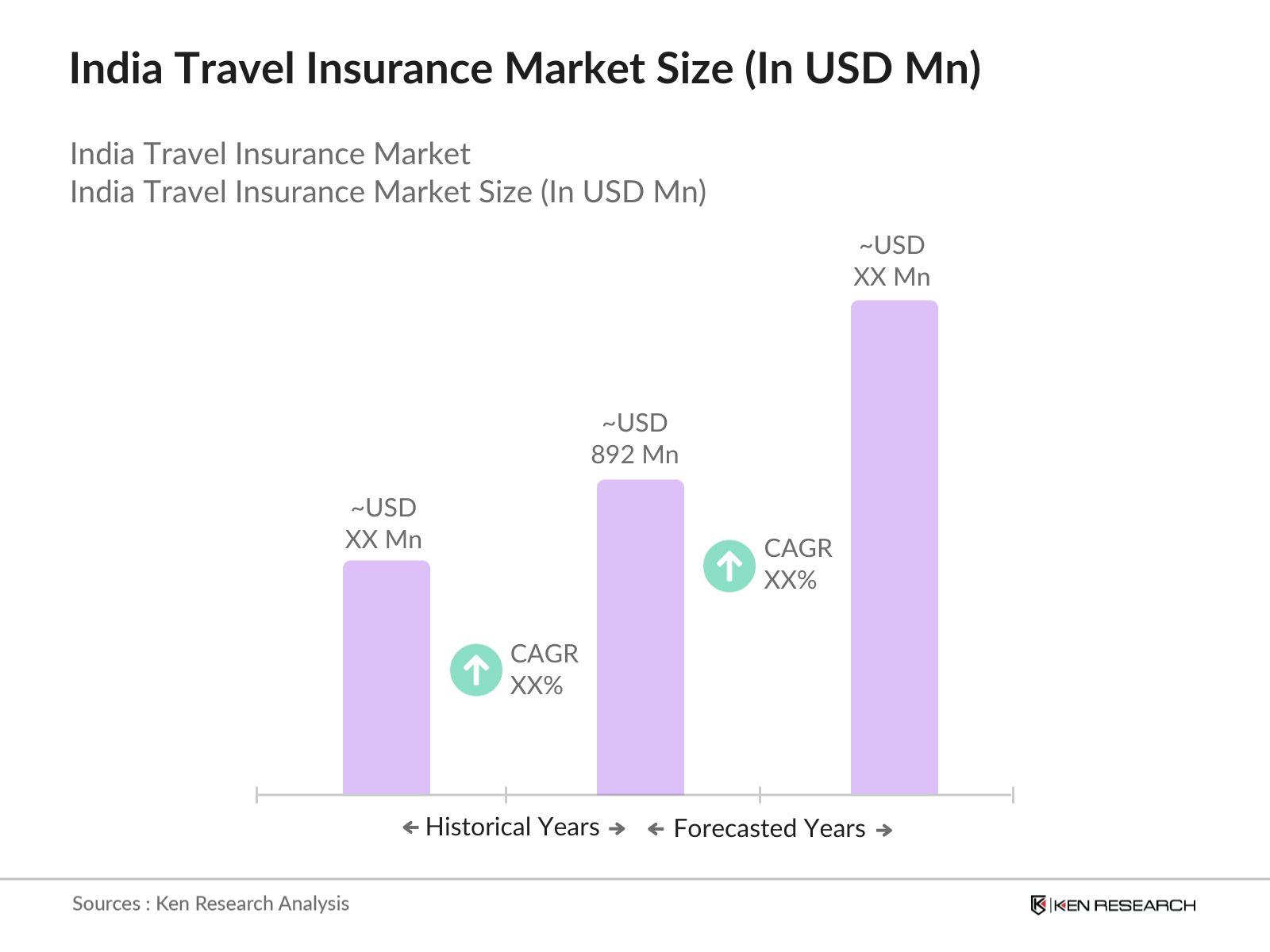
- The India travel insurance market is valued at USD 892 million, based on a five-year historical analysis. This market is driven primarily by the steady growth in both international and domestic tourism. A growing number of middle-class travelers, increasing awareness about the importance of travel insurance, and regulatory frameworks pushing for mandatory insurance for certain international travels have contributed to this market's growth. Additionally, the rise of online insurance platforms and easy policy issuance has spurred market demand.
- Cities like Mumbai, Delhi, and Bangalore dominate the travel insurance market due to their strong outbound travel volumes and high disposable incomes. These cities also serve as hubs for international travel, driving the need for comprehensive travel insurance. Moreover, the presence of major financial institutions and insurance providers in these cities further amplifies the dominance. Additionally, corporate travel is more frequent in these urban centers, boosting the demand for group and business travel insurance policies.
- IRDAI regulates the travel insurance market in India, ensuring fair practices and consumer protection. In 2023, IRDAI introduced guidelines mandating clear disclosures on policy terms and conditions, particularly around medical coverage and exclusions. These guidelines have increased transparency, helping consumers make informed decisions when purchasing travel insurance.
India Travel Insurance Market Segmentation
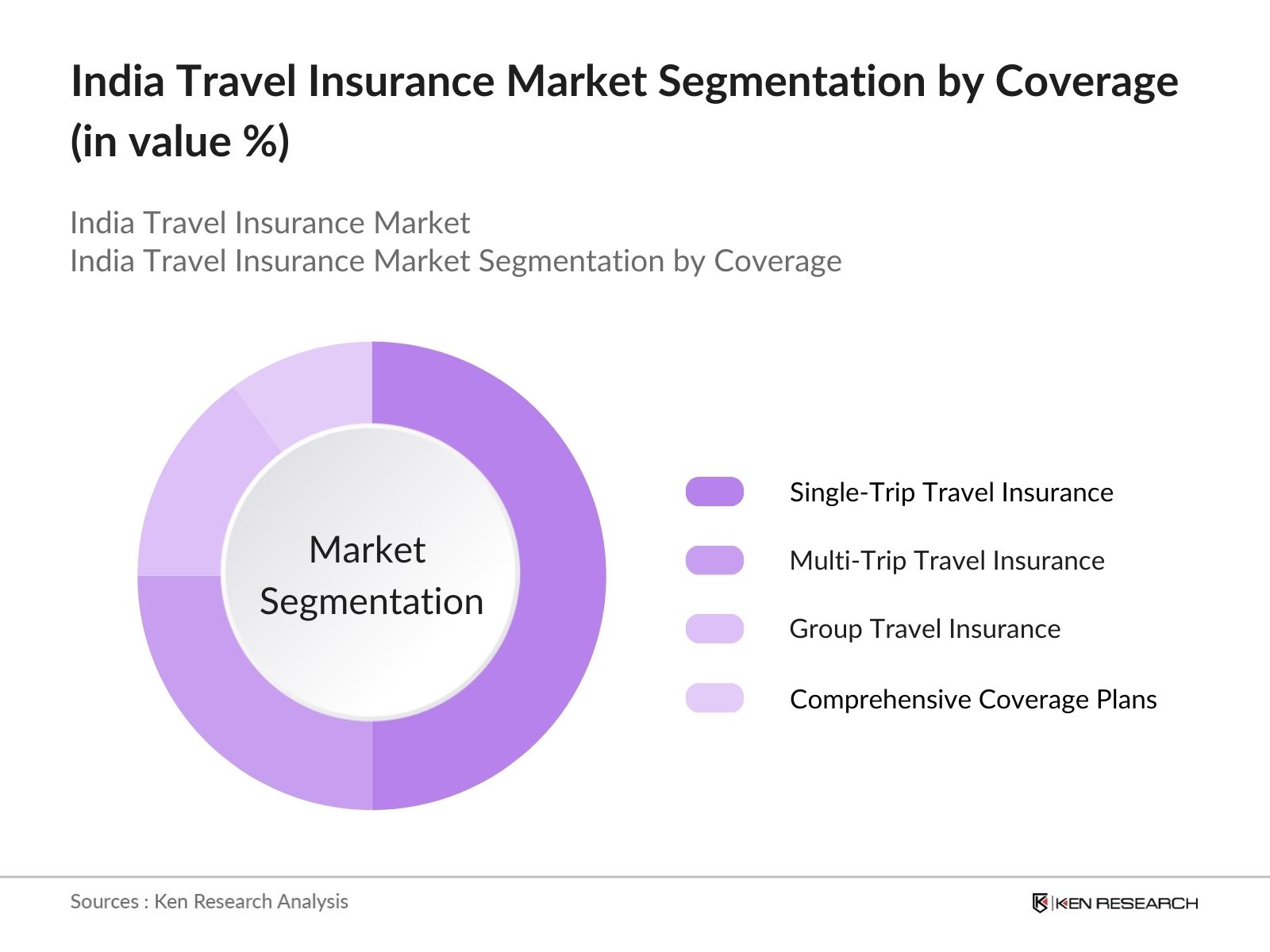
- By Coverage Type: The market is segmented by coverage type into single-trip travel insurance, multi-trip travel insurance, group travel insurance, and comprehensive coverage plans. Among these, single-trip travel insurance holds the dominant market share due to its widespread use by leisure travelers who only need insurance for individual trips. With increasing domestic and international trips being booked for vacations and short-term purposes, single-trip policies have remained the go-to option for most travelers. Moreover, its affordability and ease of customization make it the preferred choice for first-time travelers.
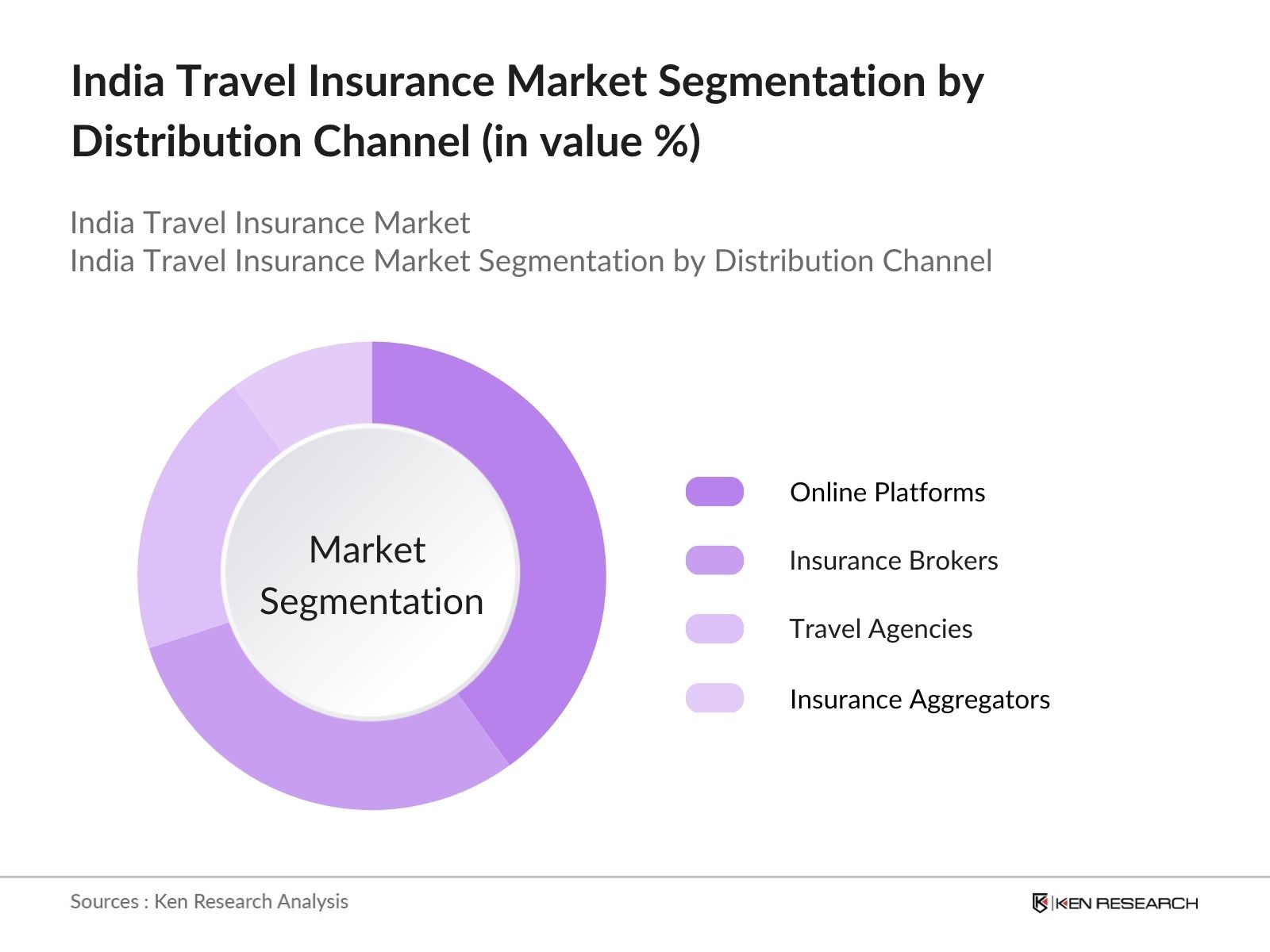
- By Distribution Channel: The market is segmented by distribution channel into insurance brokers, travel agencies, online platforms, and insurance aggregators. Online platforms have dominated the distribution channel owing to the rapid digitalization of the insurance sector in India. The rise of mobile applications, coupled with the convenience of buying and renewing policies online, has contributed to the growth of this sub-segment. Additionally, partnerships between insurers and online travel booking platforms have made it easier for customers to purchase travel insurance as an add-on during their travel bookings.
India Travel Insurance Market Competitive Landscape
The India Travel Insurance Market is characterized by several key players that have established strong market positions through comprehensive product offerings, strong distribution networks, and a customer-first approach. The market is dominated by a combination of local and global insurers who focus on providing extensive coverage at competitive prices. Major players like ICICI Lombard and HDFC ERGO have capitalized on their strong brand presence and diversified product portfolios.
Company | Establishment Year | Headquarters | No. of Employees | Revenue (INR Cr) | Claim Settlement Ratio | Distribution Channels | Product Portfolio | Market Share |
ICICI Lombard General Insurance | 2001 | Mumbai | - | - | - | - | - | - |
HDFC ERGO General Insurance | 2002 | Mumbai | - | - | - | - | - | - |
Bajaj Allianz General Insurance | 2001 | Pune | - | - | - | - | - | - |
New India Assurance Co. Ltd. | 1919 | Mumbai | - | - | - | - | - | - |
Tata AIG General Insurance | 2001 | Mumbai | - | - | - | - | - | - |
India Travel Insurance Market Analysis
India Travel Insurance Market Growth Drivers
- Rise in Outbound and Domestic Tourism: India has seen a notable rise in both outbound and domestic tourism, with over 24 million Indians traveling abroad in 2022, according to the Ministry of Tourism. Domestically, over 2.3 billion trips were recorded in the same year. This increased travel frequency highlights a growing need for travel insurance, which ensures financial protection during unexpected travel disruptions. Outbound tourism has been primarily driven by improved income levels, while domestic travel is supported by the government's "Dekho Apna Desh" initiative aimed at boosting local tourism. This demand fosters growth in the travel insurance market.
- Increasing Awareness of Travel Insurance Benefits: In 2023, travel insurance awareness campaigns led to an increase in insured travelers, with over 12 million policies issued, marking a rise compared to previous years. Awareness programs by the Insurance Regulatory and Development Authority of India (IRDAI) and private insurers emphasized the importance of coverage against trip cancellations, medical emergencies, and loss of belongings, contributing to more customers opting for travel insurance. According to IRDAI, 70% of outbound travelers in 2023 had travel insurance.
- Digital Transformation in Insurance Distribution: The digital transformation of the insurance industry has made purchasing travel insurance more accessible. In 2023, over 80% of travel insurance policies were purchased online, facilitated by the growth of fintech platforms and mobile applications, according to the IRDAI. Additionally, digital payment systems such as UPI have streamlined the insurance buying process, with over 50 million digital insurance transactions recorded in 2023. This shift towards digital platforms is expected to further increase the penetration of travel insurance in India.
India Travel Insurance Market Challenges
- Low Penetration of Travel Insurance: Despite the rise in tourism, travel insurance penetration remains low in India, with only 5 out of 100 domestic travellers opting for coverage in 2023, according to the Ministry of Tourism. This gap can be attributed to a lack of awareness and cultural resistance toward insurance in general. Additionally, travel insurance is often seen as an unnecessary expense for domestic travel, limiting its adoption. The low penetration poses a major challenge for market expansion.
- High Competition from Global Insurance Providers: Global insurance giants, including companies based in the US and Europe, hold a substantial share of the Indian travel insurance market. In 2023, global providers accounted for over 40% of policies sold in India, leveraging their established international networks and extensive coverage options. This competition creates challenges for local insurers to gain market share and compete on price and service quality, especially for outbound travel insurance.
India Travel Insurance Market Future Outlook
The India travel insurance market is expected to experience robust growth over the next five years. This growth will be driven by several factors, including an increase in international outbound travel, particularly among the younger population. The proliferation of online insurance platforms will continue to streamline access to travel insurance, making it more convenient for a broader range of consumers. Additionally, emerging trends such as the inclusion of pandemic coverage and niche travel insurance offerings like adventure and corporate travel policies will further enhance market growth.
India Travel Insurance Market Opportunities
- Expansion into Tier-2 and Tier-3 Cities: With increasing income levels and travel trends in Tier-2 and Tier-3 cities, insurers are focusing on expanding their reach into these markets. In 2023, outbound travel from Tier-2 cities increased by 18%, according to the Ministry of Civil Aviation. Insurance companies are launching targeted campaigns and establishing partnerships with local travel agencies to tap into this growing segment. The expansion into smaller cities offers growth opportunities for travel insurance providers.
- Cross-Border Partnerships and Collaborations: Cross-border collaborations between Indian insurers and international companies have opened new avenues for growth. In 2023, nearly 30% of travel insurance policies for international destinations were issued through partnerships between Indian and foreign insurers, ensuring wider global coverage and competitive pricing. These collaborations allow Indian insurers to leverage international expertise and expand their product offerings for outbound travelers, enhancing market competitiveness.
Scope of the Report
Coverage Type | Single Trip Travel Insurance Multi-Trip Travel Insurance Group Travel Insurance Comprehensive Coverage Plans |
Distribution Channel | Insurance Brokers Travel Agencies Online Platforms Insurance Aggregators |
Type of Traveler | Corporate Travelers Family Travelers Solo Travelers Student Travelers |
Age Group | Below 18 Years 18-30 Years 31-50 Years Above 50 Years |
Region | North India South India East India West India |
Products
Key Target Audience
Insurance Companies
Online Travel Platforms
Banks and Financial Institutions
Corporate Travel Management Firms
Government and Regulatory Bodies (IRDAI, Ministry of Tourism)
International Travel Agencies
Travel Aggregators
Investors and Venture Capitalist Firms
Digital Payment Gateways and Wallet Services
Companies
Players Mentioned in the Report
ICICI Lombard General Insurance
HDFC ERGO General Insurance
Bajaj Allianz General Insurance
SBI General Insurance
New India Assurance Co. Ltd.
Tata AIG General Insurance
Reliance General Insurance
Bharti AXA General Insurance
Future Generali India Insurance
IFFCO Tokio General Insurance
Table of Contents
1. India Travel Insurance Market Overview
1.1 Definition and Scope
1.2 Market Taxonomy
1.3 Market Growth Rate
1.4 Market Segmentation Overview
2. India Travel Insurance Market Size
2.1 Historical Market Size
2.2 Year-On-Year Growth Analysis
2.3 Key Market Developments and Milestones
3. India Travel Insurance Market Analysis
3.1 Growth Drivers
3.1.1 Rise in Outbound and Domestic Tourism
3.1.2 Increasing Awareness of Travel Insurance Benefits
3.1.3 Regulatory Mandates on Travel Insurance for International Travel
3.1.4 Digital Transformation in Insurance Distribution
3.2 Market Challenges
3.2.1 Low Penetration of Travel Insurance
3.2.2 High Competition from Global Insurance Providers
3.2.3 Complex Claim Processes
3.2.4 Lack of Awareness in Rural Areas
3.3 Opportunities
3.3.1 Technological Advancements in Online Insurance Platforms
3.3.2 Expansion into Tier-2 and Tier-3 Cities
3.3.3 Cross-Border Partnerships and Collaborations
3.3.4 Niche Travel Insurance Offerings (Adventure, Corporate Travel, etc.)
3.4 Trends
3.4.1 Emergence of Customizable Travel Insurance Plans
3.4.2 Growth of Group Travel Insurance Policies
3.4.3 Integration of COVID-19 Coverage
3.4.4 Increase in Digital Claims Processing
3.5 Regulatory Framework
3.5.1 Insurance Regulatory and Development Authority of India (IRDAI) Guidelines
3.5.2 Mandatory Travel Insurance for Specific Destinations
3.5.3 New Policies Related to Pandemic Coverage
3.5.4 Public-Private Insurance Initiatives
3.6 SWOT Analysis
3.7 Stakeholder Ecosystem
3.8 Porters Five Forces
3.9 Competitive Ecosystem
4. India Travel Insurance Market Segmentation (In Value %)
4.1 By Coverage Type
4.1.1 Single Trip Travel Insurance
4.1.2 Multi-Trip Travel Insurance
4.1.3 Group Travel Insurance
4.1.4 Comprehensive Coverage Plans
4.2 By Distribution Channel
4.2.1 Insurance Brokers
4.2.2 Travel Agencies
4.2.3 Online Platforms
4.2.4 Insurance Aggregators
4.3 By Type of Traveler
4.3.1 Corporate Travelers
4.3.2 Family Travelers
4.3.3 Solo Travelers
4.3.4 Student Travelers
4.4 By Age Group
4.4.1 Below 18 Years
4.4.2 18-30 Years
4.4.3 31-50 Years
4.4.4 Above 50 Years
4.5 By Region
4.5.1 North India
4.5.2 South India
4.5.3 East India
4.5.4 West India
5. India Travel Insurance Market Competitive Analysis
5.1 Detailed Profiles of Major Companies
5.1.1 ICICI Lombard General Insurance
5.1.2 HDFC ERGO General Insurance
5.1.3 Bajaj Allianz General Insurance
5.1.4 SBI General Insurance
5.1.5 New India Assurance Co. Ltd.
5.1.6 Tata AIG General Insurance
5.1.7 Reliance General Insurance
5.1.8 Bharti AXA General Insurance
5.1.9 Future Generali India Insurance
5.1.10 IFFCO Tokio General Insurance
5.1.11 Royal Sundaram General Insurance
5.1.12 Go Digit General Insurance
5.1.13 Apollo Munich Health Insurance
5.1.14 Star Health and Allied Insurance
5.1.15 Religare Health Insurance
5.2 Cross Comparison Parameters (No. of Employees, Headquarters, Inception Year, Revenue, Claim Settlement Ratio, Product Portfolio, Distribution Network, Market Share)
5.3 Market Share Analysis
5.4 Strategic Initiatives
5.5 Mergers and Acquisitions
5.6 Investment Analysis
5.7 Government Grants
5.8 Private Equity Investments
6. India Travel Insurance Market Regulatory Framework
6.1 Insurance Policy Standards
6.2 Compliance with IRDAI Guidelines
6.3 Consumer Protection Laws
6.4 Cross-Border Regulatory Guidelines
7. India Travel Insurance Future Market Size
7.1 Future Market Size Projections
7.2 Key Factors Driving Future Market Growth
8. India Travel Insurance Future Market Segmentation
8.1 By Coverage Type (In Value %)
8.2 By Distribution Channel (In Value %)
8.3 By Type of Traveler (In Value %)
8.4 By Age Group (In Value %)
8.5 By Region (In Value %)
9. India Travel Insurance Market Analysts Recommendations
9.1 TAM/SAM/SOM Analysis
9.2 Consumer Cohort Analysis
9.3 Strategic Marketing Initiatives
9.4 White Space Opportunity Analysis
DisclaimerContact UsResearch Methodology
Step 1: Identification of Key Variables
The initial phase involves constructing a detailed map of the India Travel Insurance Market, identifying key stakeholders such as insurance providers, distribution channels, and end-users. Comprehensive desk research is conducted, leveraging secondary databases and proprietary information to gather insights on market trends, growth drivers, and competitive landscape.
Step 2: Market Analysis and Construction
In this phase, historical data pertaining to travel insurance policies and revenue generation will be compiled and analyzed. Market penetration rates, customer demographics, and policy types are reviewed to create an accurate picture of the market structure.
Step 3: Hypothesis Validation and Expert Consultation
Market hypotheses are developed based on collected data and tested through interviews with insurance experts, distributors, and corporate buyers. This process ensures that all variables impacting the market are accounted for and validates the forecasted growth trajectory.
Step 4: Research Synthesis and Final Output
The final stage involves synthesizing all gathered data to create a comprehensive view of the India Travel Insurance Market. This includes segment-specific insights, growth forecasts, and analysis of emerging trends, providing a complete and validated market assessment.
Frequently Asked Questions
01. How big is the India Travel Insurance Market?
The India travel insurance market is valued at USD 892 million, primarily driven by increasing outbound travel and rising consumer awareness of the benefits of travel insurance.
02. What are the major challenges in the India Travel Insurance Market?
Challenges in the India travel insurance market include low market penetration, complex claims processes, and the highly competitive nature of the industry. Additionally, awareness in rural areas remains limited, affecting the overall growth potential.
03. Who are the major players in the India Travel Insurance Market?
Key players in the India travel insurance market include ICICI Lombard, HDFC ERGO, Bajaj Allianz, Tata AIG, and SBI General Insurance, all of whom have strong brand presence and extensive product portfolios.
04. What are the key growth drivers for the India Travel Insurance Market?
Growth drivers in the India travel insurance market include the increasing number of international travelers, rising disposable incomes, and the growth of digital platforms facilitating easier access to insurance policies.
Why Buy From Us?

What makes us stand out is that our consultants follows Robust, Refine and Result (RRR) methodology. i.e. Robust for clear definitions, approaches and sanity checking, Refine for differentiating respondents facts and opinions and Result for presenting data with story

We have set a benchmark in the industry by offering our clients with syndicated and customized market research reports featuring coverage of entire market as well as meticulous research and analyst insights.

While we don't replace traditional research, we flip the method upside down. Our dual approach of Top Bottom & Bottom Top ensures quality deliverable by not just verifying company fundamentals but also looking at the sector and macroeconomic factors.

With one step in the future, our research team constantly tries to show you the bigger picture. We help with some of the tough questions you may encounter along the way: How is the industry positioned? Best marketing channel? KPI's of competitors? By aligning every element, we help maximize success.

Our report gives you instant access to the answers and sources that other companies might choose to hide. We elaborate each steps of research methodology we have used and showcase you the sample size to earn your trust.

If you need any support, we are here! We pride ourselves on universe strength, data quality, and quick, friendly, and professional service.