















Indonesia Analgesics Market Outlook to 2030
Region:Asia
Author(s):Abhinav kumar
Product Code:KROD4484
December 2024
97
About the Report
Indonesia Analgesics Market Overview
- The Indonesia Analgesics Market is valued at USD 560 million based on a five-year historical analysis, driven by the rising prevalence of chronic pain conditions, increased healthcare access, and growing self-medication trends. The market is witnessing significant growth due to the accessibility of over-the-counter (OTC) pain relief medications and innovations in non-opioid pain management solutions. The demand for effective pain relief, particularly for arthritis and other chronic illnesses, is also pushing the expansion of the analgesics market in the country, backed by pharmaceutical innovations.
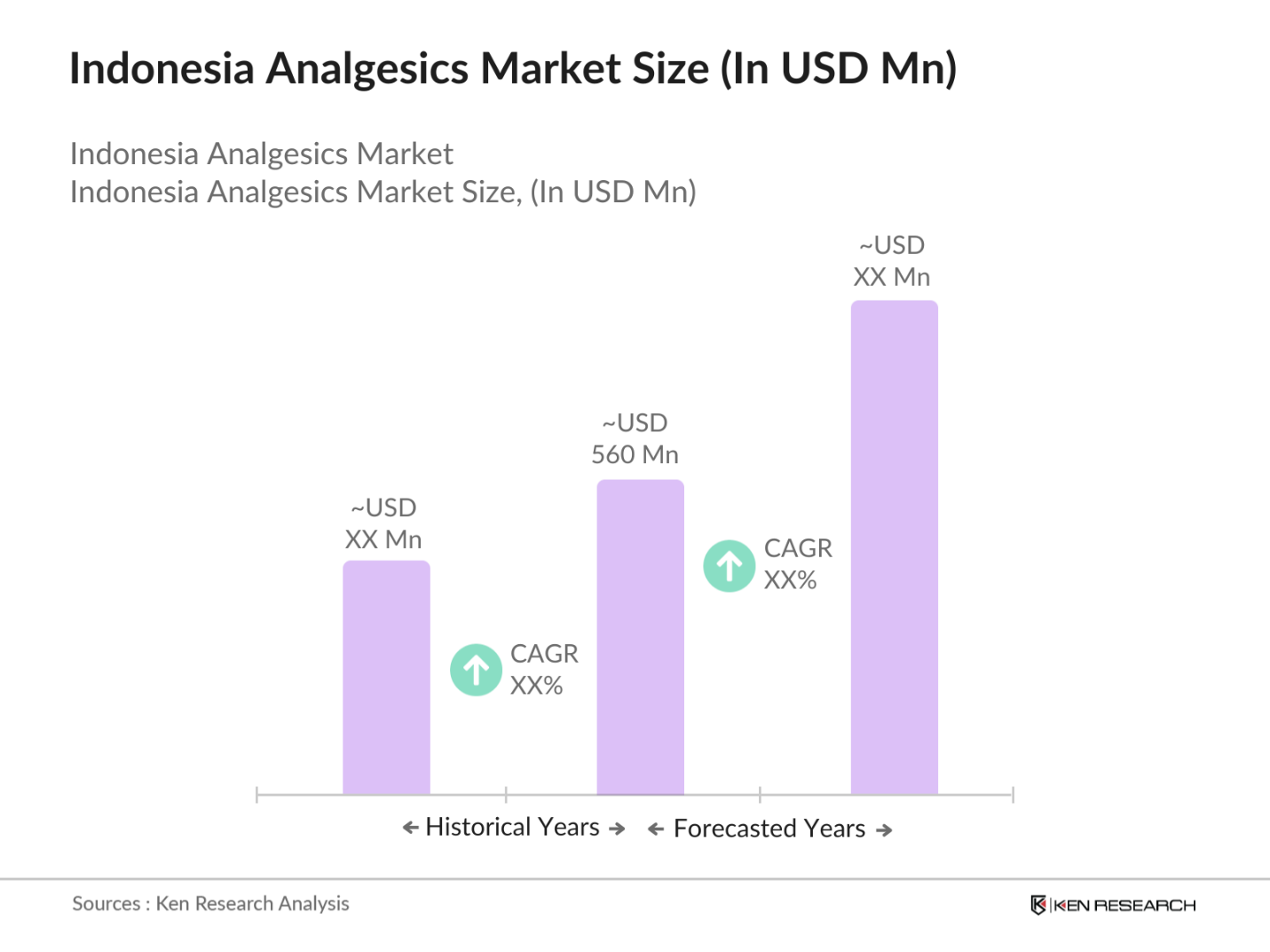
- Key cities and regions like Jakarta, Surabaya, and Java dominate the market due to their dense population, higher healthcare infrastructure, and widespread access to pharmacies. The concentration of pharmaceutical manufacturing hubs and robust distribution channels in these areas enables companies to serve a larger consumer base effectively. These urban areas also show a higher prevalence of self-medication practices, driving the demand for OTC analgesics.
- The Drug Regulatory Authority (BPOM) in Indonesia plays a crucial role in ensuring the safety and efficacy of analgesics in the market. As of 2024, BPOM has implemented streamlined pharmaceutical licensing processes, reducing the time for product approvals by 20%. These initiatives facilitate quicker access to market for new analgesic products, promoting competition and innovation within the sector. Moreover, BPOM's rigorous oversight ensures that all analgesics meet established safety standards, thereby bolstering consumer confidence in available medications.
Indonesia Analgesics Market Segmentation
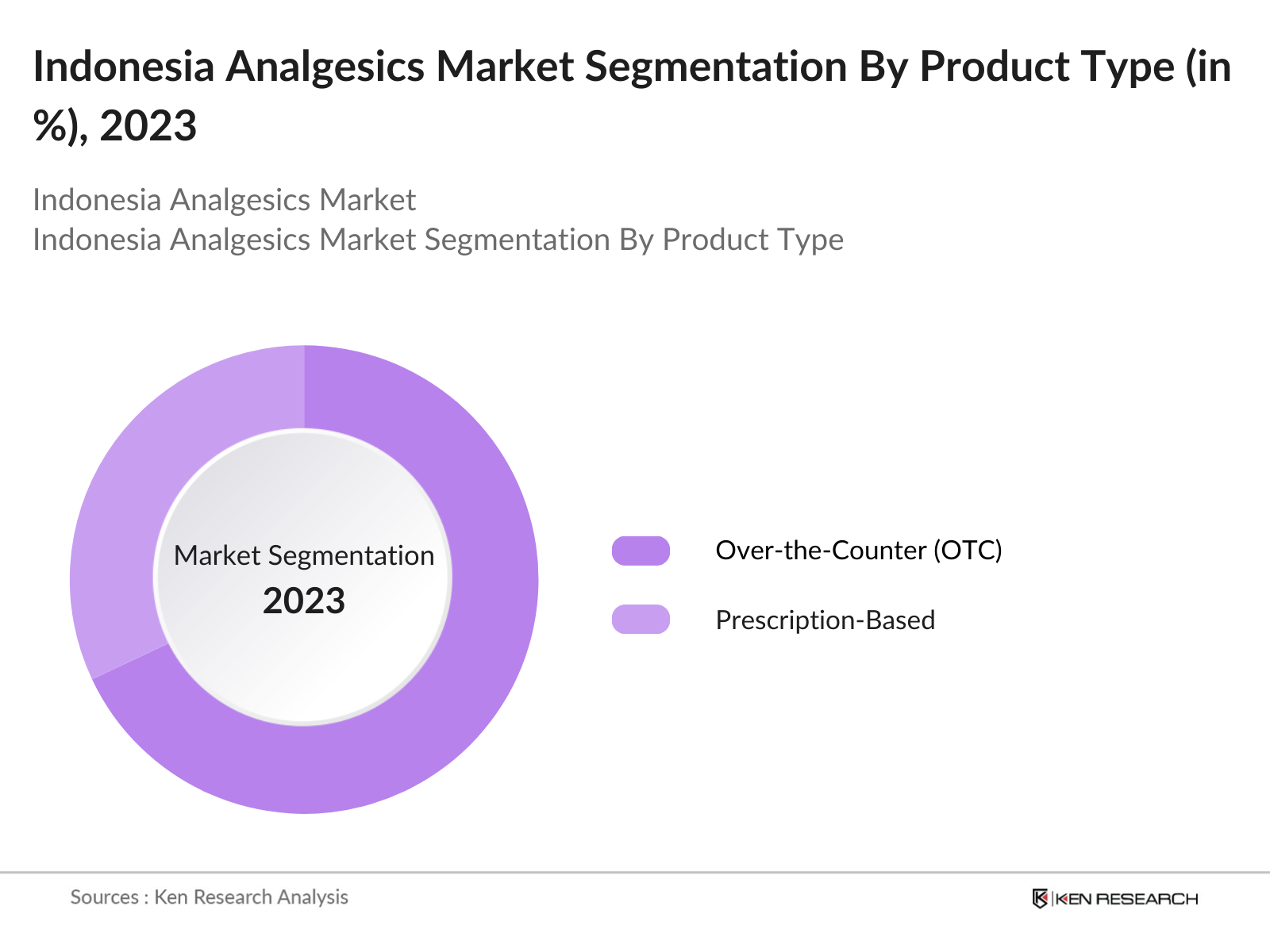
By Product Type: Indonesia's analgesics market is segmented by product type into Over-the-Counter (OTC) Analgesics and Prescription-Based Analgesics. OTC analgesics hold a dominant market share due to their widespread availability and ease of access, particularly in urban centers. Consumers prefer these products for immediate pain relief solutions without the need for a prescription, making them more convenient. The presence of leading brands like Panadol and Paracetamol strengthens the OTC segment's position, which is further supported by the increasing self-medication trend in Indonesia.
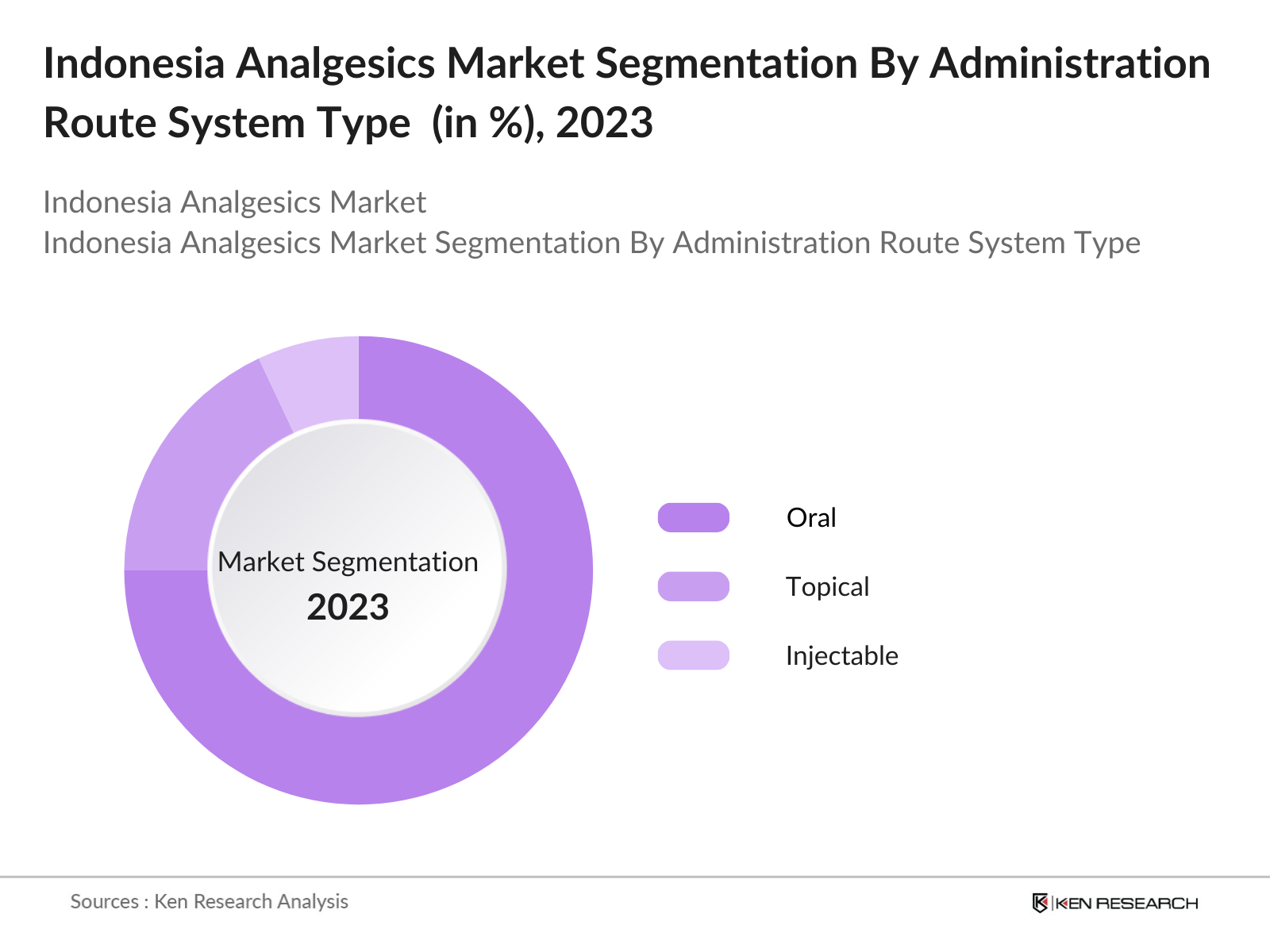
By Administration Route: The market is also segmented by Oral, Topical, and Injectable routes of administration. Oral analgesics dominate the segment, owing to their familiarity, ease of use, and rapid absorption. Common oral forms such as tablets and capsules are favored by consumers due to their convenience and effectiveness. Additionally, the availability of oral painkillers in different dosage forms, such as sustained-release tablets, adds to the popularity of this sub-segment.
Indonesia Analgesics Market Competitive Landscape
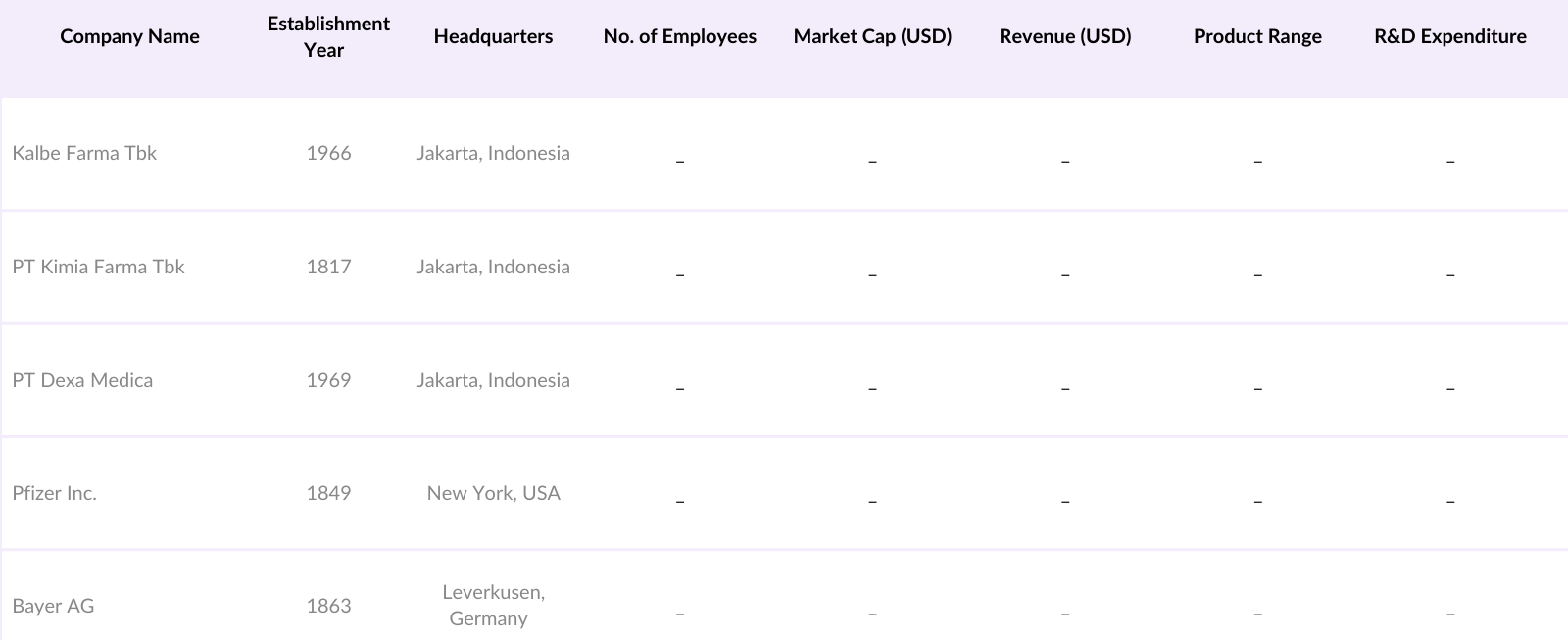
The Indonesia Analgesics Market is highly competitive, with a mix of local and international players. Companies like Kalbe Farma and PT Kimia Farma Tbk have a stronghold due to their well-established distribution networks and brand reputation. International pharmaceutical companies such as Pfizer and Bayer also play a key role, providing innovative pain relief solutions that cater to diverse consumer needs. The competition landscape is marked by the differentiation in product formulations, availability of both opioid and non-opioid medications, and an expanding online pharmacy segment.
Indonesia Analgesics Industry Analysis
Growth Drivers
- Rising Prevalence of Chronic Pain Conditions: The prevalence of chronic pain conditions is significantly increasing in Indonesia, primarily driven by an aging population. In 2023, it was estimated that around 57% of older adults (aged 60 and above) experience chronic pain, highlighting a critical healthcare need. Additionally, the Ministry of Health reported that 34% of the population suffers from chronic illnesses, including arthritis and fibromyalgia, further escalating the demand for analgesics. This rise in chronic conditions necessitates a robust analgesics market to meet healthcare needs, emphasizing the role of effective pain management solutions.
- Expanding Healthcare Access: Indonesia's commitment to expanding healthcare access is evident through initiatives like the Universal Health Coverage (UHC) program, which aims to cover 98% of the population by 2025. As of 2024, approximately 96% of Indonesians are already enrolled in UHC, facilitating access to essential medicines, including analgesics. Moreover, rural healthcare initiatives are set to increase the number of health facilities by 30% in underserved areas, enhancing access to pain management solutions. This growth in healthcare infrastructure significantly supports the analgesics market.
- Increasing Consumer Awareness: Consumer awareness regarding pain management is rising, with a notable shift towards self-medication and the adoption of over-the-counter (OTC) analgesics. As of 2024, data indicates that nearly 65% of adults in Indonesia are aware of OTC options for pain relief, reflecting a growing trend in self-care. Educational campaigns by the government and healthcare organizations have contributed to this awareness, emphasizing the safe use of analgesics. Consequently, this trend supports the analgesics market, driven by informed consumers seeking accessible solutions.
Market Challenges
- Government Regulations on Drug Pricing: The Indonesian government imposes strict regulations on drug pricing to ensure affordability, which can hinder profitability in the analgesics market. The National Health Insurance (BPJS Kesehatan) mandates price controls on essential medications, including analgesics. As of 2024, this regulation has led to a 20% price reduction for several key analgesics. Additionally, the government promotes the use of generics, which, while beneficial for affordability, has intensified price competition and eroded margins for branded analgesic manufacturers. Indonesian
- Opioid Misuse and Abuse: The growing concern over opioid misuse has led to stringent regulatory restrictions on prescription analgesics in Indonesia. In 2023, the Indonesian government reported a 15% increase in opioid-related incidents, prompting a reevaluation of prescription practices. As a result, healthcare providers are now required to follow stricter guidelines for prescribing opioids, which may limit access for patients in genuine need of pain relief. These regulatory challenges present significant obstacles to the analgesics market, particularly for opioid-based products.
Indonesia Analgesics Market Future Outlook
Over the next five years, the Indonesia Analgesics Market is expected to grow significantly due to several key factors. These include increasing consumer demand for non-opioid pain relief options, expanding rural healthcare infrastructure, and a shift towards self-medication in both urban and rural areas. Technological advancements in drug delivery, such as the rise in topical pain relief solutions and innovative drug formulations, will also contribute to market growth. Additionally, increased government initiatives focused on improving healthcare access and affordability are expected to further drive market expansion.
Opportunities
- Innovation in Pain Relief Solutions: The market for pain relief solutions is expanding, particularly through innovative topical treatments and non-traditional therapies. As of 2024, the demand for topical analgesics, such as gels and patches, has increased by 25% compared to 2023. This trend is driven by consumer preference for localized pain management solutions that offer fewer systemic side effects. Additionally, the growing acceptance of alternative therapies, including acupuncture and physical therapy, creates opportunities for analgesic manufacturers to diversify their product offerings and partnerships.
- Expansion into E-Pharmacies: The rise of e-pharmacies presents a significant growth opportunity for the analgesics market in Indonesia. By 2024, e-pharmacy sales have surged, with online channels accounting for 15% of total pharmaceutical sales. This shift is largely driven by increasing internet penetration and consumer preference for convenient shopping. The governments support for digital health initiatives further promotes the growth of e-pharmacies, allowing analgesic manufacturers to reach a broader audience and enhance their market presence through online platforms.
Scope of the Report
|
By Product Type |
Over-the-Counter (OTC) AnalgesicsPrescription-Based Analgesics |
|
By Administration Route |
Oral Topical Injectable |
|
By Therapeutic Class |
Opioids Non-Opioids |
|
By Distribution Channel |
Retail Pharmacies Online Pharmacies Hospital Pharmacies |
|
By Region |
Java Sumatra Kalimantan Sulawesi Papua |
Products
Key Target Audience
Pharmaceutical Companies
Retail Pharmacies Companies
Online Pharmacies Companies
Hospital Pharmacies Industries
Healthcare Providers Industries
Government and Regulatory Bodies (BPOM, Ministry of Health Indonesia)
Investors and Venture Capital Firms
Public Health Organizations Companies
Companies
Major Players in the Indonesia Analgesics Market
Kalbe Farma Tbk
PT Kimia Farma Tbk
PT Dexa Medica
PT Soho Global Health
Pfizer Inc.
Bayer AG
GlaxoSmithKline plc
Johnson & Johnson
PT Pharos Indonesia
Sanofi
Boehringer Ingelheim
Merck & Co., Inc.
Novartis AG
Mylan NV
PT Darya-Varia Laboratoria Tbk
Table of Contents
1. Indonesia Analgesics Market Overview
1.1. Definition and Scope
1.2. Market Taxonomy
1.3. Market Growth Rate
1.4. Market Segmentation Overview
2. Indonesia Analgesics Market Size (In USD Mn)
2.1. Historical Market Size
2.2. Year-On-Year Growth Analysis
2.3. Key Market Developments and Milestones
3. Indonesia Analgesics Market Analysis
3.1. Growth Drivers
3.1.1. Rising Prevalence of Chronic Pain Conditions
3.1.2. Increasing Consumer Preference for Over-The-Counter (OTC) Medications
3.1.3. Expansion of Healthcare Infrastructure
3.1.4. Growing Awareness of Pain Management Solutions
3.2. Market Challenges
3.2.1. Regulatory Hurdles in Drug Approval Processes
3.2.2. Competition from Traditional and Herbal Remedies
3.2.3. Price Sensitivity Among Consumers
3.3. Opportunities
3.3.1. Introduction of Innovative Drug Delivery Systems
3.3.2. Expansion into Rural and Underserved Markets
3.3.3. Strategic Partnerships and Collaborations
3.4. Trends
3.4.1. Shift Towards Topical Analgesics
3.4.2. Adoption of Digital Marketing Strategies
3.4.3. Increasing Use of E-commerce Platforms for Distribution
3.5. Government Regulation
3.5.1. National Drug Policy and Its Impact on Analgesics
3.5.2. Pricing Controls and Subsidies
3.5.3. Import and Export Regulations
3.5.4. Intellectual Property Rights and Patent Laws
3.6. SWOT Analysis
3.7. Stakeholder Ecosystem
3.8. Porter’s Five Forces
3.9. Competitive Landscape
4. Indonesia Analgesics Market Segmentation
4.1. By Drug Type (In Value %)
4.1.1. Non-Opioid Analgesics
4.1.2. Opioid Analgesics
4.1.3. Combination Analgesics
4.2. By Route of Administration (In Value %)
4.2.1. Oral
4.2.2. Topical
4.2.3. Intravenous
4.2.4. Rectal
4.3. By Distribution Channel (In Value %)
4.3.1. Hospital Pharmacies
4.3.2. Retail Pharmacies
4.3.3. Online Pharmacies
4.3.4. Others
4.4. By End User (In Value %)
4.4.1. Adults
4.4.2. Pediatrics
4.4.3. Geriatrics
4.5. By Region (In Value %)
4.5.1. Java
4.5.2. Sumatra
4.5.3. Kalimantan
4.5.4. Sulawesi
4.5.5. Others
5. Indonesia Analgesics Market Competitive Analysis
5.1. Detailed Profiles of Major Companies
5.1.1. PT Kalbe Farma Tbk
5.1.2. PT Darya-Varia Laboratoria Tbk
5.1.3. PT Tempo Scan Pacific Tbk
5.1.4. PT Kimia Farma Tbk
5.1.5. PT Phapros Tbk
5.1.6. PT Soho Global Health
5.1.7. PT Sido Muncul Tbk
5.1.8. PT Indofarma Tbk
5.1.9. PT Bintang Toedjoe
5.1.10. PT Harsen Laboratories
5.1.11. PT Konimex
5.1.12. PT Sanbe Farma
5.1.13. PT Dexa Medica
5.1.14. PT Bernofarm
5.1.15. PT Combiphar
5.2. Cross Comparison Parameters (Product Portfolio, Market Share, Distribution Network, R&D Investment, Revenue)
5.3. Market Share Analysis
5.4. Strategic Initiatives
5.5. Mergers and Acquisitions
5.6. Investment Analysis
5.6.1. Venture Capital Funding
5.6.2. Government Grants
5.6.3. Private Equity Investments
6. Indonesia Analgesics Market Regulatory Framework
6.1. Drug Registration and Approval Processes
6.2. Compliance Requirements
6.3. Certification Processes
7. Indonesia Analgesics Future Market Size (In USD Mn)
7.1. Future Market Size Projections
7.2. Key Factors Driving Future Market Growth
8. Indonesia Analgesics Future Market Segmentation
8.1. By Drug Type (In Value %)
8.2. By Route of Administration (In Value %)
8.3. By Distribution Channel (In Value %)
8.4. By End User (In Value %)
8.5. By Region (In Value %)
9. Indonesia Analgesics Market Analysts’ Recommendations
9.1. Total Addressable Market (TAM), Serviceable Available Market (SAM), Serviceable Obtainable Market (SOM) Analysis
9.2. Customer Cohort Analysis
9.3. Marketing Initiatives
9.4. White Space Opportunity Analysis
Disclaimer Contact UsResearch Methodology
Step 1: Identification of Key Variables
The initial phase involves constructing a detailed ecosystem map that encompasses all major stakeholders within the Indonesia Analgesics Market. This is achieved through extensive desk research, utilizing proprietary databases and publicly available information to define the critical variables that drive the market.
Step 2: Market Analysis and Construction
This phase involves compiling historical data on the Indonesia Analgesics Market to assess key trends such as market penetration and revenue generation. Analyzing the data allows for identifying emerging patterns, especially related to consumer preferences for different product types and routes of administration.
Step 3: Hypothesis Validation and Expert Consultation
Hypotheses on market dynamics are validated through expert consultations conducted via interviews with industry stakeholders. These consultations provide insights into operational and financial aspects, adding valuable perspectives on market trends and the competitive landscape.
Step 4: Research Synthesis and Final Output
The final step involves synthesizing the data collected and presenting it in a structured manner. A bottom-up approach is utilized to verify the insights, complemented by interviews with key market players to ensure a comprehensive analysis of the Indonesia Analgesics Market.
Frequently Asked Questions
01. How big is the Indonesia Analgesics Market?
The Indonesia Analgesics Market is valued at USD 560 million, driven by rising self-medication trends, a growing aging population, and the availability of OTC pain relief solutions.
02. What are the challenges in the Indonesia Analgesics Market?
Challenges include strict regulatory frameworks surrounding opioid medications, high competition from generics, and the need for effective pain management solutions that avoid misuse and addiction.
03. Who are the major players in the Indonesia Analgesics Market?
Major players include Kalbe Farma, PT Kimia Farma Tbk, Pfizer, Johnson & Johnson, and Bayer. These companies dominate due to their strong distribution networks, extensive product portfolios, and innovation in pain management.
04. What are the growth drivers of the Indonesia Analgesics Market?
Growth is driven by increasing consumer awareness about pain management, advancements in pharmaceutical formulations, and the growing availability of non-opioid pain relief solutions.
Why Buy From Us?

What makes us stand out is that our consultants follows Robust, Refine and Result (RRR) methodology. i.e. Robust for clear definitions, approaches and sanity checking, Refine for differentiating respondents facts and opinions and Result for presenting data with story

We have set a benchmark in the industry by offering our clients with syndicated and customized market research reports featuring coverage of entire market as well as meticulous research and analyst insights.

While we don't replace traditional research, we flip the method upside down. Our dual approach of Top Bottom & Bottom Top ensures quality deliverable by not just verifying company fundamentals but also looking at the sector and macroeconomic factors.

With one step in the future, our research team constantly tries to show you the bigger picture. We help with some of the tough questions you may encounter along the way: How is the industry positioned? Best marketing channel? KPI's of competitors? By aligning every element, we help maximize success.

Our report gives you instant access to the answers and sources that other companies might choose to hide. We elaborate each steps of research methodology we have used and showcase you the sample size to earn your trust.

If you need any support, we are here! We pride ourselves on universe strength, data quality, and quick, friendly, and professional service.