















Saudi Arabia Medical Devices Market Outlook 2030
Region:Middle East
Author(s):Shivani Mehra
Product Code:KROD11439
November 2024
94
About the Report
Saudi Arabia Medical Devices Market Overview
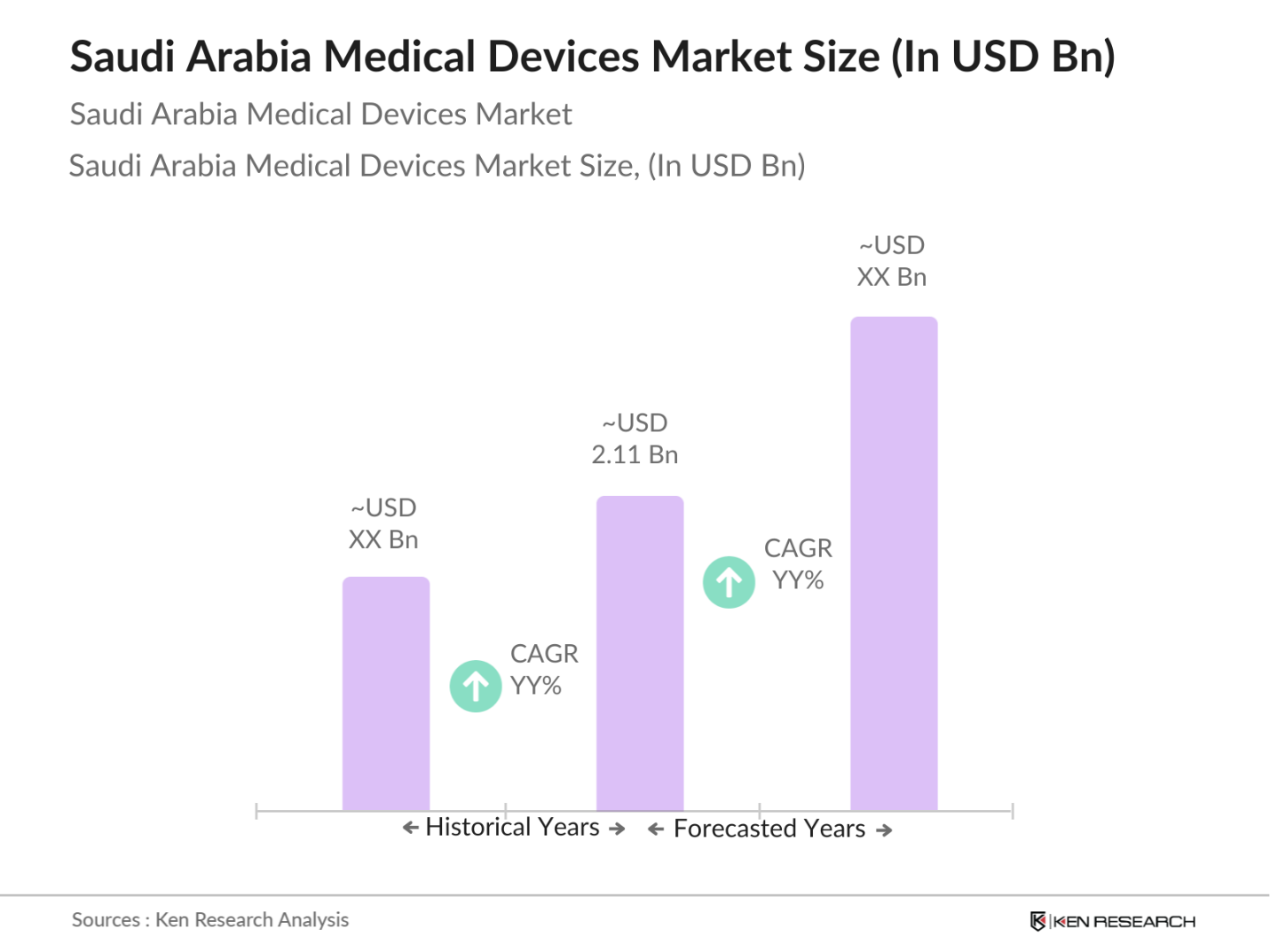
- The Saudi Arabia medical devices market is valued at USD 2.11 billion, with significant growth driven by a rising demand for advanced healthcare technologies and an increasing focus on improving healthcare infrastructure. The market's expansion is further supported by the government's initiatives to promote healthcare investments, improve access to quality medical services, and boost local manufacturing capabilities in line with strategy. As a result, investments in innovative medical technologies are accelerating, providing a robust foundation for future growth.
- The cities of Riyadh, Jeddah, and Dammam are dominant in the medical devices market due to their established healthcare infrastructure and concentration of hospitals and healthcare facilities. Riyadh, as the capital, leads in healthcare investments, while Jeddah serves as a key logistics hub, facilitating imports of medical devices. Dammam is crucial for its proximity to industrial zones and growing healthcare facilities, making these cities focal points for the medical device sector's growth in Saudi Arabia.
- The Saudi government has launched several programs to encourage local manufacturing of medical devices, aiming to increase self-sufficiency and reduce import dependency. This includes providing financial incentives, such as grants and low-interest loans, to companies that establish manufacturing facilities in the Kingdom. In 2022, the government announced an investment of SAR 1.4 billion to support local manufacturers, focusing on high-demand medical devices. These initiatives are expected to enhance the production capacity of local firms and stimulate innovation in the medical devices sector.
Saudi Arabia Medical Devices Market Segmentation
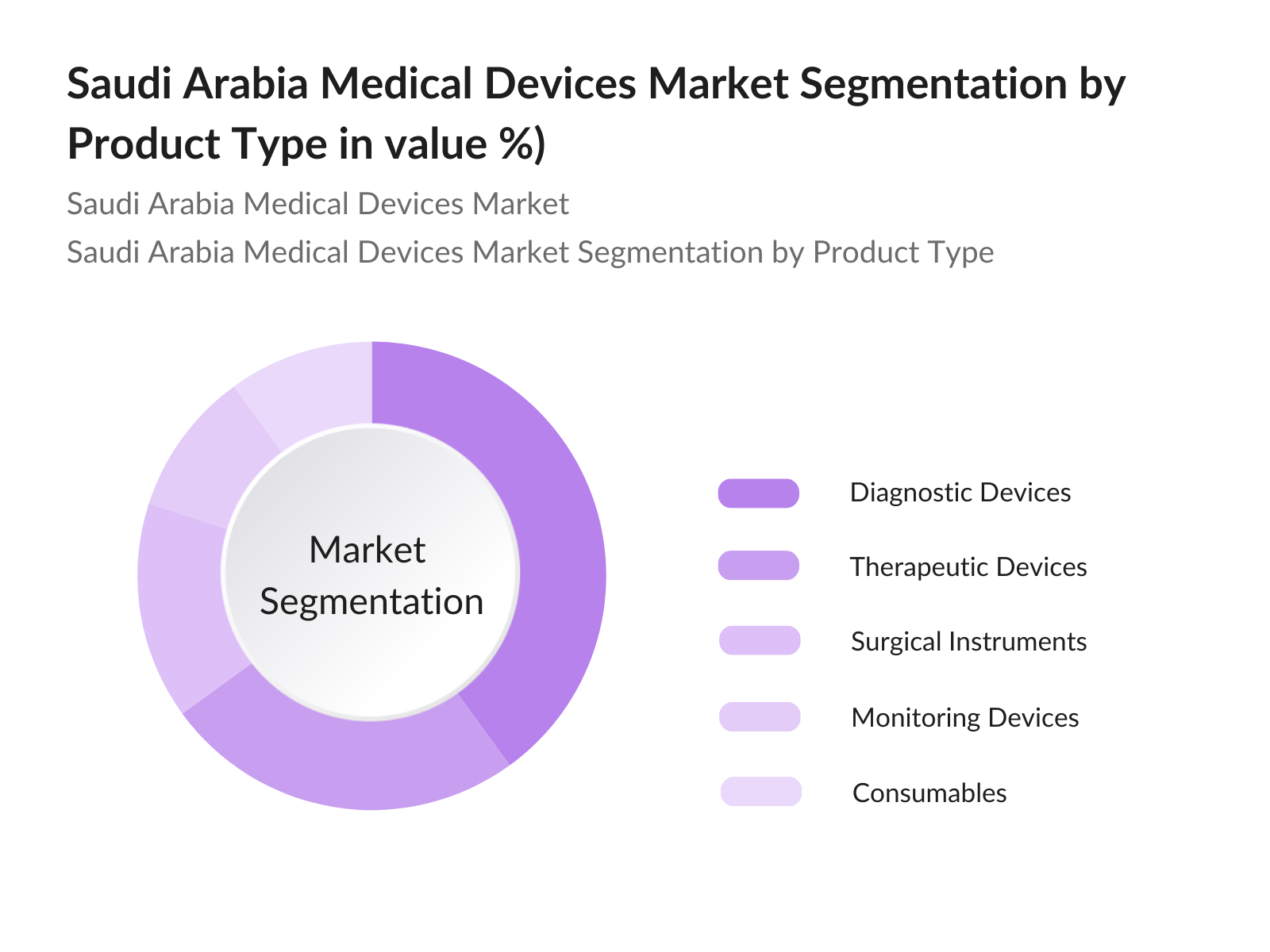
- By Product Type: The Saudi Arabia medical devices market is segmented by product type into diagnostic devices, therapeutic devices, surgical instruments, monitoring devices, and consumables. Among these, diagnostic devices hold the largest market share due to the increasing prevalence of chronic diseases and the need for early detection. The rising adoption of advanced imaging technologies, such as MRI and CT scans, further drives this segment's dominance as healthcare providers prioritize accurate diagnostics for effective treatment planning.
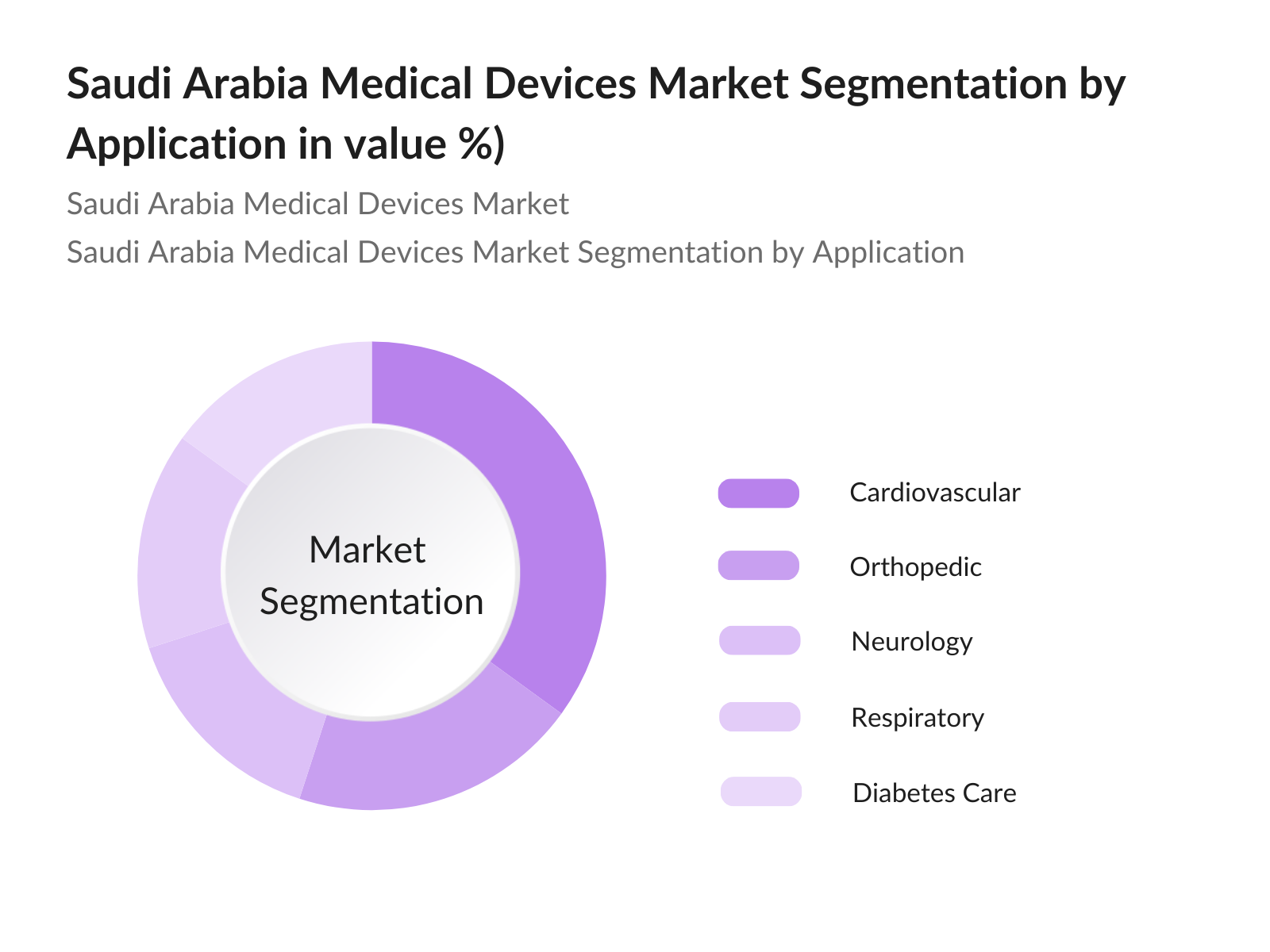
- By Application: The market is also segmented by application into cardiovascular, orthopedic, neurology, respiratory, and diabetes care. The cardiovascular segment is leading in market share, primarily due to the high incidence of cardiovascular diseases in the region. The growing elderly population, along with increased health awareness and access to advanced cardiovascular treatments, has significantly contributed to the demand for cardiovascular devices such as stents, pacemakers, and diagnostic imaging tools.
Saudi Arabia Medical Devices Market Competitive Landscape
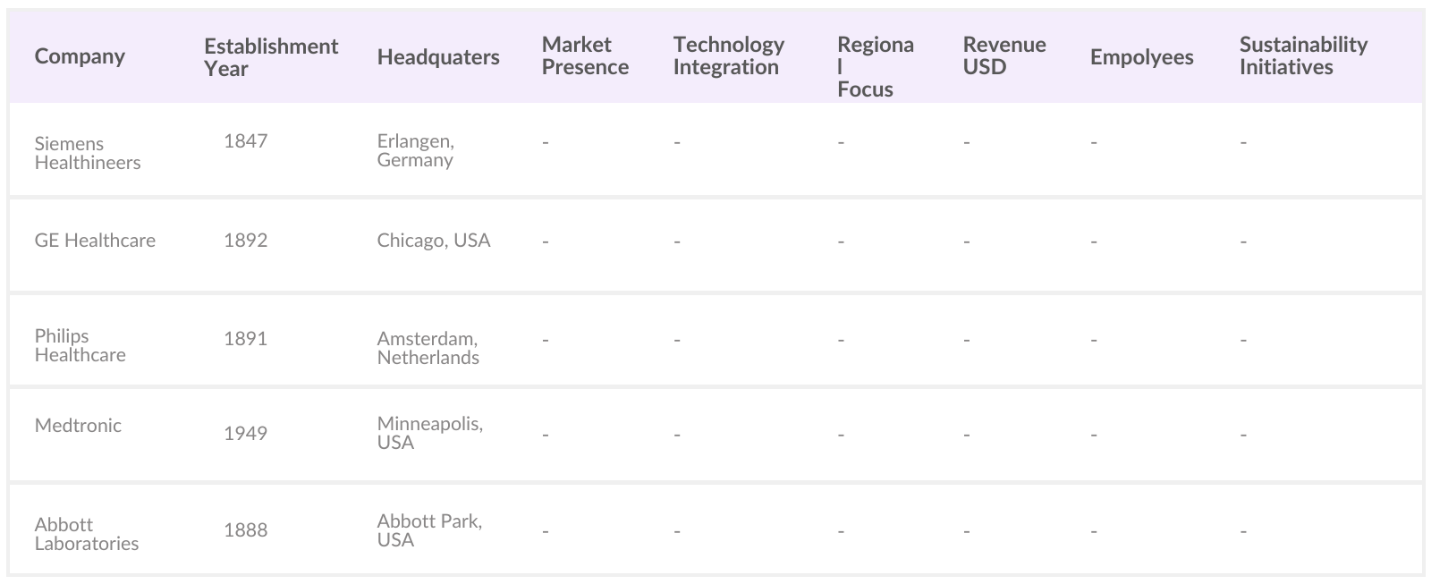
The Saudi Arabia medical devices market is dominated by a few major players, including international corporations and local manufacturers. Key companies such as Siemens Healthineers, GE Healthcare, and Philips Healthcare lead the market due to their innovative product offerings and strong distribution networks. This consolidation emphasizes the significant influence of these companies in shaping market dynamics and driving technological advancements.
Saudi Arabia Medical Devices Industry Analysis
Market Growth Drivers
- Rising Chronic Diseases (Prevalence Rates): Chronic diseases significantly impact Saudi Arabia's healthcare landscape, with the World Health Organization (WHO) noting that non-communicable diseases accounted for a large portion of all deaths in the Kingdom in 2022. Diabetes prevalence is notably high, affecting over 4 million individuals as of 2023. Additionally, cardiovascular diseases and respiratory conditions are on the rise, necessitating advanced medical devices for management and treatment. The increasing burden of these diseases drives the demand for innovative medical technologies and devices to improve patient outcomes and healthcare delivery.
- Growing Geriatric Population (Demographics): The demographic shift towards an aging population in Saudi Arabia presents a substantial growth driver for the medical devices market. By 2025, the elderly population (aged 60 and above) is projected to reach 6 million. This demographic is prone to various health issues, including chronic diseases, which increases the demand for medical devices tailored to their needs. The government has recognized this trend, leading to an expansion in healthcare services aimed at supporting geriatric care, thereby bolstering the market for medical devices specifically designed for older adults.
- Increasing Health Awareness (Public Sentiment): Health awareness in Saudi Arabia has surged, with a significant portion of the population actively engaging in health promotion activities as of 2023. Government initiatives and public campaigns focusing on healthy lifestyles and disease prevention have contributed to this trend. The Ministry of Health has reported a rise in preventive health check-ups, with over 2 million individuals participating in screening programs for chronic diseases in 2022. This increased awareness is expected to drive the adoption of medical devices, as more individuals seek early diagnosis and management of health conditions.
Market Challenges:
- Stringent Regulatory Environment (Compliance Requirements): Saudi Arabia's regulatory framework for medical devices is rigorous, with compliance requirements that can be challenging for manufacturers. The Saudi Food and Drug Authority (SFDA) oversees the registration and approval process, which includes stringent documentation and testing requirements. In 2022, the SFDA processed over 10,000 medical device applications, with a notable number being rejected due to non-compliance. This regulatory environment can slow down the entry of new products into the market, posing a challenge for manufacturers looking to innovate and expand their offerings.
- High Import Costs (Cost Analysis): Import costs for medical devices in Saudi Arabia are substantial, attributed to tariffs and logistics expenses. In 2022, the average import tariff on medical devices was significant, with additional costs incurred for compliance and registration. Moreover, currency fluctuations and global supply chain disruptions have exacerbated these costs, impacting pricing strategies for foreign manufacturers. As a result, many companies are facing difficulties in maintaining competitive pricing while ensuring compliance with local regulations, which can hinder market penetration and growth.
Saudi Arabia Medical Devices Market Future Outlook
Over the next five years, the Saudi Arabia medical devices market is anticipated to witness robust growth, propelled by continuous government support, advancements in medical technologies, and increasing consumer demand for innovative healthcare solutions. The ongoing efforts to enhance healthcare infrastructure and accessibility will further contribute to the market's expansion. As the focus on preventive healthcare increases, the demand for advanced diagnostic and monitoring devices is expected to rise significantly.
Market Opportunities:
- Advancements in Telemedicine (Technology Adoption): The telemedicine sector in Saudi Arabia is experiencing rapid growth, driven by increased investments in digital health technologies. In 2022, the telemedicine market was valued at approximately SAR 1 billion, reflecting a growing trend towards remote healthcare services. The governments support for digital transformation in healthcare, exemplified by initiatives like the National Health Information Center, has facilitated the integration of telemedicine into mainstream healthcare delivery. As healthcare providers adopt telemedicine solutions, there is a corresponding demand for medical devices that can be used in remote patient monitoring and diagnosis, creating opportunities for innovation in this sector.
- Strategic Collaborations with Global Firms (Partnerships): Strategic collaborations between local firms and global medical device manufacturers are opening new avenues for growth in the Saudi market. In 2022, over 25 partnerships were established between Saudi companies and international firms, focusing on technology transfer and local manufacturing initiatives. These collaborations enhance the capacity for innovation and allow local firms to leverage advanced technologies and expertise from established players. As the government promotes localization and encourages foreign investment, such partnerships are expected to play a crucial role in expanding the medical devices market and improving healthcare outcomes in the Kingdom.
Scope of the Report
|
By Product Type |
Diagnostic Devices Therapeutic Devices Surgical Instruments Monitoring Devices Consumables |
|
By Application |
Cardiovascular Orthopedic Neurology Respiratory Diabetes Care |
|
By End-User |
Hospitals Diagnostic Laboratories Home Care Settings Rehabilitation Centers Research Institutions |
|
By Technology |
Minimally Invasive Technology 3D Printing Technology Robotics in Surgery |
|
By Region |
North-East Midwest West Coast Southern States |
Products
Key Target Audience
Government and Regulatory Bodies (Saudi Food and Drug Authority)
Healthcare Providers (Hospitals and Clinics)
Medical Device Manufacturers
Healthcare Distributors
Pharmaceutical Companies
Investments and Venture Capitalist Firms
Research and Development Institutions
Insurance Companies
Companies
Players Mentioned in the market
Siemens Healthineers
GE Healthcare
Philips Healthcare
Medtronic
Abbott Laboratories
Boston Scientific
B. Braun Melsungen AG
Stryker Corporation
Johnson & Johnson
3M Company
Baxter International Inc.
Zimmer Biomet
Olympus Corporation
Hitachi Medical Corporation
Hologic, Inc.
Table of Contents
1. Saudi Arabia Medical Devices Market Overview
1.1. Definition and Scope
1.2. Market Taxonomy
1.3. Market Growth Rate
1.4. Market Segmentation Overview
2. Saudi Arabia Medical Devices Market Size (In USD Mn)
2.1. Historical Market Size
2.2. Year-On-Year Growth Analysis
2.3. Key Market Developments and Milestones
3. Saudi Arabia Medical Devices Market Analysis
3.1. Growth Drivers
3.1.1. Rising Chronic Diseases (Prevalence Rates)
3.1.2. Growing Geriatric Population (Demographics)
3.1.3. Increasing Health Awareness (Public Sentiment)
3.1.4. Government Initiatives (Healthcare Policies)
3.2. Market Challenges
3.2.1. Stringent Regulatory Environment (Compliance Requirements)
3.2.2. High Import Costs (Cost Analysis)
3.2.3. Limited Local Manufacturing (Production Capacity)
3.3. Opportunities
3.3.1. Advancements in Telemedicine (Technology Adoption)
3.3.2. Expansion of Health Insurance Coverage (Market Accessibility)
3.3.3. Strategic Collaborations with Global Firms (Partnerships)
3.4. Trends
3.4.1. Increasing Use of AI in Diagnostics (Technology Trends)
3.4.2. Focus on Preventive Healthcare (Healthcare Trends)
3.4.3. Integration of Wearable Devices (Product Innovation)
3.5. Government Regulation
3.5.1. National Healthcare Strategy (Policy Framework)
3.5.2. Medical Device Registration Process (Regulatory Framework)
3.5.3. Quality Standards Compliance (Certification)
3.6. SWOT Analysis
3.7. Stakeholder Ecosystem
3.8. Porters Five Forces
3.9. Competition Ecosystem
4. Saudi Arabia Medical Devices Market Segmentation
4.1. By Product Type (In Value %)
4.1.1. Diagnostic Devices
4.1.2. Therapeutic Devices
4.1.3. Surgical Instruments
4.1.4. Monitoring Devices
4.1.5. Consumables
4.2. By Application (In Value %)
4.2.1. Cardiovascular
4.2.2. Orthopedic
4.2.3. Neurology
4.2.4. Respiratory
4.2.5. Diabetes Care
4.3. By End-User (In Value %)
4.3.1. Hospitals
4.3.2. Diagnostic Laboratories
4.3.3. Home Care Settings
4.3.4. Rehabilitation Centers
4.3.5. Research Institutions
4.4. By Technology (In Value %)
4.4.1. Minimally Invasive Technology
4.4.2. 3D Printing Technology
4.4.3. Robotics in Surgery
4.5. By Region (In Value %)
4.5.1. Central Region
4.5.2. Eastern Region
4.5.3. Western Region
4.5.4. Southern Region
5. Saudi Arabia Medical Devices Market Competitive Analysis
5.1. Detailed Profiles of Major Companies
5.1.1. Siemens Healthineers
5.1.2. GE Healthcare
5.1.3. Philips Healthcare
5.1.4. Medtronic
5.1.5. Abbott Laboratories
5.1.6. Boston Scientific
5.1.7. B. Braun Melsungen AG
5.1.8. Stryker Corporation
5.1.9. Johnson & Johnson
5.1.10. 3M Company
5.1.11. Baxter International Inc.
5.1.12. Zimmer Biomet
5.1.13. Olympus Corporation
5.1.14. Hitachi Medical Corporation
5.1.15. Hologic, Inc.
5.2. Cross Comparison Parameters (Revenue, Product Portfolio, Market Share, Geographic Presence, R&D Investment, Regulatory Compliance, Customer Base, Distribution Channels)
5.3. Market Share Analysis
5.4. Strategic Initiatives
5.5. Mergers and Acquisitions
5.6. Investment Analysis
5.7. Venture Capital Funding
5.8. Government Grants
5.9. Private Equity Investments
6. Saudi Arabia Medical Devices Market Regulatory Framework
6.1. National Medical Device Regulations
6.2. Compliance Requirements
6.3. Certification Processes
7. Saudi Arabia Medical Devices Market Future Size (In USD Mn)
7.1. Future Market Size Projections
7.2. Key Factors Driving Future Market Growth
8. Saudi Arabia Medical Devices Market Future Segmentation
8.1. By Product Type (In Value %)
8.2. By Application (In Value %)
8.3. By End-User (In Value %)
8.4. By Technology (In Value %)
8.5. By Region (In Value %)
9. Saudi Arabia Medical Devices Market Analysts Recommendations
9.1. TAM/SAM/SOM Analysis
9.2. Customer Cohort Analysis
9.3. Marketing Initiatives
9.4. White Space Opportunity Analysis
Research Methodology
Step 1: Identification of Key Variables
This phase involves mapping the ecosystem of the Saudi Arabia medical devices market, identifying all major stakeholders through extensive desk research and analysis of secondary and proprietary databases. The goal is to establish a comprehensive understanding of the market dynamics and variables impacting growth.
Step 2: Market Analysis and Construction
In this stage, historical data relevant to the Saudi Arabia medical devices market is compiled and analyzed. This includes reviewing market penetration rates, service provider ratios, and revenue generation, ensuring a reliable foundation for the revenue estimates provided.
Step 3: Hypothesis Validation and Expert Consultation
Hypotheses regarding market trends are developed and validated through interviews with industry experts representing diverse companies within the sector. These consultations offer vital operational insights, enhancing the accuracy and reliability of the market data.
Step 4: Research Synthesis and Final Output
The final step involves engaging with multiple medical device manufacturers to gather in-depth insights into product segments, sales performance, and consumer preferences. This interaction is crucial for verifying and complementing the statistics derived from previous research phases, ensuring a thorough and accurate analysis of the market.
Frequently Asked Questions
01. How big is the Saudi Arabia Medical Devices Market?
The Saudi Arabia medical devices market is valued at USD 2.11 billion, driven by increasing healthcare investments, the rising prevalence of chronic diseases, and an expanding healthcare infrastructure.
02. What are the challenges in the Saudi Arabia Medical Devices Market?
Challenges in the Saudi Arabia medical devices market include stringent regulatory requirements, high import costs for advanced technologies, and limited local manufacturing capabilities, which may hinder market accessibility.
03. Who are the major players in the Saudi Arabia Medical Devices Market?
Key players in the Saudi Arabia medical devices market include Siemens Healthineers, GE Healthcare, Philips Healthcare, and Medtronic. These companies dominate due to their extensive product offerings, strong brand recognition, and advanced technology.
04. What are the growth drivers of the Saudi Arabia Medical Devices Market?
The market is propelled by factors such as government initiatives to enhance healthcare quality, technological advancements in medical devices, and an increasing focus on preventive healthcare measures to combat chronic diseases.
Why Buy From Us?

What makes us stand out is that our consultants follows Robust, Refine and Result (RRR) methodology. i.e. Robust for clear definitions, approaches and sanity checking, Refine for differentiating respondents facts and opinions and Result for presenting data with story

We have set a benchmark in the industry by offering our clients with syndicated and customized market research reports featuring coverage of entire market as well as meticulous research and analyst insights.

While we don't replace traditional research, we flip the method upside down. Our dual approach of Top Bottom & Bottom Top ensures quality deliverable by not just verifying company fundamentals but also looking at the sector and macroeconomic factors.

With one step in the future, our research team constantly tries to show you the bigger picture. We help with some of the tough questions you may encounter along the way: How is the industry positioned? Best marketing channel? KPI's of competitors? By aligning every element, we help maximize success.

Our report gives you instant access to the answers and sources that other companies might choose to hide. We elaborate each steps of research methodology we have used and showcase you the sample size to earn your trust.

If you need any support, we are here! We pride ourselves on universe strength, data quality, and quick, friendly, and professional service.