















US Home Bedding Market Outlook to 2030
Region:North America
Author(s):Paribhasha Tiwari
Product Code:KROD11069
November 2024
88
About the Report
US Home Bedding Market Overview
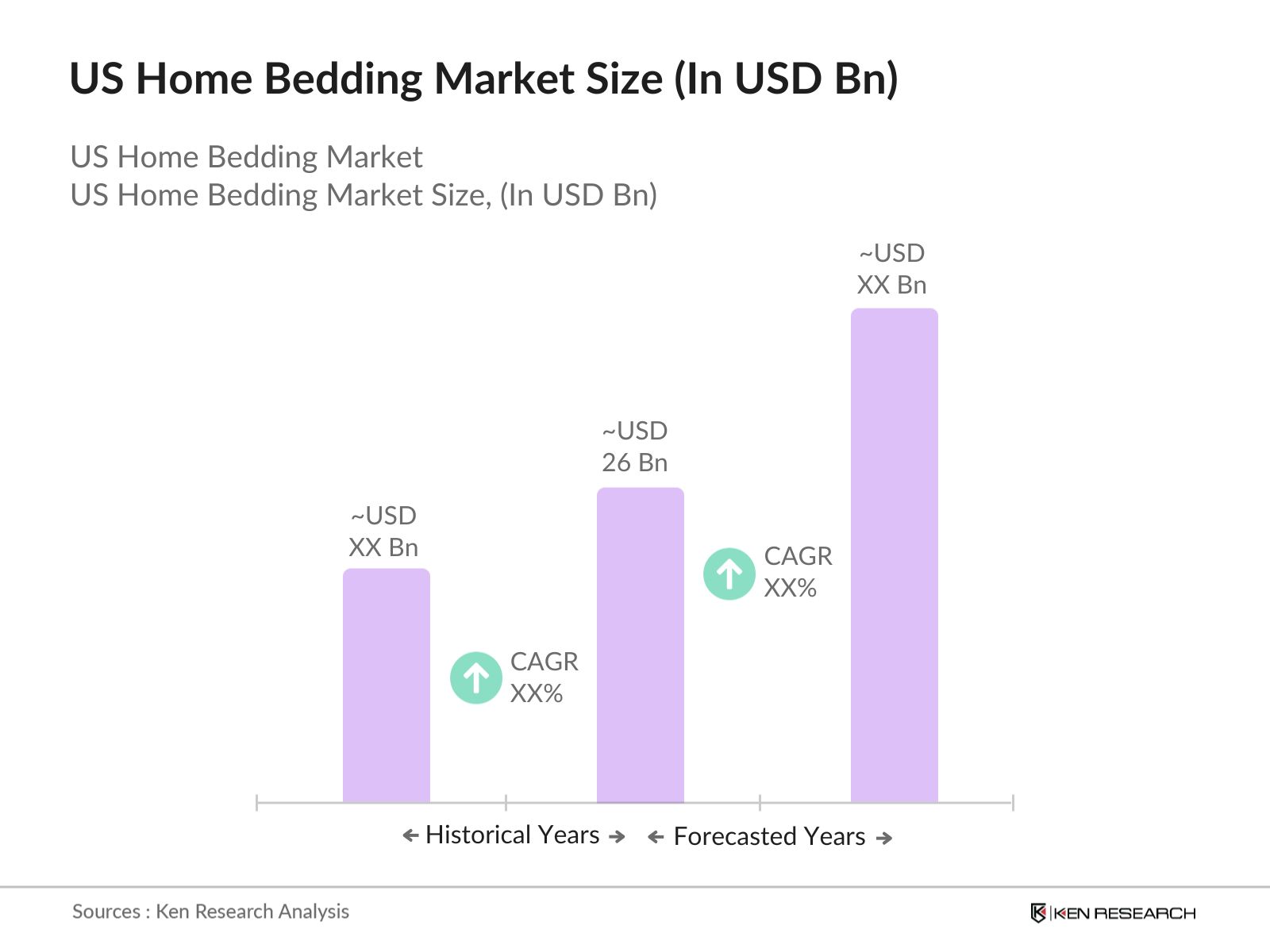
- The US Home Bedding Market is valued at USD 26 billion, based on a five-year historical analysis. This market's growth is driven by increasing consumer spending on home improvement, health, and wellness, particularly as consumers seek better sleep quality through bedding enhancements. Additionally, the market benefits from a trend toward luxury and eco-friendly bedding options, which resonate with a growing segment of environmentally conscious consumers.
- Metropolitan areas like New York, Los Angeles, and Chicago lead the US Home Bedding Market, primarily due to higher disposable income levels and consumer inclination toward premium home products. These cities exhibit a high density of specialty stores and urban consumers, who are typically early adopters of luxury and eco-friendly bedding options. Their established retail infrastructure and high-income demographics further bolster market dominance in these regions.
- The governments investment in health and wellness initiatives indirectly supports the bedding industry, with campaigns emphasizing the importance of sleep quality in overall health. Subsidies for wellness-focused products and educational campaigns help raise awareness and drive demand for bedding items that align with health-conscious goals.
US Home Bedding Market Segmentation
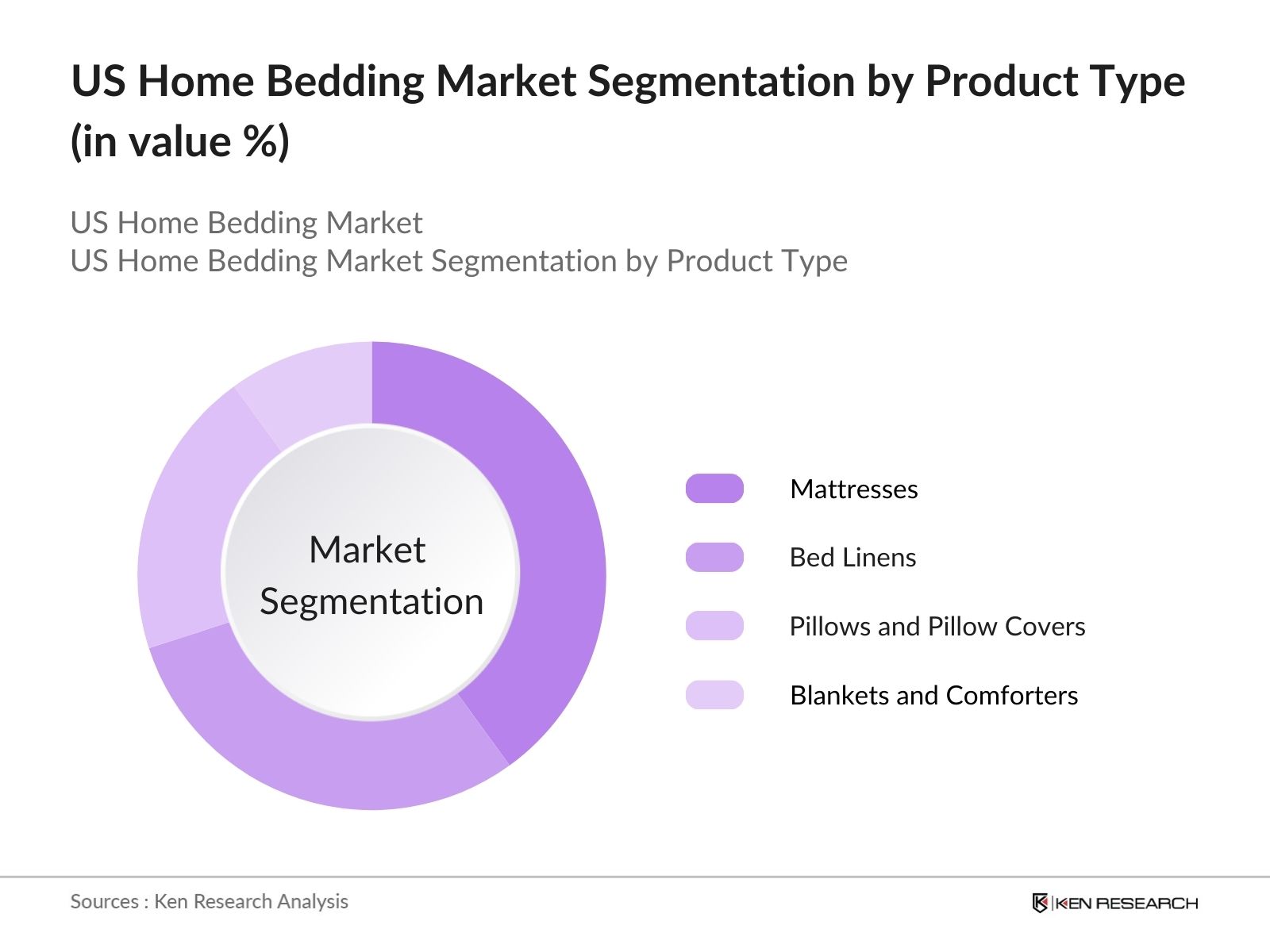
By Product Type: The US Home Bedding Market is segmented by product type into Mattresses, Bed Linens, Pillows and Pillow Covers, and Blankets and Comforters. Recently, mattresses have a dominant market share within the product type category, attributed to increasing consumer investment in quality sleep solutions. Companies like Tempur Sealy and Sleep Number leverage technological advancements in mattress design, such as memory foam and adjustable features, to cater to health-conscious consumers. These innovations have strengthened the prominence of mattresses in the market.
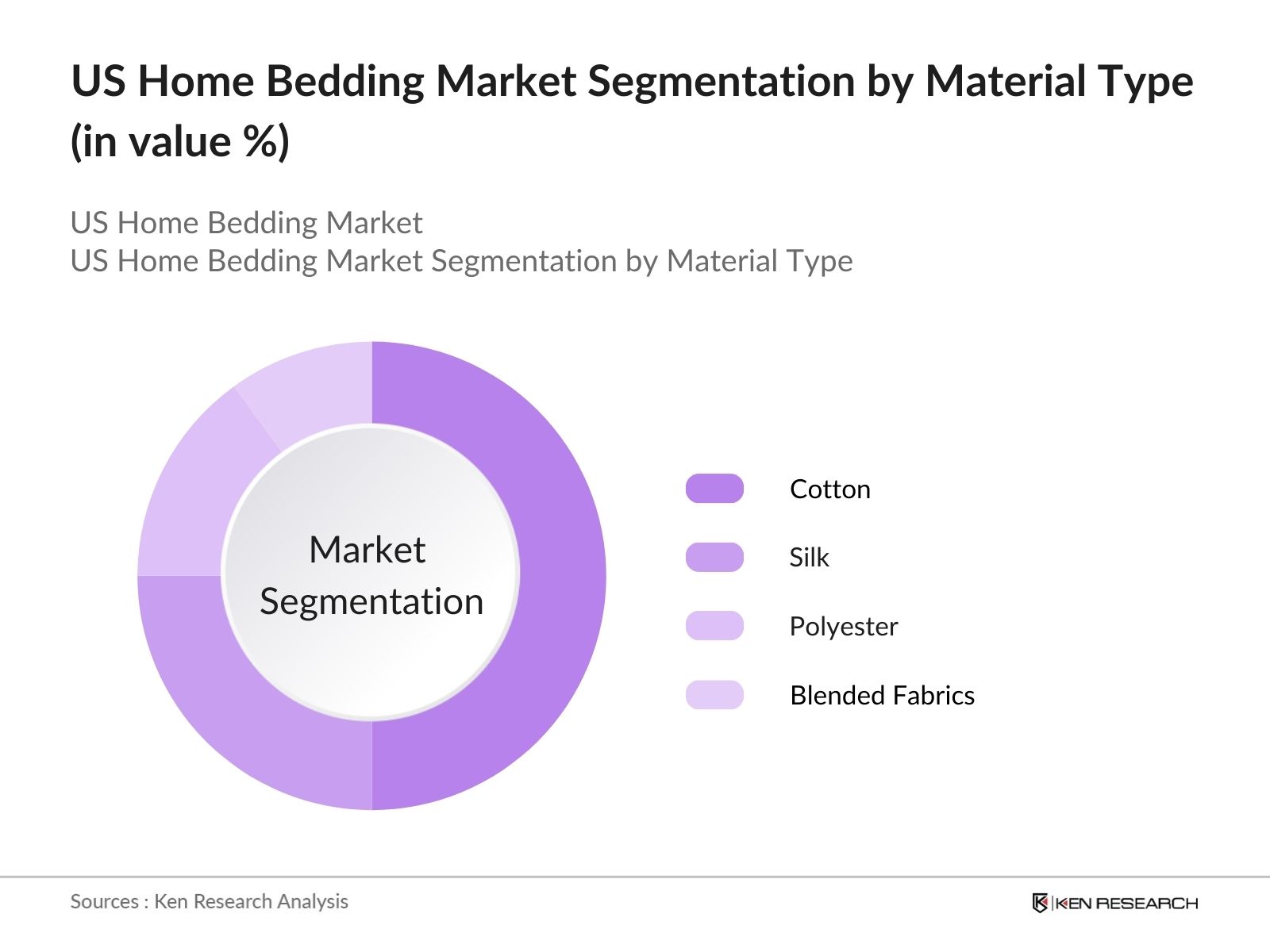
By Material Type: The market is segmented by material type into Cotton, Silk, Polyester, and Blended Fabrics. Cotton bedding products maintain a leading position due to their widespread consumer appeal for comfort, breathability, and durability. Brands like Boll & Branch and Brooklinen capitalize on the popularity of organic cotton, which appeals to consumers focused on sustainability and hypoallergenic benefits. The enduring preference for cotton aligns with health trends and environmental considerations, underscoring its dominance.
US Home Bedding Market Competitive Landscape
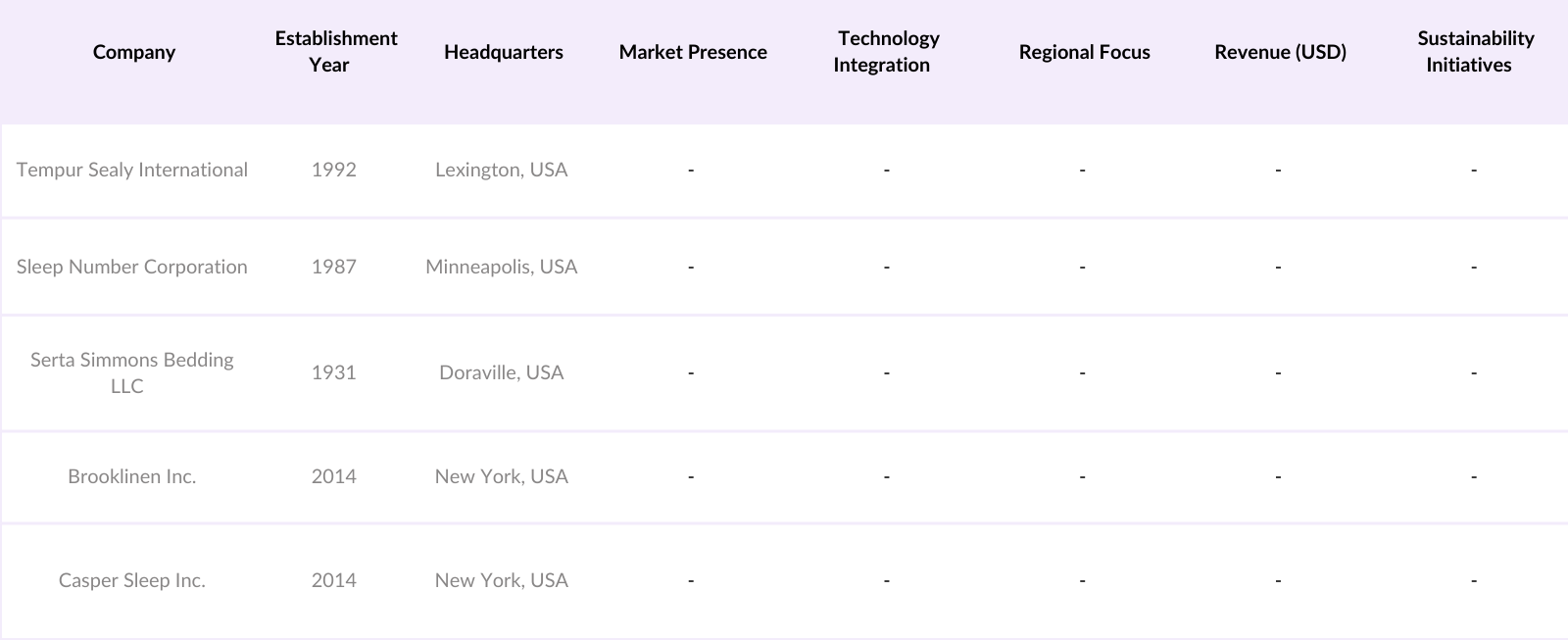
The US Home Bedding Market is dominated by key players including established domestic and international brands. These players have solidified their market presence through product innovation, brand loyalty, and a strong distribution network.
US Home Bedding Market Analysis
Growth Drivers
- Rise in Consumer Spending on Home Comfort: The US home bedding market has seen increased spending on premium and comfort-enhancing home products, with household expenditures on home goods. This shift reflects a growing consumer focus on enhancing in-home experiences, spurred by work-from-home trends and heightened emphasis on personal well-being. Recent financial data shows significant growth in average annual spending on home furnishings, supporting robust demand for quality bedding.
- Increased Awareness of Sleep Health: With over 70 million US adults affected by sleep disorders, awareness campaigns led by health organizations and educational institutions have amplified the importance of sleep health. This has translated into heightened demand for supportive and ergonomic bedding solutions that promote restful sleep, contributing to an annual increase in premium bedding sales. Health experts link sleep quality directly to long-term wellness, influencing consumer choices toward advanced bedding products that support physical health.
- Demand for Eco-Friendly and Organic Bedding: Demand for sustainable products has driven the home bedding industry toward eco-friendly alternatives. In 2024, the sales of organic bedding products have increased significantly, with organic cotton, bamboo, and natural latex bedding materials gaining traction. This trend aligns with consumer-driven shifts towards products with minimal environmental impact, especially as environmental awareness grows nationwide.
Market Challenges
- High Cost of Quality Bedding Products: Quality bedding often comes with higher production costs due to premium materials, advanced manufacturing techniques, and sustainable sourcing practices. For instance, premium organic and hypoallergenic options can be priced up to 30-40% higher than standard products, limiting affordability for a wide customer base.
- Competition from Alternative Comfort Solutions: Innovations in the home comfort market, including specialized mattresses and weighted blankets, present competitive challenges. These products are increasingly preferred for their specific comfort benefits, which may detract from traditional bedding purchases. This trend impacts market penetration, particularly in segments emphasizing multi-functional home comfort solutions.
US Home Bedding Market Future Outlook
Over the next five years, the US Home Bedding Market is anticipated to experience considerable growth. This expansion is expected to be fueled by continued innovations in bedding materials, a shift towards sustainable options, and the growing popularity of personalized sleep solutions. Increased consumer awareness about sleep health will drive demand for high-quality and technologically advanced bedding products.
Market Opportunities
- Growing E-commerce and Omni-channel Retailing: The US bedding market has benefited from the expansion of e-commerce platforms, where bedding products represent a major sales category. In 2024, online bedding sales crossed significant thresholds, with consumer access to a diverse range of products. Retailers with strong online presence and omni-channel capabilities are poised to capitalize on evolving consumer purchasing habits.
- Expansion in Luxury Bedding Segment: Demand for luxury bedding, particularly products tailored to affluent consumers, has risen as higher-income households increasingly invest in premium products. Luxury home goods, including high-end bedding, now constitute a sizeable portion of consumer expenditure in major urban areas. This segment presents a promising avenue for manufacturers with value propositions emphasizing exclusivity and superior comfort.
Scope of the Report
|
By Product Type |
Mattresses Bed Linens Pillows Blankets Comforters |
|
By Material Type |
Cotton Silk Polyester Blended Fabrics |
|
By Distribution Channel |
Online Retailers Offline Retailers Specialty Stores |
|
By Pricing Category |
Economy Premium Luxury |
|
By Region |
Northeast Midwest South West |
Products
Key Target Audience
Bedding and Mattress Retailers
E-commerce Bedding Platforms
Interior Designers and Decor Agencies
High-Net-Worth Individuals
Eco-conscious Home Product Buyers
Hospitality Industry (Hotels and Resorts)
Investors and Venture Capitalist Firms
Government and Regulatory Bodies (Consumer Product Safety Commission)
Companies
Players Mentioned in the Report:
Tempur Sealy International
Sleep Number Corporation
Serta Simmons Bedding LLC
Brooklinen Inc.
Casper Sleep Inc.
Parachute Home
Purple Innovation Inc.
Bed Bath & Beyond Inc.
My Pillow Inc.
Boll & Branch LLC
Table of Contents
1. US Home Bedding Market Overview
1.1 Definition and Scope
1.2 Market Taxonomy
1.3 Key Market Trends
1.4 Market Segmentation Overview
2. US Home Bedding Market Size (In USD Billion)
2.1 Historical Market Size
2.2 Year-On-Year Growth Analysis
2.3 Key Developments and Market Milestones
3. US Home Bedding Market Analysis
3.1 Growth Drivers
3.1.1 Rise in Consumer Spending on Home Comfort
3.1.2 Increased Awareness of Sleep Health
3.1.3 Demand for Eco-Friendly and Organic Bedding
3.1.4 Technological Advancements in Bedding Materials
3.2 Market Challenges
3.2.1 High Cost of Quality Bedding Products
3.2.2 Competition from Alternative Comfort Solutions
3.2.3 Regulatory Compliance for Material Safety
3.3 Opportunities
3.3.1 Growing E-commerce and Omni-channel Retailing
3.3.2 Expansion in Luxury Bedding Segment
3.3.3 Collaborative Marketing Strategies
3.4 Trends
3.4.1 Increasing Demand for Personalized Bedding Solutions
3.4.2 Popularity of Smart Bedding with Embedded Sensors
3.4.3 Rise in Sustainable and Recyclable Bedding Products
3.5 Government Regulation
3.5.1 Material Safety and Consumer Protection Standards
3.5.2 Sustainability Regulations in the Bedding Sector
3.6 Competitive Landscape Overview
3.7 Porters Five Forces Analysis
3.8 SWOT Analysis
3.9 Stakeholder Ecosystem
4. US Home Bedding Market Segmentation
4.1 By Product Type (In Value %)
4.1.1 Mattresses
4.1.2 Bed Linens
4.1.3 Pillows and Pillow Covers
4.1.4 Blankets and Comforters
4.2 By Material Type (In Value %)
4.2.1 Cotton
4.2.2 Silk
4.2.3 Polyester
4.2.4 Blended Fabrics
4.3 By Distribution Channel (In Value %)
4.3.1 Online Retailers
4.3.2 Offline Retailers
4.3.3 Specialty Stores
4.4 By Pricing Category (In Value %)
4.4.1 Economy
4.4.2 Premium
4.4.3 Luxury
4.5 By Region (In Value %)
4.5.1 Northeast
4.5.2 Midwest
4.5.3 South
4.5.4 West
5. US Home Bedding Market Competitive Analysis
5.1 Detailed Profiles of Major Companies
5.1.1 Tempur Sealy International
5.1.2 Sleep Number Corporation
5.1.3 Serta Simmons Bedding LLC
5.1.4 Brooklinen Inc.
5.1.5 Casper Sleep Inc.
5.1.6 Parachute Home
5.1.7 Purple Innovation Inc.
5.1.8 Bed Bath & Beyond Inc.
5.1.9 My Pillow Inc.
5.1.10 Crane & Canopy
5.1.11 The Company Store
5.1.12 Boll & Branch LLC
5.1.13 Peacock Alley
5.1.14 Amerisleep
5.1.15 West Elm
5.2 Cross Comparison Parameters (Revenue, Product Innovation, Market Reach, Sustainability Initiatives, Consumer Ratings, Warranty Policies, Pricing Strategy, Distribution Network)
5.3 Market Share Analysis
5.4 Strategic Initiatives
5.5 Mergers and Acquisitions
5.6 Investment and Funding Analysis
5.7 Private Equity and Venture Capital Investments
6. US Home Bedding Market Regulatory Framework
6.1 Material Safety Regulations
6.2 Sustainability and Environmental Compliance
6.3 Consumer Protection Standards
7. US Home Bedding Future Market Size (In USD Billion)
7.1 Projections for Future Market Size
7.2 Factors Contributing to Future Market Growth
8. US Home Bedding Market Analysts Recommendations
8.1 Total Addressable Market (TAM) Analysis
8.2 Customer Segmentation Insights
8.3 Strategic Marketing Initiatives
8.4 White Space and Growth Opportunities
Disclaimer Contact UsResearch Methodology
Step 1: Identification of Key Variables
The initial step includes constructing an industry-wide ecosystem map of all significant stakeholders in the US Home Bedding Market. This involves comprehensive desk research to identify and define critical market variables affecting demand and supply.
Step 2: Market Analysis and Construction
This phase compiles historical data to examine market penetration, consumer preferences, and retail dynamics. Additionally, the data is validated to ensure it reflects reliable revenue and growth trends.
Step 3: Hypothesis Validation and Expert Consultation
Hypotheses are generated based on preliminary data and validated through interviews with industry experts. These interactions provide real-world insights on market dynamics and reinforce data accuracy.
Step 4: Research Synthesis and Final Output
The final phase involves synthesizing primary and secondary data to develop actionable insights. Direct engagement with manufacturers and retailers enables a comprehensive analysis, ensuring the report is grounded in accurate, validated data.
Frequently Asked Questions
01. How big is the US Home Bedding Market?
The US Home Bedding Market is valued at USD 26 billion, supported by consumer demand for premium bedding solutions and increasing spending on home comfort.
02. What are the growth drivers in the US Home Bedding Market?
Key drivers in the US Home Bedding Market include the focus on sleep health, demand for eco-friendly products, and technological advancements in bedding materials, making comfort and sustainability pivotal to market growth.
03. Who are the major players in the US Home Bedding Market?
Leading companies in the US Home Bedding Market include Tempur Sealy International, Serta Simmons Bedding LLC, and Sleep Number Corporation, known for their extensive distribution networks and product innovation.
04. Which regions dominate the US Home Bedding Market?
Cities like New York, Los Angeles, and Chicago dominate due to high disposable income levels and a propensity for luxury home products.
Why Buy From Us?

What makes us stand out is that our consultants follows Robust, Refine and Result (RRR) methodology. i.e. Robust for clear definitions, approaches and sanity checking, Refine for differentiating respondents facts and opinions and Result for presenting data with story

We have set a benchmark in the industry by offering our clients with syndicated and customized market research reports featuring coverage of entire market as well as meticulous research and analyst insights.

While we don't replace traditional research, we flip the method upside down. Our dual approach of Top Bottom & Bottom Top ensures quality deliverable by not just verifying company fundamentals but also looking at the sector and macroeconomic factors.

With one step in the future, our research team constantly tries to show you the bigger picture. We help with some of the tough questions you may encounter along the way: How is the industry positioned? Best marketing channel? KPI's of competitors? By aligning every element, we help maximize success.

Our report gives you instant access to the answers and sources that other companies might choose to hide. We elaborate each steps of research methodology we have used and showcase you the sample size to earn your trust.

If you need any support, we are here! We pride ourselves on universe strength, data quality, and quick, friendly, and professional service.