















USA Breast Pumps Market Outlook to 2030
Region:North America
Author(s):Meenakshi Bisht
Product Code:KROD8757
December 2024
90
About the Report
USA Breast Pumps Market Overview
- The USA Breast Pumps Market is valued at USD 1.9 billion, based on a five-year historical analysis. The market is driven primarily by an increase in breastfeeding awareness among new mothers, as well as the expanding working women population who require solutions to continue breastfeeding while balancing work responsibilities. Additionally, advancements in breast pump technology, including quieter and wearable pumps, have also contributed to the growth of the market, offering mothers more convenience and flexibility.
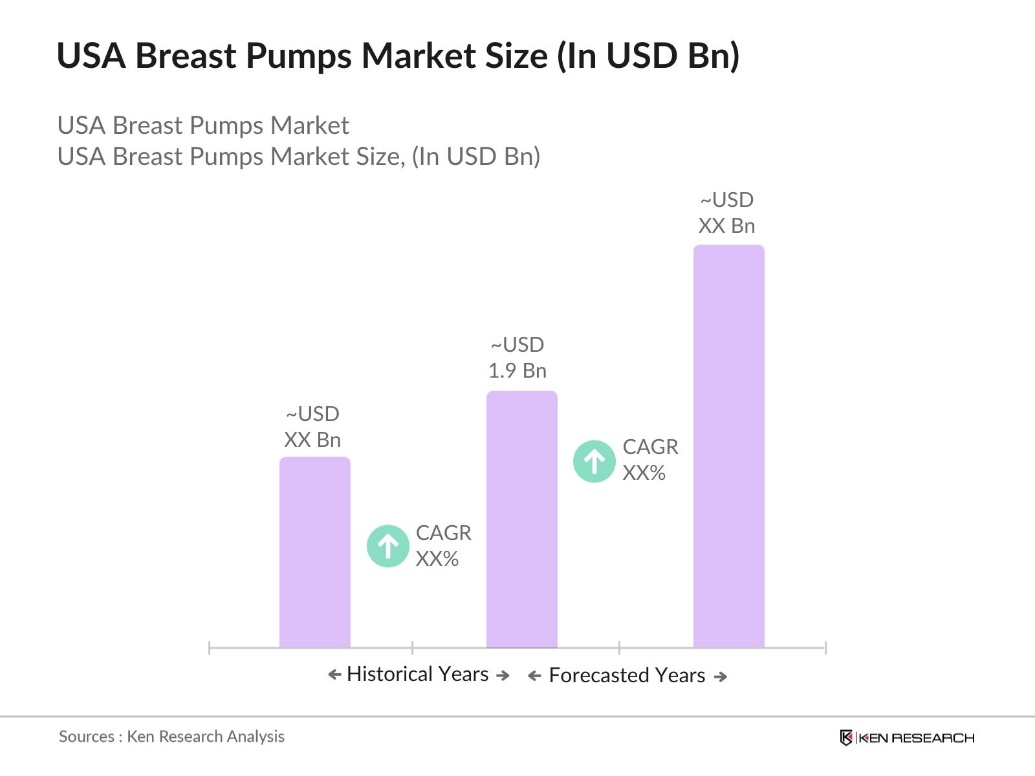
- Dominant cities in the breast pump market include New York, Los Angeles, and Chicago, due to their high population density and advanced healthcare infrastructure. These cities see higher adoption rates of breast pumps owing to strong healthcare systems, greater awareness campaigns regarding breastfeeding, and higher income levels. Furthermore, urban areas with large working populations also show significant demand due to employer-supported breastfeeding initiatives and government healthcare programs.
- The U.S. government has set stringent standards on product safety, particularly regarding BPA in plastic components. As of 2023, all breast pump manufacturers are required to comply with BPA-free standards for products sold in the U.S. The U.S. Environmental Protection Agency (EPA) plays a key role in ensuring that breast pump materials meet these safety standards to protect infant and maternal health.
USA Breast Pumps Market Segmentation
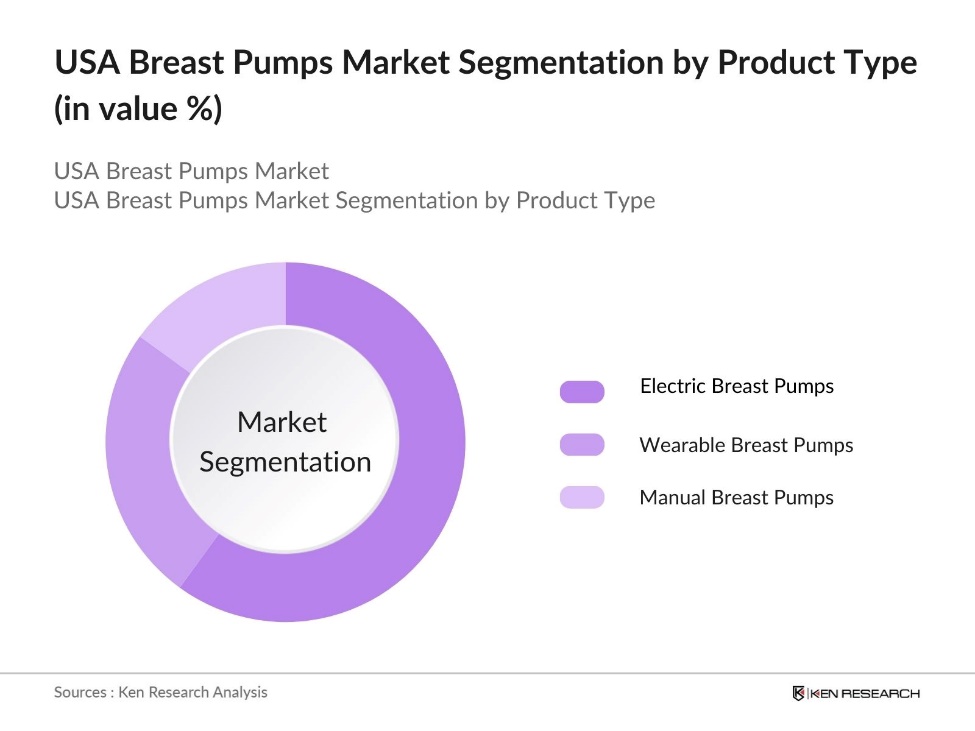
By Product Type: The USA breast pumps market is segmented by product type into manual breast pumps, electric breast pumps, and wearable breast pumps. Recently, electric breast pumps have dominated this segment, primarily because of their ease of use and efficiency. The ability of electric pumps to express milk faster and more effectively compared to manual options makes them the preferred choice for mothers who return to work shortly after childbirth. Furthermore, advancements in electric breast pumps, such as portability and quieter operation, have further fueled their market dominance.
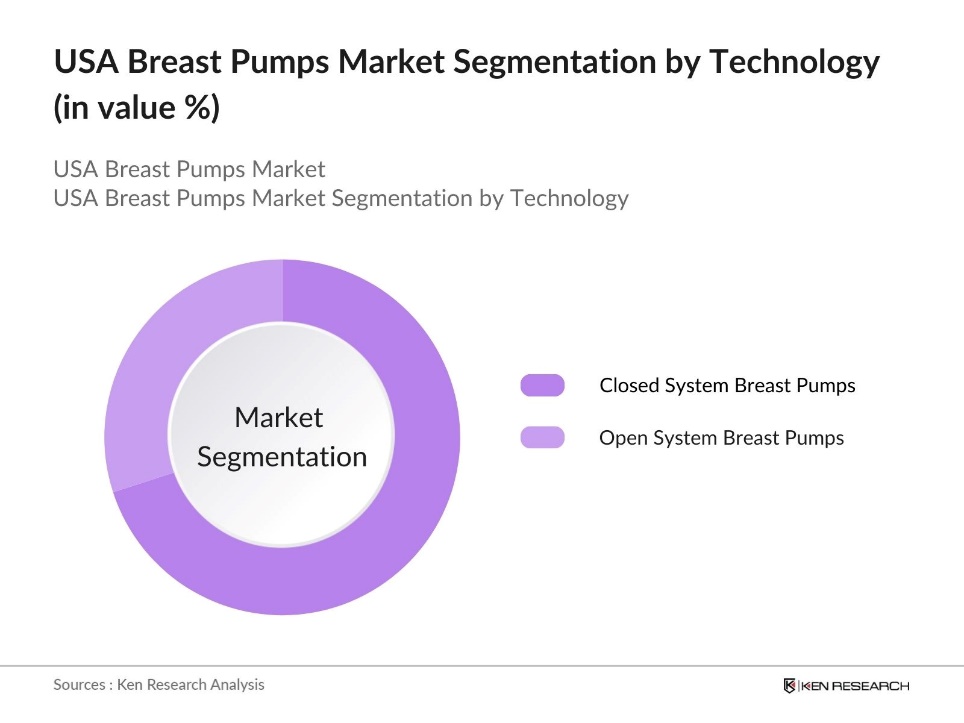
By Technology: By technology, the USA breast pumps market is categorized into closed system and open system breast pumps. The closed system breast pumps dominate the market due to their hygienic design that prevents milk from entering the pumps motor, reducing the risk of contamination. This feature makes closed systems highly preferred in hospital environments and by mothers who are concerned about ensuring the purity of expressed milk. Moreover, these pumps are often recommended by healthcare professionals for long-term use, contributing to their market share.
USA Breast Pumps Market Competitive Landscape
The market is characterized by the presence of both domestic and international players, with companies like Medela and Spectra Baby USA playing key roles. The dominance of these companies is due to their continuous innovation, strong distribution channels, and partnerships with hospitals. The competition remains robust, with new players entering the market with advanced, wearable, and user-friendly designs to capture niche segments.
|
Company Name |
Establishment Year |
Headquarters |
Product Range |
Technology Used |
Distribution Network |
Market Share |
Innovative Products |
Customer Support |
|
Medela LLC |
1961 |
Baar, Switzerland |
||||||
|
Spectra Baby USA |
2011 |
South Korea |
||||||
|
Willow Innovations, Inc. |
2014 |
USA |
||||||
|
Philips Avent |
1984 |
Netherlands |
||||||
|
Lansinoh Laboratories |
1984 |
USA |
USA Breast Pumps Industry Analysis
Growth Drivers
- Rising Awareness of Breastfeeding Benefits: The USA has seen a significant rise in breastfeeding awareness as medical professionals continue to emphasize its benefits for both infants and mothers. The percentage of infants who were exclusively breastfed for the first six months was lower, at 24.9%. Public health campaigns backed by government bodies, including the Department of Health and Human Services, have aimed to educate mothers on breastfeeding benefits like immunity and bonding, which in turn drive demand for breast pumps as support tools.
- Increasing Women Workforce Participation: The labor force participation rate for women in their prime working age (25-54) reached an all-time high of 77.8% in June 2023. The growing participation of women in the workforce, particularly mothers returning to work postpartum, is a key driver for breast pump sales. Flexible work policies and the support of lactation programs by employers have heightened demand for breast pumps as working mothers seek to balance professional commitments and breastfeeding.
- Advancements in Breast Pump Technology: Advancements in breast pump technology have revolutionized the market, with the introduction of portable, wireless, and quieter models offering greater convenience for users. Innovations such as smart pumps, which can track feeding patterns and provide data insights, are becoming increasingly popular. These advancements cater to the needs of modern mothers, particularly those balancing work and childcare, by addressing concerns around privacy, mobility, and comfort.
Market Challenges
- High Initial Costs: Although the Affordable Care Act provides some coverage for breast pumps, not all models are fully covered, especially higher-end or more advanced pumps. The out-of-pocket costs for these pumps can be a significant barrier for many families, particularly those with lower incomes. Financial challenges, even with available subsidies, limit accessibility for some individuals. Additionally, differences in Medicaid coverage across states create inconsistencies in access to breast pumps, particularly affecting low-income mothers who may rely on this type of healthcare support.
- Limited Accessibility in Rural Areas: Access to breast pumps is limited in rural areas due to challenges like inadequate healthcare infrastructure and fewer retail or online shopping options. Rural communities often face a lack of lactation support services and medical equipment availability, including breast pumps. This geographical disparity restricts access for many mothers in rural regions, making it difficult for them to find the necessary resources and support for breastfeeding. Healthcare centers in these areas may also be under-resourced, further contributing to limited accessibility.
USA Breast Pumps Market Future Outlook
Over the next five years, the USA breast pumps market is expected to show steady growth driven by the rising awareness of breastfeeding's health benefits and a growing working female population. Advancements in breast pump technology, especially wearable, silent, and app-enabled models, will further expand the market. Increased access to health insurance that covers breast pumps, as required by the Affordable Care Act, will continue to support the market by lowering the financial barriers for consumers.
Market Opportunities
- Growing E-commerce Market: The expansion of e-commerce provides significant opportunities for breast pump manufacturers to reach a broader audience. Online platforms, such as major retail websites, offer a wide variety of breast pump options with the added convenience of home delivery. This growth in online shopping allows consumers, even in remote or underserved areas, to access breast pumps more easily. The increasing use of the internet as a shopping tool enables a wider distribution of breast pumps, making them more accessible to mothers across different regions.
- Technological Innovations (Wearable, Silent Pumps): There is a growing demand for wearable and silent breast pumps that provide both convenience and discretion. These innovative designs cater to the needs of modern mothers, particularly those balancing work and family life, offering a more efficient and private pumping experience. Companies specializing in this technology have seen a surge in interest, especially in urban areas where workplace breastfeeding support is more common. The focus on developing quiet, portable pumps aligns with the evolving preferences of consumers seeking products that enhance both comfort and efficiency.
Scope of the Report
|
By Product Type |
Manual Breast Pumps Electric Breast Pumps Wearable Breast Pumps |
|
By Technology |
Closed System Open System |
|
By Application |
Personal Use Hospital Grade |
|
By Distribution Channel |
Retail Pharmacies Online Stores Specialty Stores |
|
By Region |
Northeast Midwest South West |
Products
Key Target Audience
Manufacturers of Breastfeeding Products
Pharmaceutical Companies
Private Insurance Companies
Maternity Apparel Brands
Government and Regulatory Bodies (FDA, Affordable Care Act)
Investors and venture capital Firms
Banks and Financial Institutions
Companies
Players Mentioned in the Report
Medela LLC
Ameda Inc.
Philips Avent
Spectra Baby USA
Willow Innovations, Inc.
Lansinoh Laboratories, Inc.
Pigeon Corporation
Ardo Medical, Inc.
Elvie
Hygeia Health
Table of Contents
1. USA Breast Pumps Market Overview
1.1. Definition and Scope
1.2. Market Taxonomy
1.3. Market Growth Rate
1.4. Market Segmentation Overview
2. USA Breast Pumps Market Size (In USD Bn)
2.1. Historical Market Size
2.2. Year-On-Year Growth Analysis
2.3. Key Market Developments and Milestones
3. USA Breast Pumps Market Analysis
3.1. Growth Drivers
3.1.1. Rising Awareness of Breastfeeding Benefits
3.1.2. Increasing Women Workforce Participation
3.1.3. Advancements in Breast Pump Technology
3.1.4. Health Insurance Coverage (Affordable Care Act)
3.2. Market Challenges
3.2.1. High Initial Costs
3.2.2. Limited Accessibility in Rural Areas
3.2.3. User Discomfort
3.3. Opportunities
3.3.1. Growing E-commerce Market
3.3.2. Technological Innovations (Wearable, Silent Pumps)
3.3.3. International Expansion Opportunities
3.4. Trends
3.4.1. Integration of Smart Technologies
3.4.2. Eco-friendly, Reusable Materials
3.4.3. Customization for Different User Needs (Maternity Needs, Personalization)
3.5. Government Regulation
3.5.1. Affordable Care Act (ACA) Regulations on Breast Pump Coverage
3.5.2. FDA Regulations
3.5.3. Product Safety Standards (BPA-Free Regulations)
3.6. SWOT Analysis
3.7. Stakeholder Ecosystem (Hospitals, Retailers, Direct-to-Consumer Brands)
3.8. Porters Five Forces
3.9. Competition Ecosystem
4. USA Breast Pumps Market Segmentation
4.1. By Product Type (In Value %)
4.1.1. Manual Breast Pumps
4.1.2. Electric Breast Pumps
4.1.3. Wearable Breast Pumps
4.2. By Technology (In Value %)
4.2.1. Closed System Breast Pumps
4.2.2. Open System Breast Pumps
4.3. By Application (In Value %)
4.3.1. Personal Use
4.3.2. Hospital Grade
4.4. By Distribution Channel (In Value %)
4.4.1. Retail Pharmacies
4.4.2. Online Stores
4.4.3. Specialty Stores
4.5. By Region (In Value %)
4.5.1. Northeast
4.5.2. Midwest
4.5.3. South
4.5.4. West
5. USA Breast Pumps Market Competitive Analysis
5.1 Detailed Profiles of Major Companies
5.1.1. Medela LLC
5.1.2. Ameda Inc.
5.1.3. Pigeon Corporation
5.1.4. Philips Avent
5.1.5. Lansinoh Laboratories, Inc.
5.1.6. Willow Innovations, Inc.
5.1.7. Spectra Baby USA
5.1.8. Ardo Medical, Inc.
5.1.9. Elvie (Chiaro Technology Limited)
5.1.10. Freemie
5.1.11. Hygeia Health
5.1.12. NUK (Mapa GmbH)
5.1.13. BabyBuddha
5.1.14. BelleMa
5.1.15. Evenflo Feeding Inc.
5.2 Cross Comparison Parameters (Product Range, Pricing, Technology Used, Distribution Reach, User Reviews, Hospital Partnerships, Market Presence, Customer Support)
5.3. Market Share Analysis
5.4. Strategic Initiatives
5.5. Mergers And Acquisitions
5.6. Investment Analysis
5.7. Government Grants
5.8. Private Equity Investments
6. USA Breast Pumps Market Regulatory Framework
6.1. FDA Compliance Requirements
6.2. Product Certification Processes (BPA-Free, Quality Standards)
6.3. Breast Pump Insurance Coverage Regulations
7. USA Breast Pumps Future Market Size (In USD Bn)
7.1. Future Market Size Projections
7.2. Key Factors Driving Future Market Growth
8. USA Breast Pumps Future Market Segmentation
8.1. By Product Type (In Value %)
8.2. By Technology (In Value %)
8.3. By Application (In Value %)
8.4. By Distribution Channel (In Value %)
8.5. By Region (In Value %)
9. USA Breast Pumps Market Analysts Recommendations
9.1. TAM/SAM/SOM Analysis
9.2. Customer Cohort Analysis
9.3. Marketing Initiatives
9.4. White Space Opportunity Analysis
Disclaimer Contact UsResearch Methodology
Step 1: Identification of Key Variables
The initial phase involves constructing an ecosystem map of the USA Breast Pumps Market. This process entails detailed desk research utilizing secondary databases to gather market-level data on industry players, consumer demand, and market dynamics. The goal is to identify critical factors influencing the market.
Step 2: Market Analysis and Construction
In this phase, historical data on the USA breast pumps market is compiled and analyzed. This includes the evaluation of sales trends, technology adoption, and the geographic concentration of demand to derive revenue estimates. The impact of healthcare policies is also considered.
Step 3: Hypothesis Validation and Expert Consultation
Market hypotheses are developed based on the data collected and validated through interviews with key industry players, including manufacturers, healthcare providers, and distributors. These consultations provide valuable insights to ensure the reliability of market projections.
Step 4: Research Synthesis and Final Output
The final phase involves synthesizing the data collected and creating a comprehensive report that accurately reflects the state of the USA breast pumps market. The report incorporates expert feedback, ensuring a well-rounded and validated market analysis.
Frequently Asked Questions
01. How big is the USA Breast Pumps Market?
The USA Breast Pumps Market is valued at USD 1.9 billion, driven by rising awareness of breastfeeding benefits and a growing working women population. Technological advancements in breast pumps have also contributed to market growth.
02. What are the challenges in the USA Breast Pumps Market?
Challenges in the USA breast pumps market include high initial costs, user discomfort, and limited access in rural areas. Some mothers also find certain products difficult to operate or uncomfortable, impacting long-term usage.
03. Who are the major players in the USA Breast Pumps Market?
Key players in the USA Breast Pumps Market include Medela LLC, Spectra Baby USA, Philips Avent, Willow Innovations, and Lansinoh Laboratories. These companies are dominant due to their continuous innovation and strong market presence.
04. What are the growth drivers of the USA Breast Pumps Market?
The USA Breast Pumps Market growth drivers include increased awareness of breastfeedings health benefits, higher insurance coverage for breast pumps under the Affordable Care Act, and advancements in breast pump technology like wearable and silent pumps.
Why Buy From Us?

What makes us stand out is that our consultants follows Robust, Refine and Result (RRR) methodology. i.e. Robust for clear definitions, approaches and sanity checking, Refine for differentiating respondents facts and opinions and Result for presenting data with story

We have set a benchmark in the industry by offering our clients with syndicated and customized market research reports featuring coverage of entire market as well as meticulous research and analyst insights.

While we don't replace traditional research, we flip the method upside down. Our dual approach of Top Bottom & Bottom Top ensures quality deliverable by not just verifying company fundamentals but also looking at the sector and macroeconomic factors.

With one step in the future, our research team constantly tries to show you the bigger picture. We help with some of the tough questions you may encounter along the way: How is the industry positioned? Best marketing channel? KPI's of competitors? By aligning every element, we help maximize success.

Our report gives you instant access to the answers and sources that other companies might choose to hide. We elaborate each steps of research methodology we have used and showcase you the sample size to earn your trust.

If you need any support, we are here! We pride ourselves on universe strength, data quality, and quick, friendly, and professional service.