















USA Online Trading Platform Market Outlook to 2030
Region:North America
Author(s):Vijay Kumar
Product Code:KROD4209
December 2024
82
About the Report
USA Online Trading Platform Market Overview
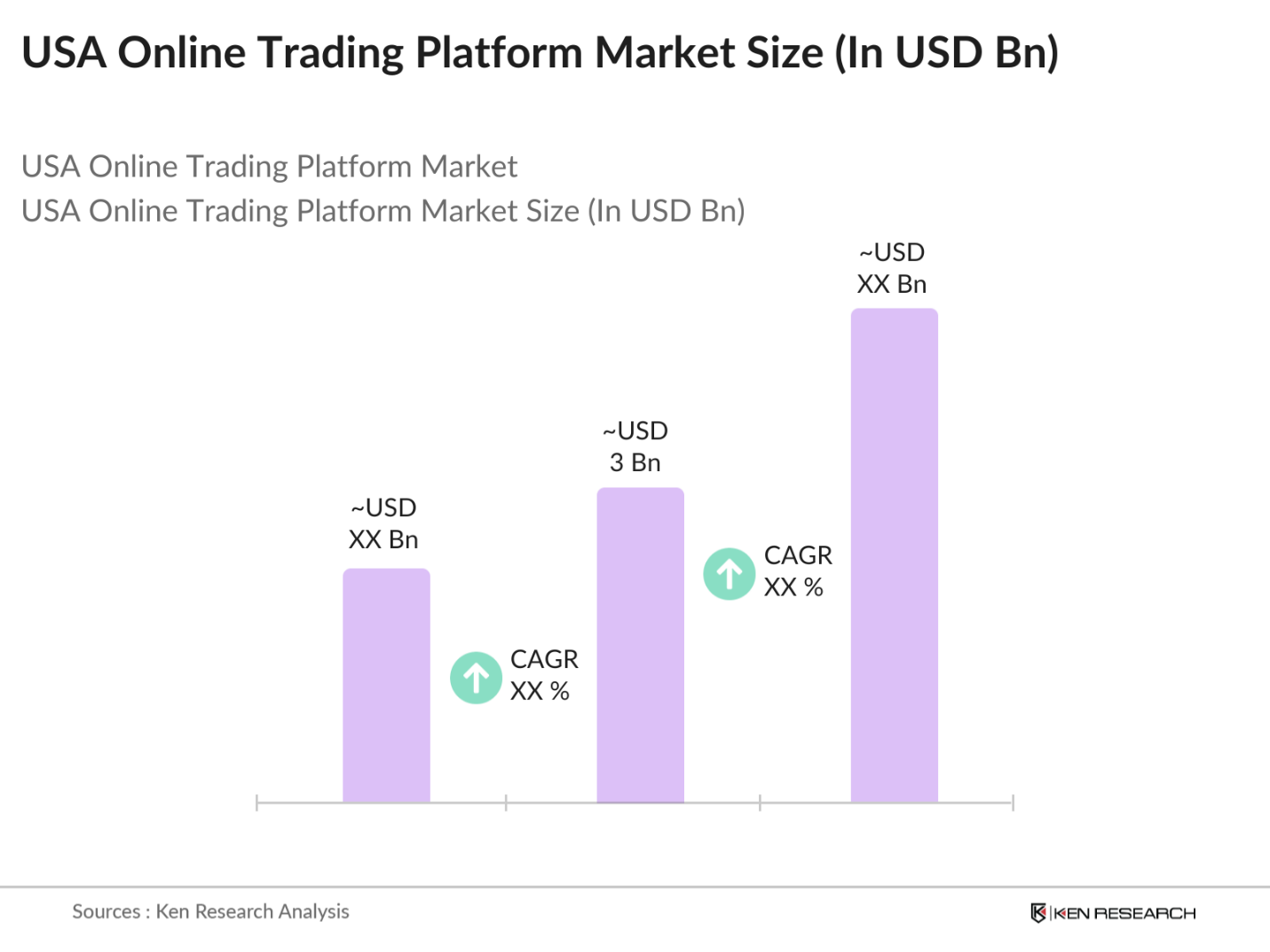
- The USA Online Trading Platform market is valued at USD 3 billion, based on a five-year historical analysis. The market is driven primarily by advancements in technology, particularly the integration of AI and robo-advisory services, which automate trading decisions and provide enhanced trading insights. The democratization of trading through zero-commission models and the growing adoption of mobile trading apps have further fueled market growth, making it accessible for both retail and institutional investors. The convenience of executing trades from mobile devices and real-time access to financial data has contributed significantly to the rise of trading activities across the country.
- The dominant regions within the USA Online Trading Platform market include New York, which hosts numerous financial institutions and stock exchanges, making it the hub for trading activities. Other significant regions include California and Illinois, due to the presence of major technology and trading firms. These regions have a well-established financial infrastructure and are home to leading brokerage and fintech companies that dominate the market landscape. The concentration of financial expertise and investor activity in these regions solidifies their leadership positions within the industry.
- The regulatory landscape for trading platforms is changing rapidly, with the SEC and CFTC introducing new rules for AI-driven trading and digital asset management. In 2023, regulatory bodies imposed $1.2 billion in fines for non-compliance, highlighting the increased scrutiny and need for enhanced compliance measures in the digital trading sector.
USA Online Trading Platform Market Segmentation
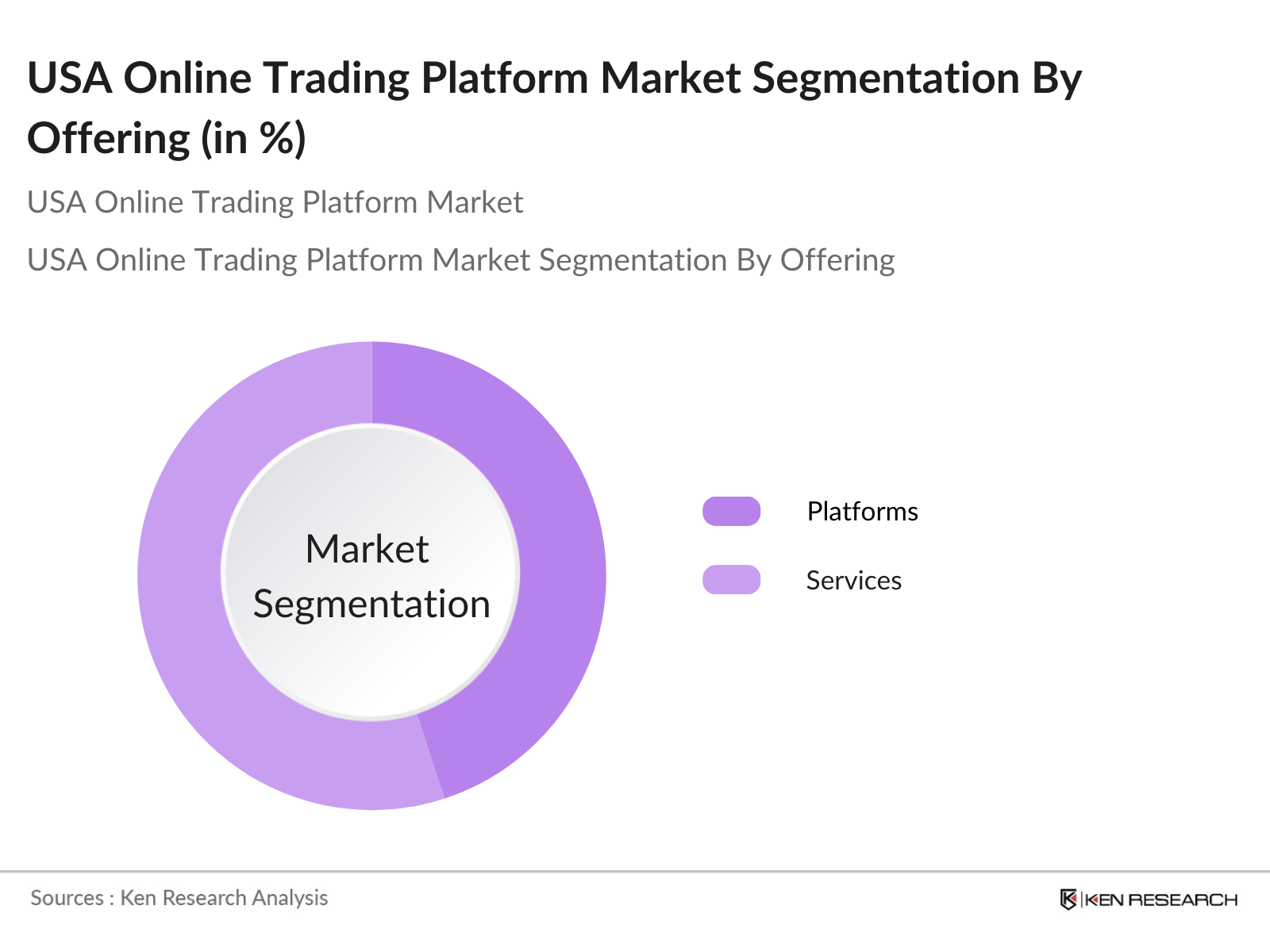
By Offering: The market is segmented into Platforms and Services. Platforms include brokerage, forex, options, and cryptocurrency trading platforms. Services include investment management, trading assistance, and financial advisory services. Platforms dominate the market share due to their capability to provide end-to-end trading solutions for various financial instruments, which cater to both novice and advanced traders. The widespread adoption of cloud-based platforms further enhances their accessibility and user experience.
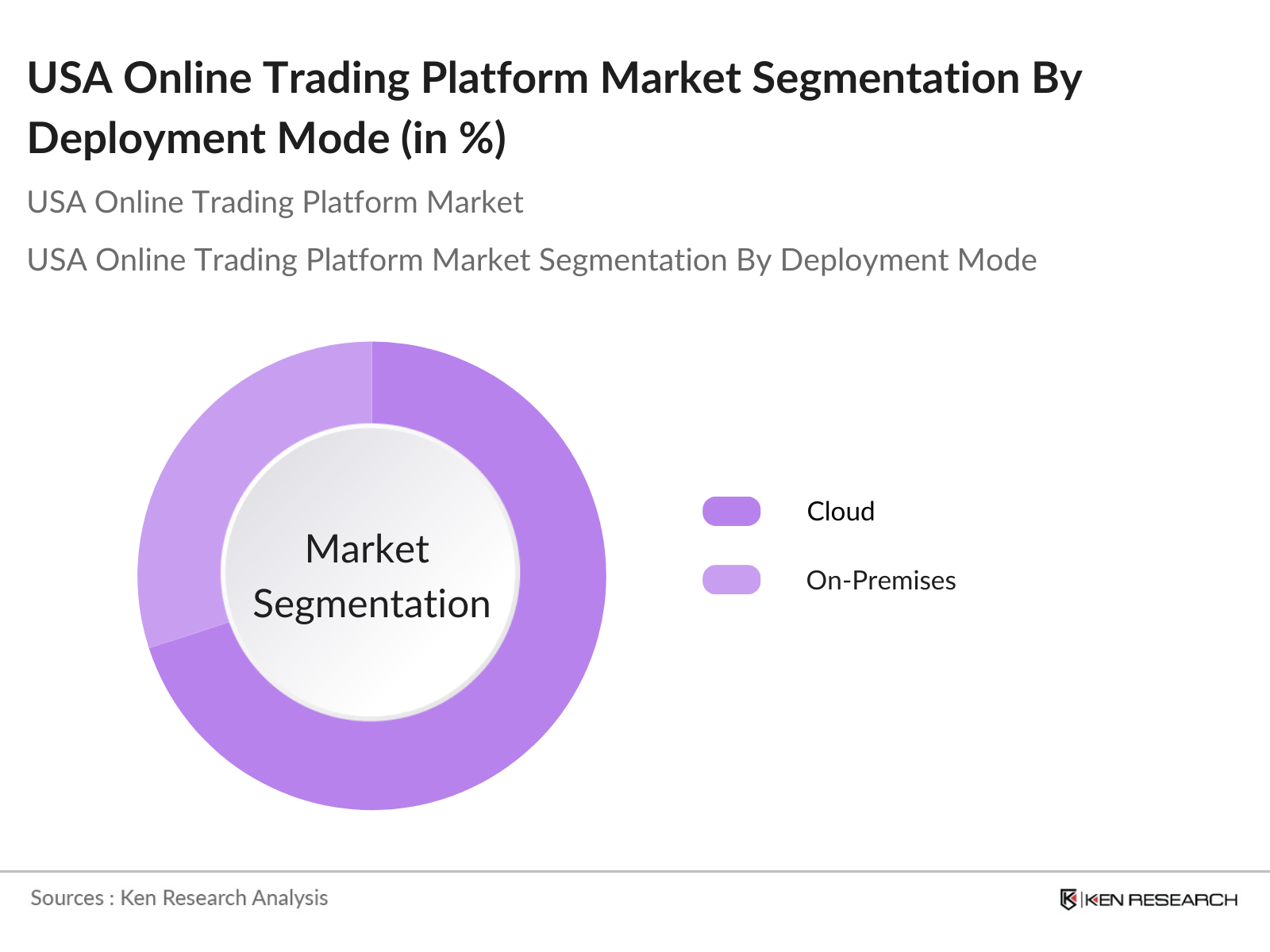
By Deployment Mode: The market is segmented into Cloud and On-Premises deployment. Cloud deployment dominates the market due to its scalability, flexibility, and reduced costs. Most online trading platforms, especially those targeting retail investors, have adopted cloud solutions to cater to the rising demand for remote access and seamless trading experiences. In contrast, on-premises deployment is preferred by high-frequency trading firms and large institutions that require low latency and high-speed execution capabilities.
USA Online Trading Platform Market Competitive Landscape
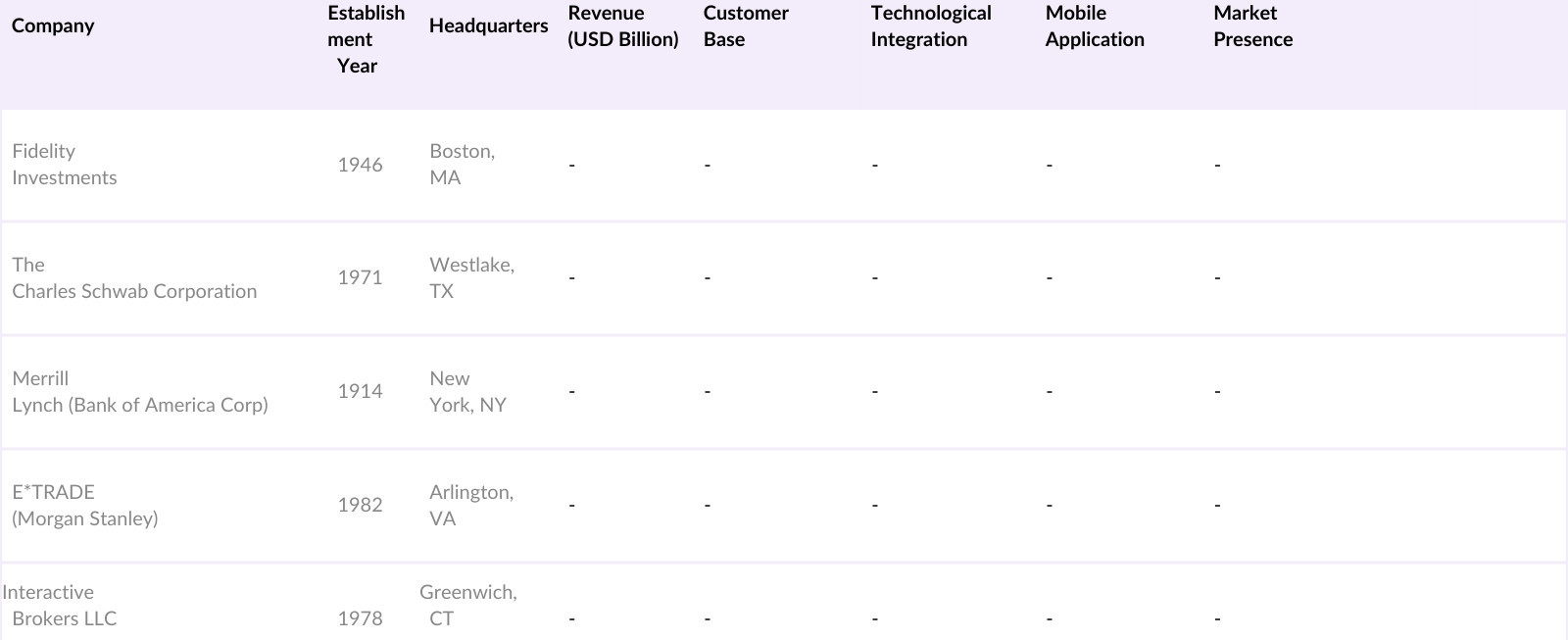
The USA Online Trading Platform market is characterized by intense competition among key players. Leading companies in the sector include Fidelity Investments, The Charles Schwab Corporation, Merrill Lynch (Bank of America Corporation), E*TRADE (Morgan Stanley), and Interactive Brokers LLC. These companies differentiate themselves through advanced technological integration, zero-commission trading, and superior customer service offerings. The consolidation of these players has contributed to significant market influence, driven by their continuous focus on innovation and strategic partnerships.
USA Online Trading Platform Industry Analysis
Growth Drivers
- Integration of AI and Robo-Advisors (Automated Trading, Data Analytics): AI is increasingly influencing the financial sector by automating trading decisions and providing advanced data analytics. The adoption of AI technologies in trading platforms has improved the efficiency of back-office operations and enhanced user experiences through AI-powered recommendations and personalized investment advice. As of 2024, over 90% of high-frequency trading activities in the U.S. are now AI-driven, with generative AI models being used to process large volumes of unstructured financial data, enabling faster and more accurate market forecasts.
- Mobile and Cloud Adoption (Accessibility, Scalability): The shift towards mobile and cloud-based trading platforms has made investing more accessible for retail investors. In the U.S., nearly 80% of trading activities were executed through mobile applications in 2023, driven by the enhanced security, scalability, and flexibility offered by cloud-based infrastructure. This trend is also supported by the rise of cloud adoption in the financial services industry, which has seen a growth rate of 15% in cloud usage for operational tasks and transaction processing.
- Low-Cost Trading Platforms (Fee Structure Analysis): Low-cost trading platforms such as zero-commission brokers have gained significant traction in the U.S. trading market. The availability of commission-free trading has democratized access to stock markets, contributing to an increase of 25 million new retail investor accounts in 2023. This shift has led to more intense competition among trading platforms, prompting many to introduce additional value-added services like financial planning and tax-efficient investment strategies to retain their customer base.
Market Challenges
- Counterfeiting Risks (Investor Confidence, Security Measures): Online trading platforms face a growing risk of counterfeiting and cyber threats, which could undermine investor confidence. According to a 2024 IMF report, cyber incidents in the financial sector have increased fourfold since 2017, with total losses reaching $2.5 billion. This increase highlights the need for platforms to strengthen their security protocols and adopt advanced authentication measures to protect investor assets and maintain trust.
- Regulatory Compliance (FINRA, SEC): Compliance with regulatory frameworks set by FINRA and the SEC is becoming more stringent, especially as new regulations around digital assets and AI usage come into play. The U.S. online trading industry has seen a 20% increase in compliance costs in 2023 due to the introduction of new reporting standards and the implementation of AI risk management guidelines. This has placed a financial burden on smaller trading platforms, contributing to market consolidation.
USA Online Trading Platform Market Future Outlook
Over the next few years, the USA Online Trading Platform market is expected to witness substantial growth, driven by continuous technological innovations and the integration of advanced data analytics and AI technologies. The increasing adoption of mobile trading and zero-commission trading models will likely encourage more retail investors to enter the market. Moreover, the rise of social trading platforms and the inclusion of newer asset classes, such as cryptocurrencies, will broaden the market scope further, providing new revenue streams and opportunities for both established players and new entrants.
Market Opportunities
- Expansion into Untapped Retail Segments: There is an opportunity for trading platforms to expand into underserved segments, such as younger demographics and lower-income groups. In 2023, 35% of new retail investors in the U.S. were under 30 years old, indicating a growing interest among younger individuals. Platforms offering fractional shares and micro-investing options are particularly well-positioned to capitalize on this trend.
- Cross-border Trading Solutions: The growing interconnectedness of global financial markets has led to increased demand for cross-border trading solutions. The IMFs report on digital money highlights that cross-border payment volumes in the U.S. increased by $300 billion in 2023, driven by the rise in digital assets and international diversification of portfolios. This trend presents an opportunity for U.S. trading platforms to expand their offerings to include cross-border investment options and tap into a global client base.
Scope of the Report
|
By Offering |
Platforms, Services |
|
By Deployment Mode |
Cloud On-Premises |
|
By Type |
Beginner Advanced |
|
By End-User |
Institutional Investors Retail Investors |
|
By Region |
North America South America Europe APAC MEA |
Products
Key Target Audience
Retail and Institutional Investors
Financial Institutions and Banks
Government and Regulatory Bodies (SEC, FINRA)
Asset Management Companies
Financial Technology Firms
Investment and Venture Capitalist Firms
Trading Desk and High-Frequency Traders
Wealth Management Advisors and Consultants
Companies
Players Mentioned in the Report
Fidelity Investments
The Charles Schwab Corporation
Merrill Lynch, Pierce, Fenner & Smith Incorporated (Bank of America Corporation)
E*TRADE (Morgan Stanley)
Interactive Brokers LLC
TD Ameritrade Holding Corporation
Robinhood Markets, Inc.
Webull Financial LLC
Plus500 Ltd.
IG Group
Table of Contents
1. Market Overview
1.1 Definition and Scope
1.2 Market Taxonomy
1.3 Market Growth Rate
1.4 Market Segmentation Overview
1.5 Value Chain Analysis
2. USA Online Trading Platform Market Size (In USD Billion)
2.1 Historical Market Size
2.2 Current Market Size
2.3 Year-On-Year Growth Analysis
2.4 Key Market Developments and Milestones
3. USA Online Trading Platform Market Analysis
3.1 Growth Drivers (AI Integration, Rise in Retail Trading, Technological Advancements)
3.1.1 Integration of AI and Robo-Advisors (Automated Trading, Data Analytics)
3.1.2 Mobile and Cloud Adoption (Accessibility, Scalability)
3.1.3 Low-Cost Trading Platforms (Fee Structure Analysis)
3.2 Market Challenges
3.2.1 Counterfeiting Risks (Investor Confidence, Security Measures)
3.2.2 Regulatory Compliance (FINRA, SEC)
3.2.3 High Market Fragmentation
3.3 Opportunities
3.3.1 Expansion into Untapped Retail Segments
3.3.2 Cross-border Trading Solutions
3.3.3 Integration of AI-based Trading Assistants
3.4 Trends
3.4.1 Increased Use of Cloud-based Deployment
3.4.2 High Adoption of Social Trading Platforms
3.4.3 Rise of Zero-Commission Trading Platforms
3.5 Government Regulations
3.5.1 Regulatory Landscape (SEC, CFTC)
3.5.2 Certification Processes
3.5.3 Compliance Mandates
3.6 SWOT Analysis
3.7 Stakeholder Ecosystem Analysis
3.8 Porters Five Forces
3.8.1 Bargaining Power of Buyers
3.8.2 Bargaining Power of Suppliers
3.8.3 Threat of New Entrants
3.8.4 Threat of Substitute Products and Services
3.8.5 Intensity of Competitive Rivalry
4. USA Online Trading Platform Market Segmentation
4.1 By Offering (Platform, Services)
4.1.1 Platforms (Brokerage, Forex, Options, Cryptocurrency, Social Trading)
4.1.2 Services (Investment Management, Trading Assistance, Financial Advisory)
4.2 By Deployment Mode (Cloud, On-Premises)
4.3 By Type (Beginner, Advanced)
4.4 By End-User (Institutional Investors, Retail Investors)
4.5 By Region (North America, South America, Europe, APAC, MEA)
5. USA Online Trading Platform Market Competitive Analysis
5.1 Detailed Profiles of Major Companies
5.1.1 Fidelity Investments Institutional Operations Company, Inc.
5.1.2 The Charles Schwab Corporation
5.1.3 Merrill Lynch, Pierce, Fenner & Smith Incorporated
5.1.4 E*TRADE from Morgan Stanley
5.1.5 Interactive Brokers LLC
5.1.6 TD Ameritrade Holding Corporation
5.1.7 Robinhood Markets, Inc.
5.1.8 Webull Financial LLC
5.1.9 Plus500 Ltd.
5.1.10 IG Group
5.1.11 CMC Markets
5.1.12 Saxo Bank A/S
5.1.13 MetaQuotes Software Corp.
5.1.14 eToro Ltd.
5.1.15 TradeStation Securities, Inc.
5.2 Cross Comparison Parameters (Market Share, Headquarters, Revenue, Technological Differentiators, Mobile Functionality, Customer Service, Regulatory Compliance, Cloud vs. On-Premises Deployment)
5.3 Market Share Analysis
5.4 Strategic Initiatives
5.5 Mergers and Acquisitions
5.6 Investment Analysis
5.7 Venture Capital Funding
5.8 Government Grants
5.9 Private Equity Investments
6. USA Online Trading Platform Market Regulatory Framework
6.1 Environmental Standards
6.2 Compliance Requirements
6.3 Certification Processes
7. USA Online Trading Platform Future Market Size (In USD Billion)
7.1 Future Market Size Projections
7.2 Key Factors Driving Future Market Growth
8. USA Online Trading Platform Future Market Segmentation
8.1 By Offering (Platform, Services)
8.2 By Deployment Mode (Cloud, On-Premises)
8.3 By Type (Beginner, Advanced)
8.4 By End-User (Institutional Investors, Retail Investors)
8.5 By Region (North America, South America, Europe, APAC, MEA)
9. USA Online Trading Platform Market Analysts Recommendations
9.1 TAM/SAM/SOM Analysis
9.2 Customer Cohort Analysis
9.3 Marketing Initiatives
9.4 White Space Opportunity Analysis
Disclaimer Contact UsResearch Methodology
Step 1: Identification of Key Variables
The initial phase involves creating a comprehensive map of all major stakeholders in the USA Online Trading Platform Market. This step leverages extensive desk research using a combination of secondary and proprietary databases to gather in-depth industry information. The main objective is to define critical variables affecting market dynamics.
Step 2: Market Analysis and Construction
In this phase, we analyze historical data related to the market. This includes evaluating market penetration, the ratio of platform usage to service providers, and revenue generation patterns. An assessment of service quality statistics is also conducted to validate the accuracy of the revenue estimates.
Step 3: Hypothesis Validation and Expert Consultation
Market hypotheses are developed and validated through expert consultations with industry professionals. These consultations, conducted via computer-assisted telephone interviews (CATIs), provide valuable insights into market operations and financial trends, which aid in refining the market data.
Step 4: Research Synthesis and Final Output
The final phase involves direct engagement with multiple platform providers to gain detailed insights into product segments, sales performance, and consumer preferences. This information is cross-validated with statistical models, ensuring a comprehensive and accurate market analysis.
Frequently Asked Questions
01. How big is the USA Online Trading Platform Market?
The USA Online Trading Platform market is valued at USD 3 billion, based on a five-year historical analysis. The market is driven primarily by advancements in technology, particularly the integration of AI and robo-advisory services, which automate trading decisions and provide enhanced trading insights.
02. What are the main challenges in the USA Online Trading Platform Market?
Key challenges include regulatory compliance, data security risks, and the increasing prevalence of counterfeit activities, which undermine investor confidence.
03. Who are the major players in the USA Online Trading Platform Market?
Major players include Fidelity Investments, The Charles Schwab Corporation, Merrill Lynch (Bank of America Corporation), E*TRADE (Morgan Stanley), and Interactive Brokers LLC.
04. What are the growth drivers of the USA Online Trading Platform Market?
The market is driven by technological innovations, integration of AI and machine learning for trading strategies, and the adoption of zero-commission trading models, which attract new retail investors.
Why Buy From Us?

What makes us stand out is that our consultants follows Robust, Refine and Result (RRR) methodology. i.e. Robust for clear definitions, approaches and sanity checking, Refine for differentiating respondents facts and opinions and Result for presenting data with story

We have set a benchmark in the industry by offering our clients with syndicated and customized market research reports featuring coverage of entire market as well as meticulous research and analyst insights.

While we don't replace traditional research, we flip the method upside down. Our dual approach of Top Bottom & Bottom Top ensures quality deliverable by not just verifying company fundamentals but also looking at the sector and macroeconomic factors.

With one step in the future, our research team constantly tries to show you the bigger picture. We help with some of the tough questions you may encounter along the way: How is the industry positioned? Best marketing channel? KPI's of competitors? By aligning every element, we help maximize success.

Our report gives you instant access to the answers and sources that other companies might choose to hide. We elaborate each steps of research methodology we have used and showcase you the sample size to earn your trust.

If you need any support, we are here! We pride ourselves on universe strength, data quality, and quick, friendly, and professional service.