















USA Pigment Dispersion Market Outlook to 2030
Region:North America
Author(s):Shubham Kashyap
Product Code:KROD5184
December 2024
89
About the Report
USA Pigment Dispersion Market Overview
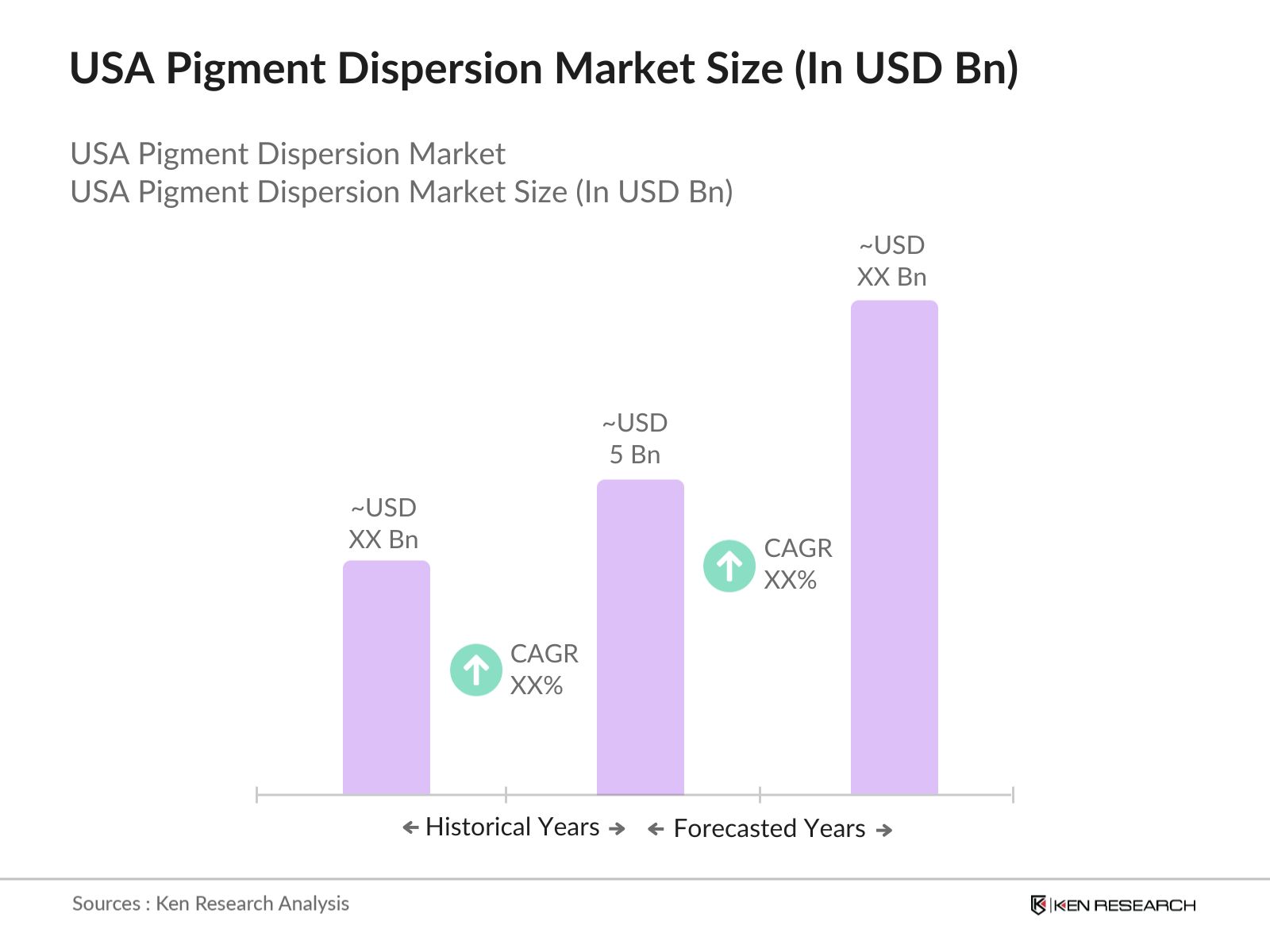
- The USA pigment dispersion market is valued at USD 5 billion, primarily driven by strong demand from key sectors like automotive, construction, and packaging. The adoption of eco-friendly water-based pigment dispersions due to stringent environmental regulations is one of the main growth drivers. Additionally, technological advancements in high-performance coatings, inks, and plastics that require high-quality dispersions are further fueling market growth. The push for sustainability, coupled with innovations in pigment technology, continues to drive the demand for pigment dispersion across various industries in the USA.
- Major cities such as Detroit, Houston, and Los Angeles play a central role in the USA pigment dispersion market. These cities are industrial hubs where sectors like automotive, construction, and textiles thrive, leading to high demand for pigment dispersions. The dominance of these regions is attributed to the concentration of large manufacturing facilities, R&D centers, and the presence of key players in the pigment industry. The growing trend toward sustainable urban development in California and Texas has also bolstered the need for advanced pigment dispersions in eco-friendly coatings and paints.
- The FTC has established guidelines for environmental marketing claims, which directly affect how pigment dispersion products are marketed. Pigment manufacturers must ensure that any claims regarding the environmental benefits of their products, such as "eco-friendly" or "sustainable," are substantiated and not misleading. This is particularly important for companies promoting water-based or low-VOC pigment dispersions, as they must comply with FTC standards to avoid deceptive advertising.
USA Pigment Dispersion Market Segmentation
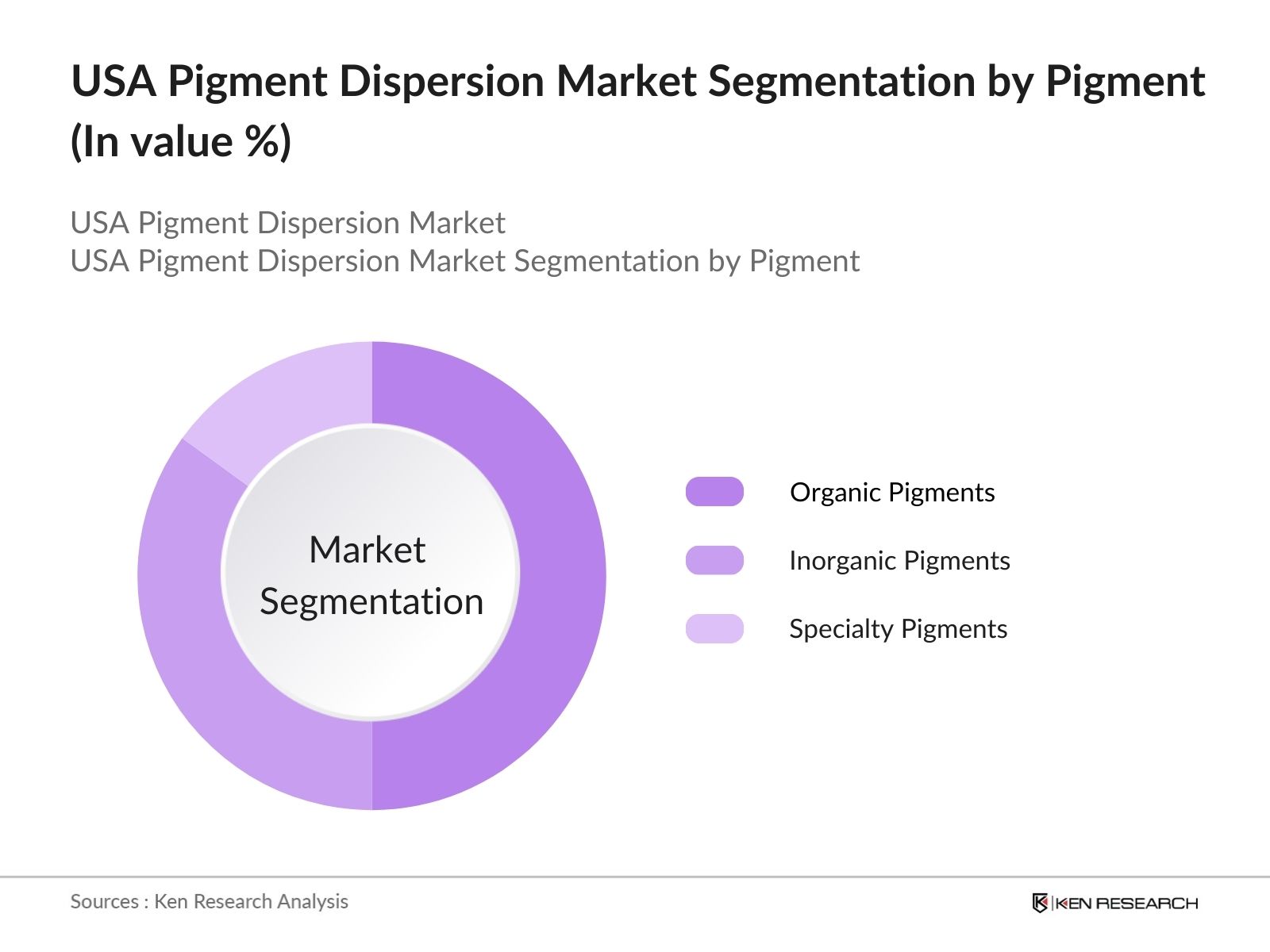
- By Pigment Type: The market is segmented by pigment type into organic pigments, inorganic pigments, and specialty pigments. Organic pigments, particularly phthalocyanines and quinacridones, dominate the market due to their superior color quality, environmental benefits, and increasing use in packaging and automotive applications. These pigments are favored for their non-toxic and sustainable characteristics, which align with growing regulations on reducing harmful emissions in paints and coatings. In contrast, inorganic pigments like titanium dioxide continue to see widespread use in high-durability applications like construction coatings and industrial finishes, though their market share is slightly lower than that of organic pigments.
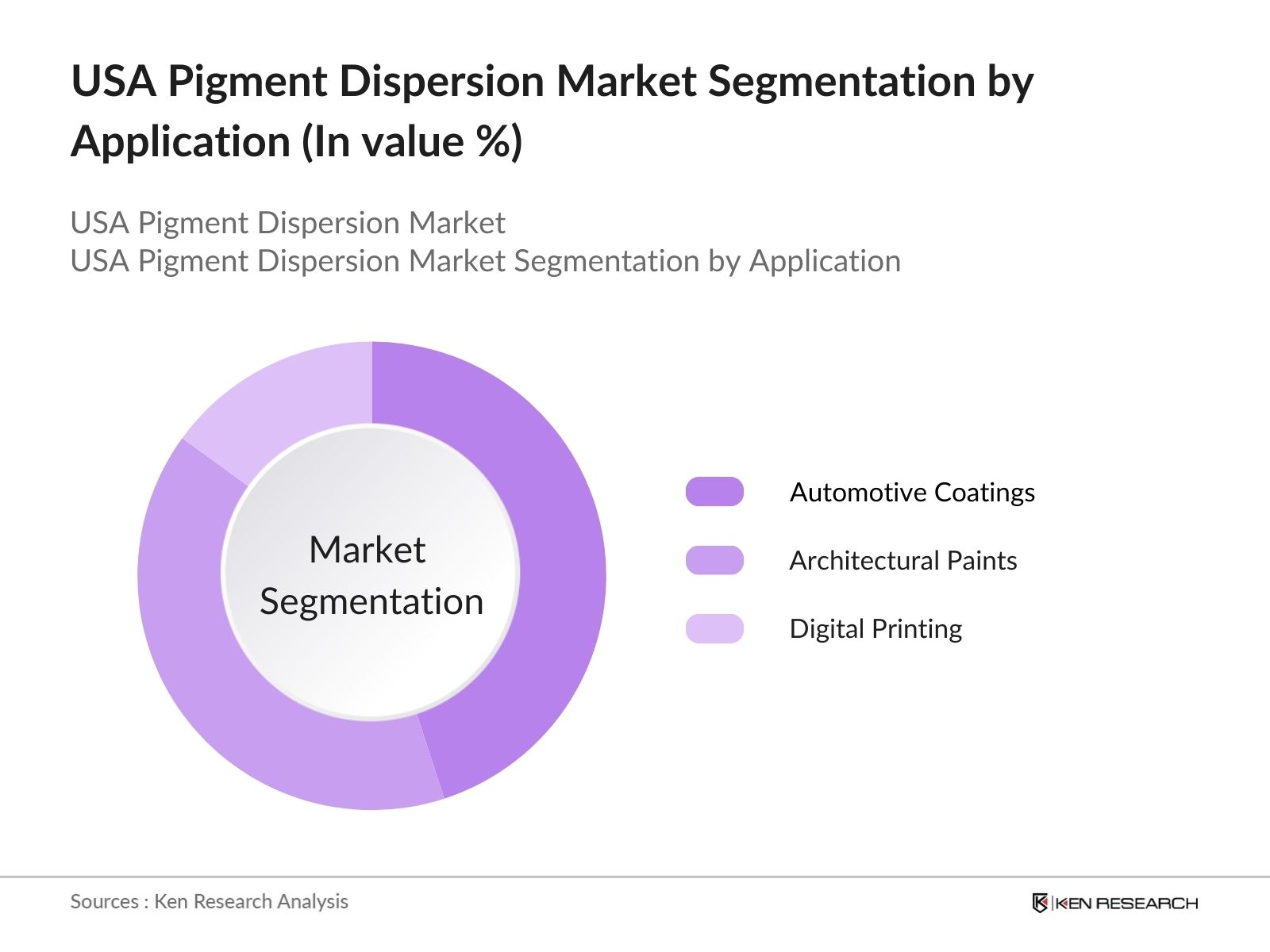
- By Application: The market is also segmented by application into automotive coatings, architectural paints, and digital printing. Automotive coatings account for the largest market share, driven by the high demand for advanced coatings that provide durability, aesthetic appeal, and environmental benefits. The automotive industrys shift towards electric vehicles and lighter, more fuel-efficient designs is increasing the need for pigments that can enhance vehicle coatings. Architectural paints also hold a significant share, especially in states like California, where sustainable, low-VOC (volatile organic compounds) paints are highly sought after due to strict environmental regulations.
USA Pigment Dispersion Market Competitive Landscape
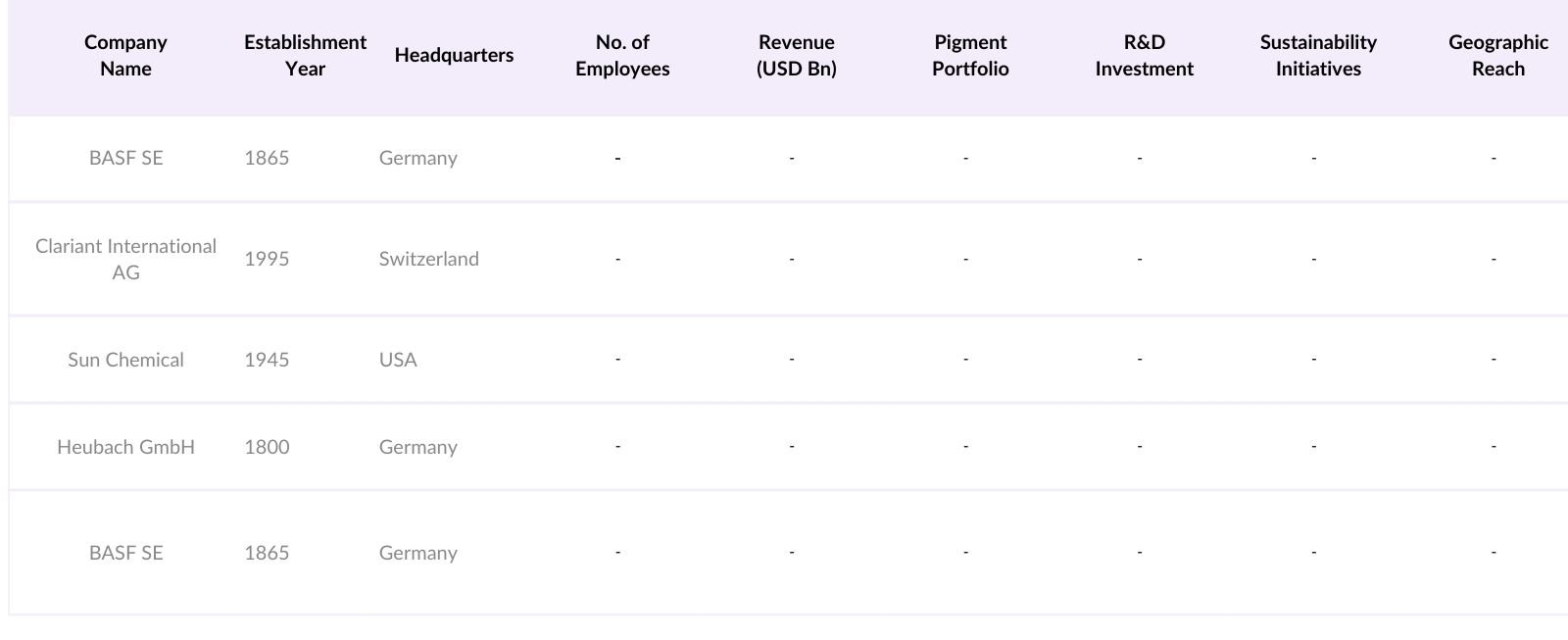
The USA pigment dispersion market is highly competitive, with both local and international players contributing to the market's growth. Key players dominate the market through extensive R&D efforts, sustainability initiatives, and strategic partnerships. These companies are focused on expanding their pigment portfolios and enhancing their manufacturing processes to meet rising demand for eco-friendly and high-performance pigment dispersions.
The USA pigment dispersion market is led by major players like BASF SE, Clariant International AG, and Sun Chemical, all of which possess strong capabilities in sustainability, innovation, and geographic reach. The market is shaped by the continuous efforts of these companies to enhance their pigment portfolios and meet rising demand from automotive, construction, and digital printing industries.
USA Pigment Dispersion Market Analysis
Growth Drivers
- Growth of Water-Based Pigment Dispersions: Water-based pigment dispersions are gaining momentum due to stringent environmental regulations in the U.S., particularly from the EPA, which encourages the reduction of volatile organic compounds (VOC) in industrial applications. The expansion of the water-based dispersion market is evident in industries such as automotive and construction, which are adopting these eco-friendly alternatives to solvent-based products. In 2024, the U.S. automotive sector is expected to consume over a million gallons of water-based coatings, supported by government incentives for green manufacturing practices.
- Sustainability Initiatives in Pigment Formulations: Sustainability is becoming a core focus of pigment formulations in the U.S. market, spurred by government initiatives promoting eco-friendly manufacturing. The EPAs Toxic Substances Control Act has imposed stringent regulations on harmful chemicals in pigments, accelerating the shift towards bio-based and sustainable pigments. The U.S. government has allocated USD 45 million to green chemistry initiatives, fostering the development of sustainable pigment dispersions. Manufacturers are leveraging these incentives to innovate formulations that minimize environmental impact while maintaining performance.
- Increased Demand from Automotive and Textile Industries: Demand for pigment dispersions in the U.S. automotive and textile industries has grown significantly, with the automotive sector employing pigment dispersions in coatings and plastics. The U.S. automotive industry, heavily depends on advanced pigment technologies for protective and aesthetic coatings. Meanwhile, the U.S. textile sector, which produced 13 billion square meters of fabric in 2022, has seen increasing use of pigments in digital textile printing and dyeing processes. This industrial demand continues to be a growth driver for pigment dispersions.
Challenges
- Price Volatility of Raw Materials: One of the key challenges for the U.S. pigment dispersion market is the volatility in raw material prices, particularly for titanium dioxide and organic chemicals. Supply chain disruptions and geopolitical factors have caused fluctuations in the cost of critical raw materials used in pigment production. These unpredictable price changes make it difficult for manufacturers to maintain consistent pricing and profitability, posing a challenge for market stability. The industry is particularly affected by raw material shortages and transportation delays, which increase production costs and create uncertainty in pricing strategies.
- Complex Supply Chain of Organic Pigments: The supply chain for organic pigments is intricate, with heavy reliance on international suppliers for essential raw materials. The U.S. imports a significant portion of these materials from overseas, making it vulnerable to supply chain disruptions. Geopolitical tensions, trade barriers, and logistical challenges have exacerbated these complexities, leading to production delays and increased costs. This dependence on external sources makes it difficult for U.S. manufacturers to ensure a steady supply of organic pigments, impacting their ability to meet growing demand and maintain production consistency.
USA Pigment Dispersion Market Future Outlook
The USA pigment dispersion market is expected to experience robust growth, driven by increasing demand for eco-friendly pigments and advancements in dispersion technologies. The shift towards sustainable urban development and stringent environmental regulations will continue to shape the market. Furthermore, innovations in nano-pigment technology and the growing use of dispersions in high-performance applications such as automotive coatings and smart textiles are expected to contribute to market growth.
Future Market Opportunities
- Increasing Demand for Custom Pigments: The demand for custom pigments is growing in the U.S. market, driven by the rise of personalized products in industries such as automotive, fashion, and consumer electronics. In 2023, the U.S. custom pigment segment generated over millions in revenue, reflecting the increasing preference for tailored color solutions. This trend presents significant opportunities for manufacturers specializing in high-performance, niche pigment formulations that cater to specific client needs.
- Growth in E-commerce Packaging Applications: The rapid expansion of e-commerce has spurred the demand for pigment dispersions in packaging applications. The U.S. e-commerce sector, has driven innovation in packaging materials that require high-quality pigment dispersions for branding and durability. As e-commerce continues to grow, there are opportunities for pigment manufacturers to develop solutions that cater to the evolving needs of packaging applications, particularly in terms of sustainability and aesthetics.
Scope of the Report
|
Pigment Type |
Organic Pigments Inorganic Pigments Specialty Pigments |
|
Dispersion Type |
Water-based Solvent-based Powder UV-cured |
|
Application |
Automotive Coatings Architectural Paints Plastics Textiles Digital Printing |
|
End-user Industry |
Automotive Construction Packaging Textiles Electronics |
|
Region |
Northeast Midwest Southern States Western States |
Products
Key Target Audience
Automotive Manufacturers
Paint and Coating Companies
Packaging Manufacturers
Textile Industry Players
Chemical Distributors
Investors and Venture Capitalist Firms
Banks and Financial Institutions
Government and Regulatory Bodies (EPA, OSHA)
Companies
Major Players Mentioned in the Report
BASF SE
Clariant International AG
Sun Chemical
Heubach GmbH
Chromaflo Technologies
Huntsman Corporation
The Shepherd Color Company
Ferro Corporation
DIC Corporation
Pidilite Industries
Toyo Ink SC Holdings Co., Ltd.
DuPont de Nemours, Inc.
Solvay SA
Cabot Corporation
Aakash Chemicals & Dyestuffs Inc.
Table of Contents
1. USA Pigment Dispersion Market Overview
1.1. Definition and Scope
1.2. Market Taxonomy
1.3. Key Market Dynamics
1.4. Market Segmentation Overview
2. USA Pigment Dispersion Market Size (In USD Bn)
2.1. Historical Market Size (In USD Bn)
2.2. Year-On-Year Growth Analysis (USD Bn Growth)
2.3. Key Market Developments and Milestones
3. USA Pigment Dispersion Market Analysis
3.1. Growth Drivers (e.g., Regulatory Push for Low VOC Coatings, Expansion of Automotive and Construction Sectors, Technological Advancements in Dispersion Technologies)
3.1.1. Growth of Water-based Pigment Dispersions
3.1.2. Sustainability Initiatives in Pigment Formulations
3.1.3. Increased Demand from Automotive and Textile Industries
3.1.4. Rising Adoption of Nano-Pigments
3.2. Market Challenges (e.g., High Cost of Specialty Pigments, Environmental Regulations)
3.2.1. Price Volatility of Raw Materials
3.2.2. Complex Supply Chain of Organic Pigments
3.2.3. Regulatory Compliance and Certifications
3.2.4. Slow Adoption of Advanced Dispersion Methods in SMEs
3.3. Opportunities (e.g., Innovation in Dispersion Methods, Emerging Applications in Digital Printing)
3.3.1. Increasing Demand for Custom Pigments
3.3.2. Growth in E-commerce Packaging Applications
3.3.3. Rising Consumer Preferences for Eco-Friendly Products
3.3.4. Technological Integration in Dispersion Equipment
3.4. Trends (e.g., Growth of Functional Pigments, Digital Textile Printing Expansion)
3.4.1. Shift Towards Eco-Friendly and Sustainable Pigments
3.4.2. Use of High-Performance Dispersions in Advanced Coatings
3.4.3. Increase in Smart Pigments for Functional Applications
3.4.4. Growth in High-Resolution Pigments for 3D Printing
3.5. Government Regulations (e.g., US EPA Regulations, Green Building Standards)
3.5.1. EPA Regulations on VOC Emissions in Paints and Coatings
3.5.2. Tax Incentives for Sustainable Manufacturing
3.5.3. Regulatory Support for Bio-based Pigments
3.5.4. Impact of OSHA Guidelines on Pigment Processing
3.6. SWOT Analysis (Specific to Pigment Dispersion Market)
3.7. Stakeholder Ecosystem
3.8. Porters Five Forces Analysis (Bargaining Power, Threats, and Competitive Landscape)
3.9. Competition Ecosystem
4. USA Pigment Dispersion Market Segmentation
4.1. By Pigment Type (In Value %)
4.1.1. Organic Pigments (Phthalocyanines, Quinacridones, etc.)
4.1.2. Inorganic Pigments (Iron Oxides, Titanium Dioxide, etc.)
4.1.3. Specialty Pigments (Metallic, Fluorescent, etc.)
4.2. By Dispersion Type (In Value %)
4.2.1. Water-based Dispersions
4.2.2. Solvent-based Dispersions
4.2.3. Powder Dispersions
4.2.4. UV-Cured Dispersions
4.3. By Application (In Value %)
4.3.1. Automotive Coatings
4.3.2. Architectural Paints
4.3.3. Plastics and Polymers
4.3.4. Textiles
4.3.5. Digital Printing
4.4. By End-user Industry (In Value %)
4.4.1. Automotive
4.4.2. Construction
4.4.3. Packaging
4.4.4. Textiles
4.4.5. Electronics
4.5. By Region (In Value %)
4.5.1. Northeast
4.5.2. Midwest
4.5.3. Southern States
4.5.4. Western States
5. USA Pigment Dispersion Market Competitive Analysis
5.1. Detailed Profiles of Major Companies
5.1.1. BASF SE
5.1.2. Clariant International AG
5.1.3. DIC Corporation
5.1.4. Heubach GmbH
5.1.5. Pidilite Industries
5.1.6. Sun Chemical
5.1.7. Chromaflo Technologies
5.1.8. Huntsman Corporation
5.1.9. The Shepherd Color Company
5.1.10. Aakash Chemicals & Dyestuffs Inc.
5.1.11. Ferro Corporation
5.1.12. Toyo Ink SC Holdings Co., Ltd.
5.1.13. Solvay SA
5.1.14. Cabot Corporation
5.1.15. DuPont de Nemours, Inc.
5.2. Cross Comparison Parameters (No. of Employees, Revenue, Market Presence, Production Capacity, Pigment Portfolio, R&D Investments, Sustainability Initiatives, Geographic Footprint)
5.3. Market Share Analysis
5.4. Strategic Initiatives
5.5. Mergers and Acquisitions
5.6. Investment Analysis
5.7. Venture Capital Funding
5.8. Government Grants
5.9. Private Equity Investments
6. USA Pigment Dispersion Market Regulatory Framework
6.1. Environmental Standards for Pigment Manufacturing
6.2. Compliance with Toxic Substances Control Act (TSCA)
6.3. Certification Processes for Eco-Friendly Pigments
7. USA Pigment Dispersion Future Market Size (In USD Bn)
7.1. Future Market Size Projections
7.2. Key Factors Driving Future Market Growth
8. USA Pigment Dispersion Future Market Segmentation
8.1. By Pigment Type (In Value %)
8.2. By Dispersion Type (In Value %)
8.3. By Application (In Value %)
8.4. By End-user Industry (In Value %)
8.5. By Region (In Value %)
9. USA Pigment Dispersion Market Analysts Recommendations
9.1. TAM/SAM/SOM Analysis
9.2. Strategic Product Positioning
9.3. White Space Opportunity Analysis
9.4. Customer Cohort Analysis
Research Methodology
Step 1: Identification of Key Variables
The first step involves mapping all stakeholders in the USA pigment dispersion market. This phase utilizes desk research and secondary databases to gather industry information, focusing on identifying key variables like pigment demand by sector, regulatory impacts, and technological developments.
Step 2: Market Analysis and Construction
Next, historical data for the USA pigment dispersion market is compiled. This includes analyzing the consumption patterns in major sectors such as automotive, construction, and packaging. The revenue from various pigment types and applications is also assessed.
Step 3: Hypothesis Validation and Expert Consultation
Hypotheses derived from the initial market analysis are validated through interviews with industry experts, including pigment manufacturers and distributors. These consultations provide insights into operational trends and technological advancements in pigment dispersion processes.
Step 4: Research Synthesis and Final Output
The final step involves synthesizing the data collected from expert interviews and secondary sources. This ensures a comprehensive view of the USA pigment dispersion market, highlighting critical factors such as demand, innovation, and sustainability.
Frequently Asked Questions
01. How big is the USA Pigment Dispersion Market?
The USA pigment dispersion market was valued at USD 5 billion, driven by strong demand from the automotive, construction, and packaging industries. This market's growth is fueled by advancements in pigment technology and eco-friendly coatings.
02. What are the challenges in the USA Pigment Dispersion Market?
Challenges in the USA pigment dispersion market include the high cost of specialty pigments, strict environmental regulations, and the volatility in raw material prices, which can affect the profitability of market players.
03. Who are the major players in the USA Pigment Dispersion Market?
Key players in the USA pigment dispersion market include BASF SE, Clariant International AG, Sun Chemical, Heubach GmbH, and Chromaflo Technologies. These companies are recognized for their extensive pigment portfolios and strong focus on innovation.
04. What are the growth drivers of the USA Pigment Dispersion Market?
The USA pigment dispersion market is driven by the demand for eco-friendly coatings, technological advancements in pigment dispersion methods, and the growth of high-performance pigments for industrial applications such as automotive and construction.
Why Buy From Us?

What makes us stand out is that our consultants follows Robust, Refine and Result (RRR) methodology. i.e. Robust for clear definitions, approaches and sanity checking, Refine for differentiating respondents facts and opinions and Result for presenting data with story

We have set a benchmark in the industry by offering our clients with syndicated and customized market research reports featuring coverage of entire market as well as meticulous research and analyst insights.

While we don't replace traditional research, we flip the method upside down. Our dual approach of Top Bottom & Bottom Top ensures quality deliverable by not just verifying company fundamentals but also looking at the sector and macroeconomic factors.

With one step in the future, our research team constantly tries to show you the bigger picture. We help with some of the tough questions you may encounter along the way: How is the industry positioned? Best marketing channel? KPI's of competitors? By aligning every element, we help maximize success.

Our report gives you instant access to the answers and sources that other companies might choose to hide. We elaborate each steps of research methodology we have used and showcase you the sample size to earn your trust.

If you need any support, we are here! We pride ourselves on universe strength, data quality, and quick, friendly, and professional service.